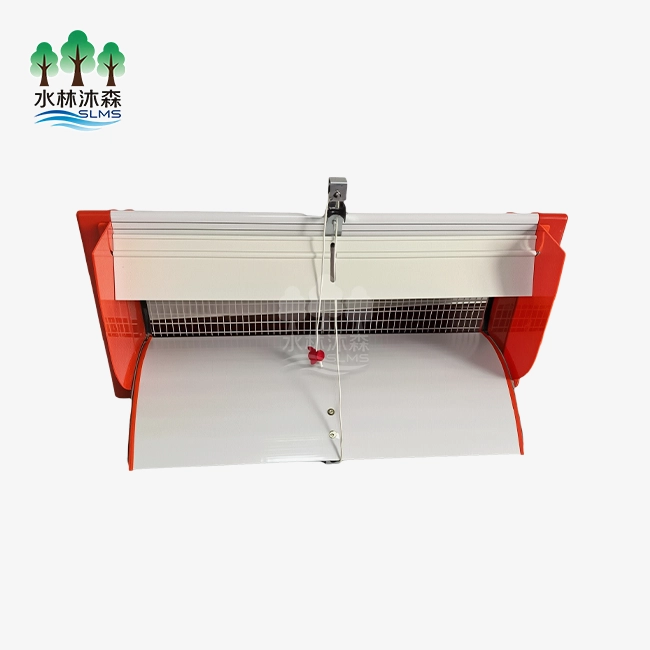
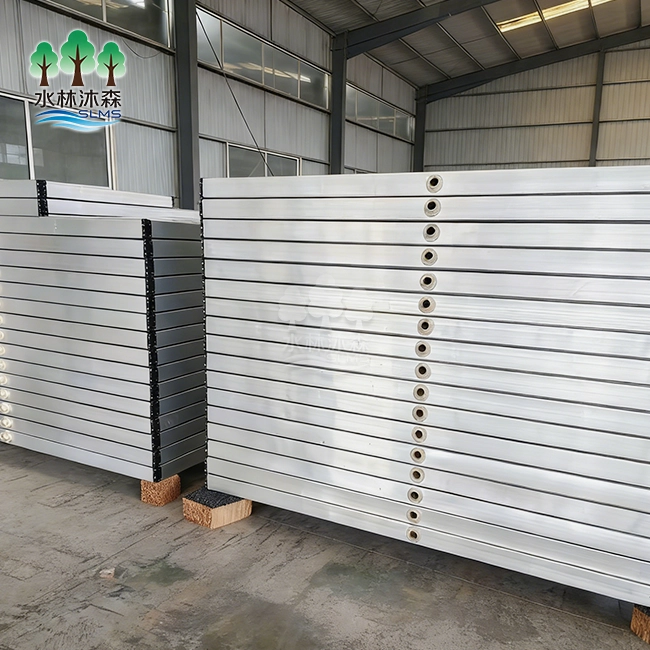
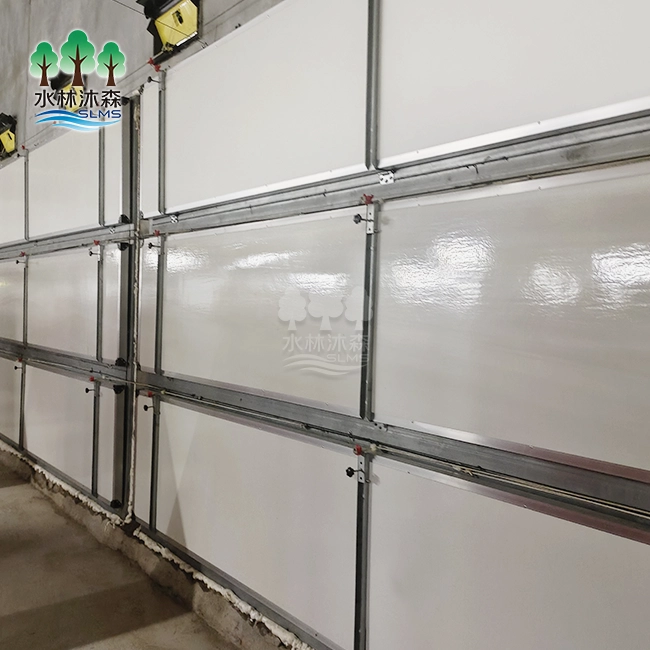
Poultry Cooling Pad System
2. Core Specifications: Model 7090, thickness 15cm or 20cm
3. Technical Support: Installation videos and other supporting technical support are provided.
4. Installation Service: On-site installation service is available.
5. After-sales Service: 1-year free warranty.
6. Product Advantages: Corrosion resistant, highly absorbent, low ventilation resistance, and long service life.
7. Customization available upon request; frame made of aluminum alloy or stainless steel.
Poultry Cooling Pad System: Professional Evaporative Cooling Solution for Modern Poultry Farms
Weifang Shuilin Musen Aquaculture Equipment Co., Ltd. delivers industrial-grade Poultry Cooling Pad System engineered with high-molecular-weight cross-linked polyethylene material. Our Model 7090 configuration offers standardized thickness options of 15cm and 20cm, with frames constructed from corrosion-resistant aluminum alloy or 304 stainless steel. Field-tested applications demonstrate consistent temperature reduction of 5-8℃ in high-density ventilation environments. Backed by 8 years of agricultural machinery expertise and a dedicated R&D team of 5 engineers, we provide fully customizable dimensions, 12-month warranty coverage, and comprehensive installation support including technical videos and on-site assistance for commercial poultry operations.
How Evaporative Cooling Technology Works in Intensive Farming
The Poultry Cooling Pad System operates through thermodynamic principles where sensible heat converts to latent heat during water evaporation. When exhaust fans create negative pressure, hot ambient air passes through saturated cellulose pads. The moisture absorption properties of cross-linked polymers ensure maximum contact time between air and water molecules.
This process directly addresses critical operational challenges. Heat stress mortality drops significantly when barn temperatures remain below panting thresholds. Feed conversion ratios stabilize as birds maintain consistent appetite in optimal thermal zones. Compared to mechanical refrigeration, evaporative systems consume substantially less electricity—a decisive factor for managing operational costs in large-scale farming.

Technical Specifications
| Parameter | Details |
|---|---|
| Model | 7090 |
| Standard Thickness | 15cm / 20cm |
| Dimensions | Customizable length and width |
| Core Material | High-molecular-weight cross-linked polyethylene |
| Frame Material | Aluminum alloy or stainless steel |
| Main Components | Cooling pad paper, frame, water circulation system |
| Temperature Reduction | 5-8℃ in high-temperature, dry environments |
| Application | Chicken coops, duck sheds, poultry farms |
| Warranty | 1 year free warranty |
Key Performance Advantages for Commercial Operations
Your cooling system must deliver reliable results under demanding conditions. Our pads exhibit superior water absorption rates while maintaining low ventilation resistance. The corrugated structure maximizes surface area contact without creating excessive pressure drop that would strain exhaust fans.
Corrosion-resistant frames ensure longevity in humid barn environments. You can freely combine and splice multiple units to match your facility's specific layout requirements. The modular design simplifies expansion projects or partial replacements during routine maintenance cycles.
Air quality improvement occurs simultaneously with temperature control. As outdoor air passes through wet pads, dust particles and airborne contaminants get filtered out. This dual functionality reduces respiratory challenges in high-density poultry housing while maintaining the cooling effect.
Application Scenarios Across Different Farm Types
High-Density Broiler Facilities
Tunnel-ventilated houses benefit most from properly configured Poultry Cooling Pad System installations. Position pads at air intake points with extraction fans creating 0.05-0.10 inches water column negative pressure. This configuration maintains critical temperature thresholds during final growth weeks when metabolic heat production peaks.
Layer and Breeder Barns
Egg production operations require precise humidity management. Excessive moisture causes ammonia buildup from wet litter, impacting shell quality and production rates. Advanced installations pair cooling pads with automated controllers that pulse water flow. This maintains temperature reduction while capping relative humidity at 75-80% to preserve egg yield.
Tropical and Arid Climate Regions
Low ambient humidity environments allow maximum evaporative efficiency. Farms in these regions achieve temperature drops exceeding 10℃ when systems integrate with climate controllers. The dry air maximizes water evaporation rates without risking excessive indoor moisture accumulation.

Installation and Ongoing Maintenance Guidance
Proper face velocity settings determine system effectiveness. Maintain airflow between 1.5-1.75 meters per second across 150mm pads. Higher velocities increase pressure drop exponentially and risk water droplet entrainment into housing areas.
Water quality management extends pad lifespan significantly. Keep pH levels between 6-8 and implement bleed-off systems that replace 5-10% of recirculated water daily. This prevents calcium scale accumulation that clogs cellulose channels and reduces saturation efficiency.
We provide installation videos covering water distribution pipe setup and frame mounting procedures. Our technical support team assists with system commissioning. On-site installation assistance ensures proper integration with your existing ventilation infrastructure.
Replacement cellulose paper is available separately for scheduled maintenance. Regular cleaning of distribution systems and periodic flushing of circulation pipes maintains optimal performance throughout operational seasons.
Why Choose Our Enterprise-Grade Solution
Eight years of agricultural machinery specialization informs our product development process. We manufacture equipment that reduces labor costs by over 40% compared to traditional cooling methods. Our 5-member engineering team continuously refines designs based on real-world farm feedback.
Quality control covers every production stage from raw material selection through final testing. High-strength materials ensure stable operation under continuous seasonal use. Simple disassembly design makes component replacement and cleaning straightforward for farm maintenance teams.
Customization services accommodate unique facility dimensions and operational requirements. Whether you need specific frame materials for corrosive environments or non-standard pad dimensions for retrofit projects, our production capabilities deliver tailored solutions without compromising delivery timelines.
Frequently Asked Questions
Q: What determines the lifespan of cooling pad systems?
A: High-quality cellulose cooling pads normally serve 3 to 5 years under seasonal continuous operation. Their service life is decided by three key factors: stable water pH value control, reasonable calcium hardness adjustment, and daily drying cycles to restrain algae proliferation.
Q: How do different thickness choices influence cooling efficiency?
A: 150mm thick pads are ideal for extremely hot and arid areas; greater water saturation brings stronger cooling effect and higher working efficiency. 100mm pads are suitable for farms with limited fan power or moderately humid zones, as overly saturated pads will reduce cooling results in humid environments.
Q: Why do newly installed cooling pads give off faint odors at the beginning?
A: Slight odor may be released during the curing of resin binders in the initial running stage. Our industrial cooling pads adopt non-toxic and phenol-free adhesives. The smell will completely fade within 24 to 48 hours after water circulation starts. Pungent lingering odors are a typical feature of inferior raw materials.
Q: How to effectively avoid limescale accumulation?
A: Equip the water circulation system with a drainage device that discharges 5%–10% of circulating water every day to avoid continuous accumulation of mineral substances. Flush the water distribution pipelines regularly to clear sediments, so as not to impair the water absorption and cooling performance of the pads.
Q: What is the recommended surface air velocity standard?
A: The industry standard surface air velocity for 150mm cooling pads is 1.5–1.75 m/s. If the wind speed exceeds this range, air static pressure loss will rise sharply, and water mist will be blown into the chicken house, adversely affecting the breeding environment.
Contact Us
Ready to improve your poultry farm's climate control? We're here to help you find the perfect poultry cooling pad system.
Reach out to discuss your specific needs, request a quote, or learn more about our products and services.
Email: slms-equipment.com@slms-equipment.com
Learn about our latest products and discounts through SMS or email