How to choose the right size evaporative cooling pad for a poultry house
Choosing the right size Poultry House Evaporative Cooling Pad relies on the size of your building, the number of birds that will be living there, how much air flow you have, and the weather in your area. To get the best airflow, your cooling pad should be the right size for your exhaust fan's capacity and the length of your building. The ideal airflow speed is between 1.5 and 2.0 meters per second. This makes sure that the temperature drops by 5 to 8°C without making the air inside too humid or letting water into the house, which is bad for bird health.


Understanding the Basics of Poultry House Evaporative Cooling Pads
How Evaporative Cooling Technology Works
The way Poultry House Evaporative Cooling Pad technology works is based on a simple physics concept. The chicken coop gets hot air from the outside through pad media that is wet with water. Thermal energy changes liquid water into gas as air flows through the wet curved structure. This change in phase takes heat from the air flow and lowers it by a large amount before it hits the birds. The process is adiabatic, which means it doesn't need any outside cooling other than wind and water.
The curved shape makes the most of the surface area that air and water can touch. If you keep good cellulose pads in good shape, they can cool your home between 75% and 85% of the time, based on the temperature and speed of the air flow. Because the entering air has less relative humidity, the temperature drops more. This is why these systems work so well in dry areas.
Key Benefits for Poultry Operations
Putting in a liquid cooling system that is the right size has many practical benefits. Birds that stay in their thermoneutral zone have better feed conversion rates because their biological energy is used for growth instead of losing heat. Layer farms say they produce more eggs consistently and have fewer problems with the quality of the shells during heat waves. When temps inside stay steady, broiler death rates go down by a lot.
Another important benefit is that it saves energy. About 75% less electricity is used by liquid cooling systems than by mechanical refrigeration systems. Water tanks and air fans are all that are needed for the technology. Neither of them uses a lot of power. Over the course of a production run, these saves add up to big cost cuts.
Better air quality also helps the health of flocks. The steady flow of air cleans the air by removing ammonia, dust, and germs that are in the air. This lower level of respiratory toxins helps the lungs work better and stops the spread of disease in crowded stocking setups.
Material Types and Standard Specifications
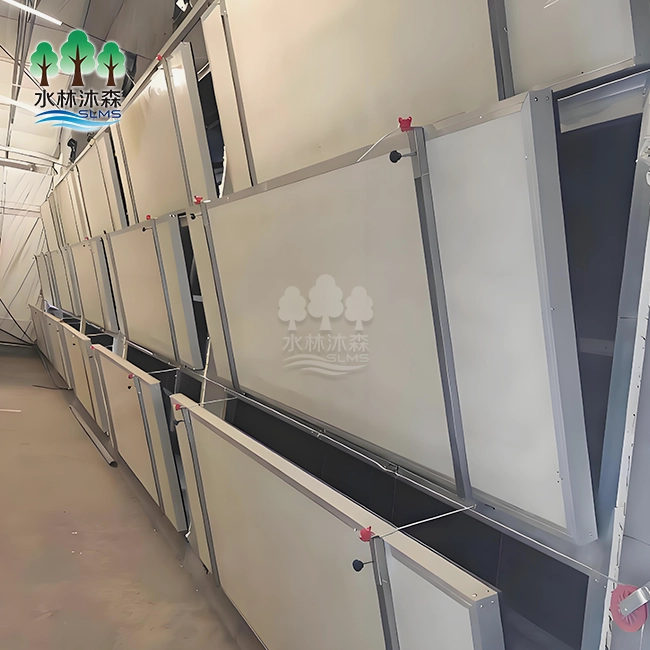
Cellulose-based pads are the most popular in the chicken business because they are cheap and absorb water better than other types. These pads are made of carefully treated kraft paper that is filled with phenolic resins that keep the paper from breaking down even when it stays wet for a long time. Cross-fluted design, usually Model 7090 with 45-degree and 15-degree angles, makes unstable airflow that improves the efficiency of evaporation.
15cm (6 inches) and 20cm (8 inches) are the standard thicknesses. The 15cm version works well in mild areas and smaller homes because it cools well and costs less at first. The extra 20 cm of width makes it better at cooling places that are very hot or have a lot of birds. The extra volume of the media makes it possible for air and water to touch for longer, which lowers the temperature even more.
There are synthetic options, but they aren't used as much in large-scale poultry uses. Longer longevity and resistance to biological growth are good things about these materials, but they are more expensive and don't evaporate as well as cellulose, which is what most businesses choose.
Key Criteria to Consider When Choosing the Right Size Cooling Pad
Calculating Required Pad Surface Area
Before you can choose the right Poultry House Evaporative Cooling Pad size, you need to know how much air flow your building needs. Find the total air flow rate of the exhaust fan in cubic meters per minute (CMM) or cubic feet per minute (CFM). This number varies on how many birds are being kept, how much heat each bird makes, and how fast air needs to be exchanged. During the hottest parts of summer, this number is usually between 4 and 6 full air changes per hour.
Once you know how much air can flow through the pad, divide that rate by the recommended face velocity for that width. The best face speed is between 1.5 and 2 meters per second, which is about 300 to 400 feet per minute. Going faster than this speed lets water droplets into the house and shortens the life of the pad. Because the motion isn't fast enough, the goal cooling can't happen.
Surface Area Formula: Required pad area (m²) = Total airflow capacity (m³/min) ÷ Face velocity (m/min)
This calculation is shown with a real-life case. It takes about 60,000 CMM of air flow to cool down a 150-meter-long, 15-meter-wide chicken coop with 30,000 broilers inside during the summer. With a face speed of 1.75 meters per second (105 meters per minute), the pad area that is needed is 60,000 divided by 105, which is 571 square meters.
Matching Pad Dimensions to Building Configuration
Once you know the total pad area, you can figure out how the pads should be set up so they fit with your building plan. In most tunnel-ventilated chicken coops, pads are attached to one end wall, and air fans are placed at the other end. The pad height usually ranges from close to ground level to about 2.5 meters high. This lets the most walls be covered while still keeping the structure strong.
To find the necessary width, divide the needed surface area by the height of the wall that is accessible. In the last case, if the end wall is 15 meters wide and there are 2.2 meters of usable height, you have 33 square meters of room for installation for every linear meter of pad width. To cover 571 square meters, you would need about 17.3 linear meters, which is the whole end wall plus extra covering on the side walls.
When standard modular sizes don't exactly fit your needs, you need to have something made just for you. Good makers offer custom sizes with frames made of aluminum alloy or stainless steel that can fit irregular holes and make sure the edges of the pads are properly sealed.
Accounting for Climate Variables and Heat Load
Regional temperature factors have a big impact on how well pads work and what size to choose. Low-humidity areas cool down more through evaporation, which could mean that slightly smaller pad areas can hit their goal temperatures. On the other hand, areas near wet coasts need bigger pad surfaces or thicker media to make up for slower drainage rates.
The amount of heat load also changes the size needs. High stocking numbers in broiler finishing houses make more metabolic heat per square meter than breeder sites or layer farms. Find the heat output by using the bird's weight, the amount of food it eats, and its metabolism activity. Higher heat loads require proportionally more cooling capacity, which means that the pad area needs to be bigger or the water distribution systems need to be improved.
Installation and Maintenance Guidelines to Maximize Cooling Pad Performance
Professional Installation Procedures
A Poultry House Evaporative Cooling Pad system's long-term dependability depends on how well it was installed. The first step in getting the site ready is to make sure that the wall hole is level, physically sound, and sealed so that air doesn't leak around the edges of the pads. Any holes let air that hasn't been cooled pass through the cooling media, which lowers its total effectiveness and makes the temperature in the house vary.
To make sure that the whole pad area is saturated, water transfer systems need to be carefully planned. Along the top edge of the pad structure, you should put in pierced PVC pipes or special distribution troughs. There shouldn't be too much waste when the water flow rates are right. Filtration units keep minerals from building up and biological pollution from happening, and recirculation pumps keep the pressure steady.
Our company offers full installation help, which includes thorough how-to videos and technical documents. On-site installation services are available for large-scale setups or settings that are hard to understand. Before the final handover, our experienced techs make sure the system is properly aligned, check the water flow patterns, and test its performance.
The material used to build the frame affects how long it will last in corrosive chicken settings. Aluminum aluminum frames are strong for their weight and don't rust, and they don't cost too much either. Even though it costs more at first, stainless steel lasts longer in high-ammonia environments. Both choices last a lot longer than galvanized steel, which breaks down quickly in places with a lot of moisture and ammonia.
Routine Maintenance and Troubleshooting
Regular care keeps the cooling working well and increases the life of the pad. Visual checks every day should make sure that the water is spread out evenly and show any dry spots or areas with uneven wetness. Cleaning once a week gets rid of dust and other biological matter that gets in the way of movement. High-pressure washing hurts the delicate cellulose fibers, so it's better to rinse them gently with low-pressure water.
The most common problem with upkeep is mineral buildup from hard water. Calcium and magnesium salts build up on pad surfaces, making it harder for water to soak in and air to flow through. Using products based on citric acid for monthly descaling treatments breaks down these layers without hurting the pad material. In recycling systems, continuous bleed-off valves keep mineral concentrations from building up.
System breakdowns can be avoided by spotting the signs of pad wear. If you notice that the cellulose structure is breaking down physically, that means the pad has hit the end of its useful life, which should last between three and five years with proper care. Strong smells indicate the presence of living things that need to be cleaned up. When the temperature in different parts of the house is different, it's usually because of clogged pipes or poor water distribution.
Comparing Evaporative Cooling Pads with Alternative Cooling Solutions
Performance Advantages Over Mechanical Systems
When compared to mechanical refrigeration, Poultry House Evaporative Cooling Pad technology has clear practical benefits. The cost of capital for pad systems is about 60% to 70% less than for equivalent-capacity refrigeration. Even bigger differences can be seen in operating costs. For example, evaporative devices use only a quarter as much power as mechanical ones.
Evaporative technology is also better because it is easier to maintain. Specialized workers, expensive refrigerant handling, and difficult repairs are needed for refrigeration equipment. Simple repair chores for pad systems can be done by farm workers with only a little training. The costs of replacing parts stay low—a full pad replacement after a few years still costs less than a single turbine fix.
Environmental factors are becoming more and more important in choosing tools. Aside from the energy used by water pumps and fans, evaporative cooling doesn't release any refrigerants and has a very small impact on the environment. Even though a lot of water is used, it is still doable in most places and helps farms stay in business as long as they follow good water saving practices.
Material Quality and Supplier Selection
Different makers use very different types of pad materials, which has a direct effect on how well they work and how long they last. Premium cellulose pads are made from brand-new kraft paper that has a fixed grammage (paper weight) of about 100 grams per square meter. Low-quality options use recycled fibers that break down quickly when they get wet. The resin must be evenly spread out and thick enough to keep the structure of the pad strong for as long as it is used.
Assessing a supplier's skills goes beyond checking that they can meet product requirements. Look for companies that have focused research and development teams that are always making ideas better by looking at how they work in the field. Businesses that offer full professional support, such as help with installation and fixing problems, add a lot of value to the buying relationship.
During the whole process of making something, our company does strict quality control. Every batch of products goes through absorption tests, structure stability checks, and dimensional accuracy checks. The tech team is always working on new products and comes up with more than three new ideas every year. Our dedication to constant improvement makes sure that our clients get cutting-edge answers to new problems in their fields.
Warranty coverage shows how confident the maker is in the product's reliability. We stand behind our Model 7090 cooling pads with a full one-year guarantee that covers both problems with the way they were made and damage that happens too soon. This security, along with helpful customer service, lowers the risk of losing money and stopping operations.
Procurement Tips and How to Make a Smart Purchase Decision
Evaluating Total Cost of Ownership
The purchase price is only one part of an investment's long-term value. Find the total cost of ownership by adding up the costs of installation, yearly upkeep, planned replacement times, and the amount of energy used during operation. A slightly more expensive Poultry House Evaporative Cooling Pad that lasts longer and works better will usually give you a better return on your investment over the course of its life.
Saving energy is the most important long-term gain. Figure out how much power it will cost you by looking at local energy rates and how long you think the machine will run during cooler months. In places where summers are very hot, the cooling system may run for 12 to 16 hours a day, three to four months a year. Profitability is directly affected by pad designs that keep goal temperatures stable while reducing fan runtime.
Costs and quantity of water should be thought about, especially in places that are prone to drought. Figure out how much is being used by looking at how much is evaporating, how much is bleed-off, and the system's capacity. Putting in water recycling systems or collecting rainwater can help cover these costs and meet environmental responsibility goals at the same time.
Customization and Scalability
Customized solutions that take into account unique building configurations and performance goals are helpful for large-scale activities. Off-the-shelf options are less flexible than those made by manufacturers who can make non-standard sizes, use special frame materials, and change water distribution systems to fit specific needs.
Planning for scalability makes sure that your cooling system can adapt to changes in operations or growth in the future. When you add more birds or change the plan of your buildings, modular pad installs let you add more space bit by bit. Talking about long-term production plans with equipment makers when buying new equipment helps find ways to handle growth without having to update the whole system.
We are experts at custom fabrication, and we work closely with our customers to come up with specs that are specific to their needs and improve performance. The engineering team at our company turns your needs into real solutions, whether you need specific sizes to fit current buildings or better corrosion resistance for harsh locations.
Building Reliable Supplier Partnerships
Supplier dependability includes more than just the quality of the products they sell. It also includes regular access, quick contact, and reliable assistance after the sale. Potential partners should be judged on their knowledge in the field, their client references, and their ability to meet deadlines for orders. When planning for new building or planned machine replacements, supply chain stability is very important.
The ability to provide technical help sets special sellers apart from commodity vendors. Look for partners that offer a wide range of tools, such as size calculators, installation training, troubleshooting guides, and direct access to expert staff who know what they're doing. This knowledge is very helpful when dealing with problems that come up out of the blue or improving system speed.
Our company has spent eight years perfecting solutions for animals and farm tools. It is based in Qingzhou City, Shandong Province. Because of this, we have a deep understanding of how things work in the field and the problems our clients face. We've set up full service systems that help customers from the first meeting through installation, training, and ongoing expert support.
Conclusion
To choose the right-sized Poultry House Evaporative Cooling Pad system, you have to weigh a lot of technical factors along with practical facts and budget limits. If you do the right figures for airflow, use the right materials, and pay close attention to the quality of the work, your investment will provide the best conditions for birds and increase production. The cooling pad is an important part of your overall plan to control the environment. It works with air fans, building insulation, and good management to keep things in good shape.
Professional installation and careful maintenance, along with high-quality tools from well-known brands, provides reliable performance during busy production cycles. As climate change gets worse and performance standards rise, investing in better cooling technology gives you a competitive edge by improving bird health, lowering bird mortality, and making feed conversion more efficient.
FAQ
How Often Should Poultry House Evaporative Cooling Pads Be Replaced?
When to change a Poultry House Evaporative Cooling Pad depends on the quality of the water, how often they are used, and how well they are maintained. High-quality cellulose pads usually last three to five years with the right care, like cleaning them regularly and managing the minerals in them. If you have hard water or don't do enough upkeep, this could be cut down to one to two years. Keep an eye out for signs that it needs to be replaced, such as structural damage, constant smells, and a drop in how well it cools.
Can I Install Cooling Pads Without Professional Assistance?
People who know how to build things and have access to the right tools can do basic setups. Professional construction, on the other hand, makes sure that the water is distributed properly, that the system is sealed properly, and that it works with ventilation settings. Our company offers detailed installation videos and technical support to help people who want to do the work themselves. However, for big or complicated installations, we suggest that you have someone come to your home to make sure it works right and protect your investment.
What Indicates My Cooling Pad Is Incorrectly Sized?
Several signs point to problems with size. If the relative humidity is higher than 80%, it means that the pads are too big or there isn't enough air flow. Spraying water drops into the house means that air is moving too quickly through pads that aren't big enough. Not being able to reach the goal temperature drop despite having enough water suggests that the pad doesn't have enough surface area. Different parts of the house often have different temperatures because the pads aren't covered evenly or wind paths are stopped.
Partner with a Trusted Poultry House Evaporative Cooling Pad Manufacturer
Shuilin Musen Aquaculture Equipment Co., Ltd. offers comprehensive Poultry House Evaporative Cooling Pad solutions designed specifically for intensive poultry operations. Our Model 7090 pads feature high-absorbency cellulose construction with corrosion-resistant frames available in aluminum alloy or stainless steel configurations. Each system includes technical support through detailed installation videos and documentation, with on-site installation services available for complex projects.
Our products demonstrate exceptional durability, low ventilation resistance, and extended service life that reduces replacement frequency and operational disruptions. Customization capabilities ensure precise fitting to your facility specifications, while our one-year warranty provides confidence in product reliability. Clients consistently report labor cost reductions exceeding 40% alongside improved production outcomes after implementing our integrated solutions. Contact our team at wangshuaislms@gmail.com to discuss your specific requirements and receive detailed sizing recommendations.
References
1. Donald, J. (2018). Poultry Housing and Environmental Control Systems. Agricultural Engineering Press.
2. Lacy, M. & Czarick, M. (2020). Tunnel Ventilation Design and Management for Broiler Production. University Extension Publications.
3. Xiong, Y., Gates, R., & Green, A. (2019). Evaporative Cooling Pad Performance in High-Density Poultry Facilities. Journal of Agricultural Engineering Research, 145(3), 221-234.
4. Purswell, J., Dozier, W., & Olanrewaju, H. (2017). Climate Control Technologies for Modern Poultry Production. American Society of Agricultural Engineers.
5. Zhao, Y., Shepherd, T., & Xin, H. (2021). Comparative Analysis of Evaporative Cooling Media in Commercial Poultry Operations. Applied Poultry Research, 30(2), 189-203.
6. Mitchell, M. & Kettlewell, P. (2019). Thermal Physiology and Heat Stress Management in Poultry. International Poultry Science Foundation.
Learn about our latest products and discounts through SMS or email