Three-tier Layer Cage
2. Core Specifications: Stocking density 40KG/㎡, corrosion-resistant galvanized iron wire and frame, automatic manure removal, automatic feeding, and automatic watering for modern farms.
3. Technical Support: Provides installation videos and other supporting technical support.
4. Installation Service: On-site installation service available.
5. After-sales Service: 1-year free warranty.
6. Product Advantages: Reduces labor costs and improves farming efficiency; the rational design reduces egg breakage rate and flock injury and disease rate, indirectly improving egg production efficiency and shortening the payback period.
7. Customization available according to customer needs.
Three-tier Layer Cage for Commercial Egg Production
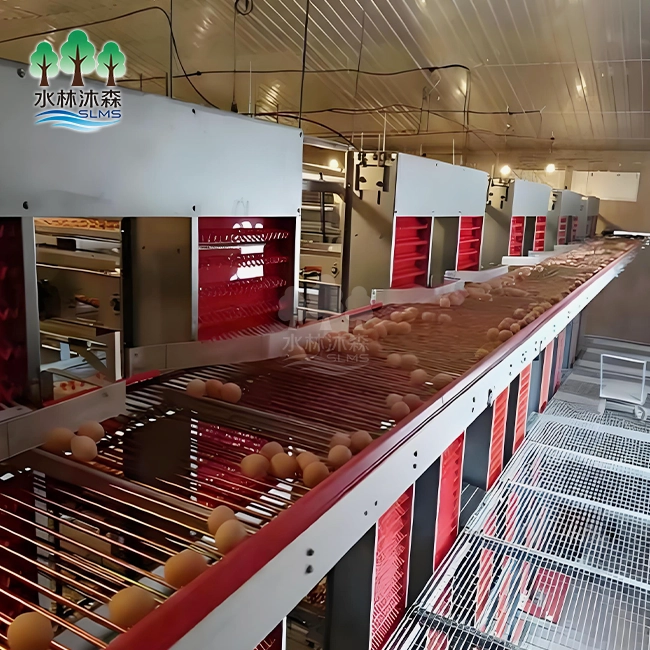
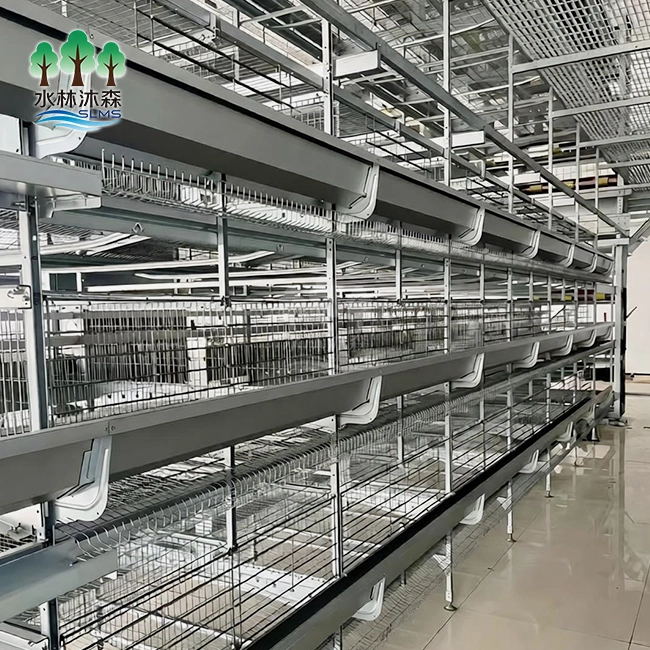
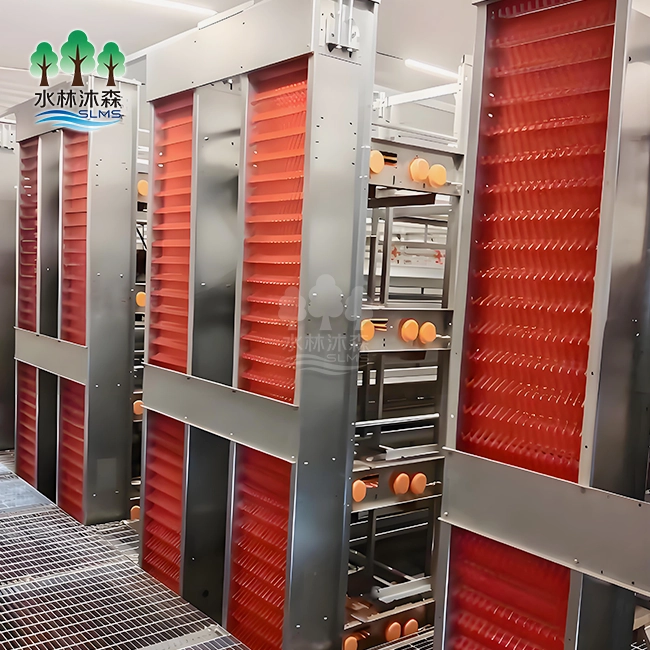
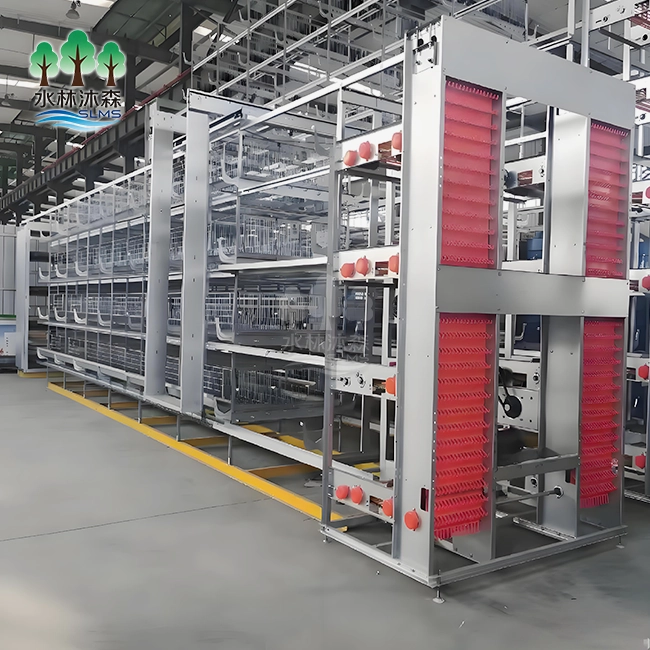
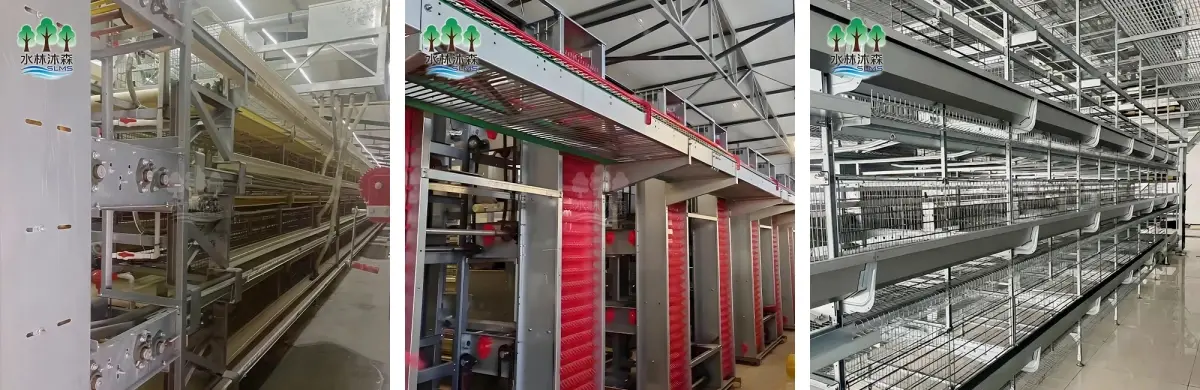
The Three-tier Layer Cage from Weifang Shuilin Musen Aquaculture Equipment Co., Ltd. represents an optimized solution for intensive layer farming operations. This system maximizes vertical space usage while achieving a stocking density of 40KG/㎡ thanks to its H-type integrated framework and Q235 high-strength galvanized steel wire. Measuring 45 cm (L) × 45 cm (W) × 450 cm (H), each cage unit has a 10° bottom slope for effective egg harvesting. The system offers a proven service life of more than 15 years with hot-dip galvanized treatment that surpasses industry standards. When compared to conventional floor-rearing techniques, the design's seamless integration of automated feeding, nipple drinking systems, and dung removal processes reduces labor expenses by over 40%.
What Makes Our Three-tier Layer Cage Different
Three major issues plague traditional poultry housing systems: excessive labor dependency, poor land efficiency, and disease transmission through manure contact.
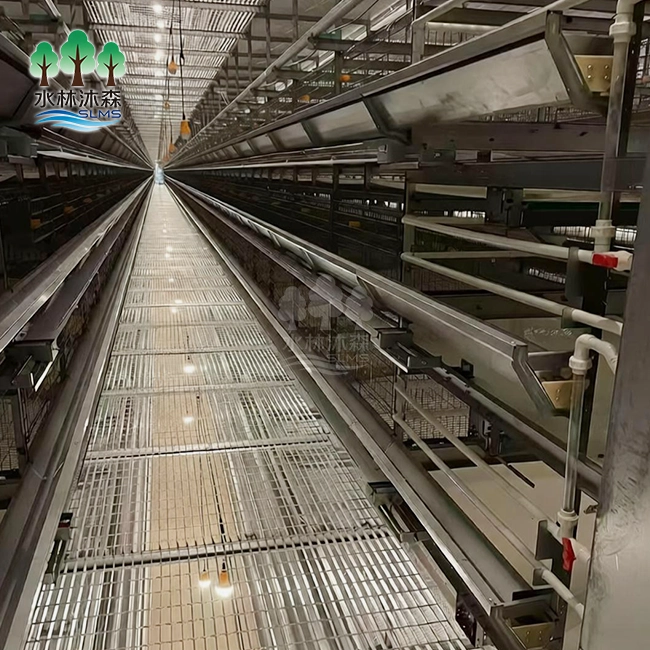
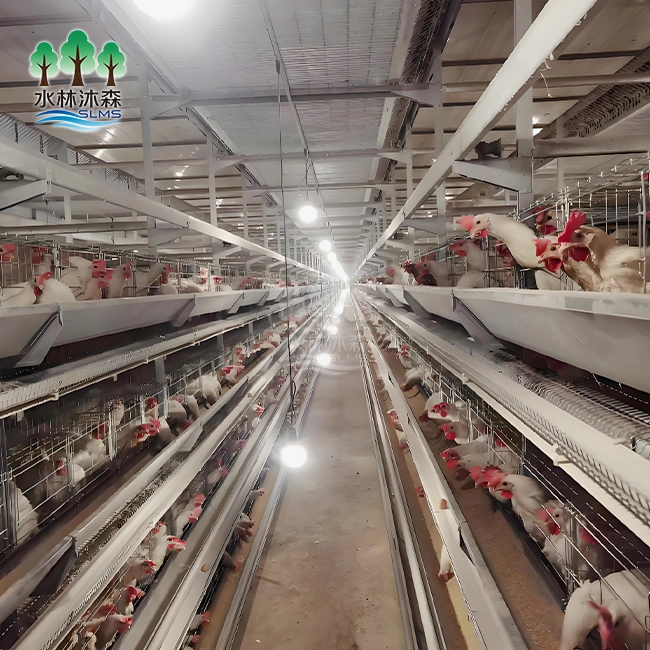
Your functional farming area is tripled within the same building footprint thanks to our vertical stacking design. Without growing your facility or buying extra land, you are able to accommodate a lot more birds.
Your flock and waste are physically separated by the integrated manure removal belt that runs beneath each tier. By significantly reducing ammonia buildup, this design lowers the danger of coccidiosis and respiratory diseases that afflict traditional deep-litter systems.
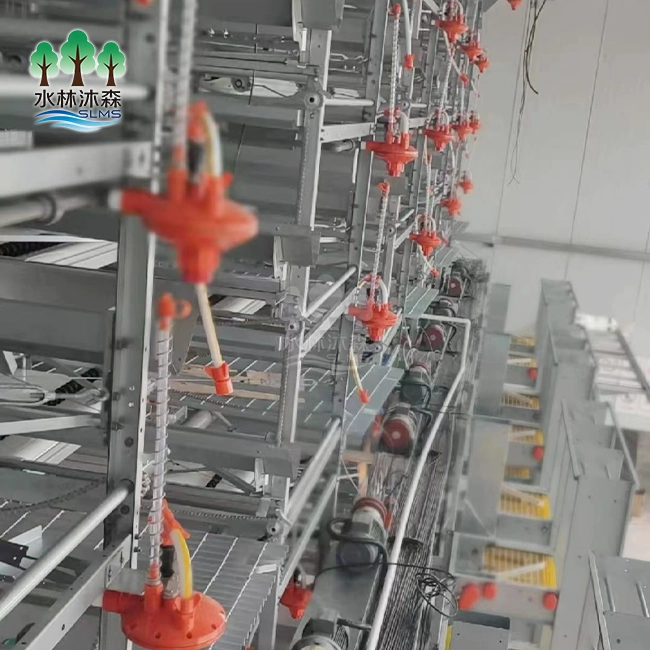
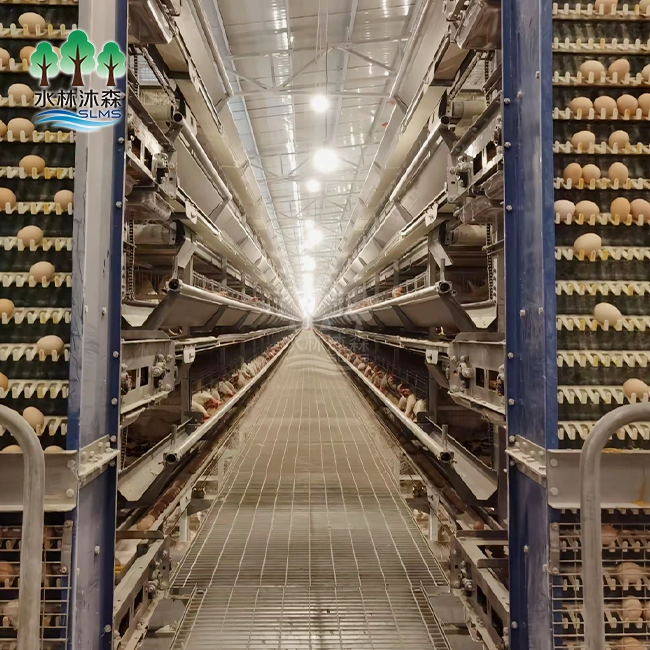
Nipple drinkers and automated feeding channels evenly divide resources throughout the three tiers. Your team can now concentrate on health monitoring and management decisions while the system takes care of monotonous duties like physically hauling feed buckets or gathering eggs tier by tier.
Technical Specifications
| Component | Specifications | Details |
|---|---|---|
| Cage Dimensions | 45cm × 45cm × 450cm | Individual cage size with optimized space |
| Bottom Slope | 10° angle | Facilitates easy egg rolling and collection |
| Primary Material | Q235 Steel Wire | Hot-dip galvanized for corrosion resistance |
| Service Life | 15+ years | Long-term durability guarantee |
| Stocking Density | 40KG/㎡ | Optimized for intensive farming |
| Structure Type | H-type 3-layer | Integrated vertical design |
| Components | Complete System | Cage frame, mesh assembly, egg collector, feed trough, nipple drinkers, water pipes |
| Automation | Fully Integrated | Automatic feeding, watering, and manure removal |
Why Space Efficiency Matters for Your Operation
Land costs represent one of your largest fixed expenses in commercial egg production. The Three-tier Layer Cage addresses this by stacking three productive layers vertically.
Compare this to single-tier floor systems: you achieve triple the bird capacity while paying rent or property taxes on the same square footage. In high-value agricultural zones, this translates to substantial cost savings annually.
The H-frame structural design distributes weight scientifically across support points. You avoid the cage deformation issues common in overloaded systems, ensuring stability throughout the 15-year operational lifespan.
Installation and maintenance remain straightforward. The modular design allows cage sections to be assembled, disassembled, and replaced without specialized tools, reducing downtime during cleaning cycles or component upgrades.
How Automated Systems Reduce Labor Dependency
Manual egg collection and feeding consume significant workforce hours in traditional setups. Our system changes this equation fundamentally.
Automated feed distribution travels along centralized channels serving all three tiers simultaneously. You fill one hopper, and the system delivers precise portions to every cage compartment.
Nipple drinkers connect to pressurized water lines, providing fresh water on demand. Birds access hydration without your team refilling troughs multiple times daily.
The 10° bottom slope works with gravity—eggs roll gently into collection troughs positioned at cage fronts. Your staff walks a single aisle to gather eggs, rather than reaching into individual cages across multiple rows.
Manure belts operate on timed cycles, conveying waste away from bird areas before ammonia levels rise. This automation protects flock health while eliminating the labor-intensive task of manual waste removal.
Durability Through Material Engineering
Poultry manure creates one of the most corrosive environments in agricultural applications. Our hot-dip galvanization process applies zinc coating exceeding 275g/m², forming a protective barrier that withstands acidic waste for over 15 years.
The Q235 steel base material provides high tensile strength. Fully-loaded cages maintain structural integrity without sagging or wire deformation, even under the concentrated weight of mature laying hens.
Corrosion resistance extends equipment lifespan, but it also protects your investment. You avoid the frequent replacement costs associated with cold-galvanized or untreated metal cages that rust through within 3-5 years.
Comprehensive Support for Smooth Implementation
Technical complexity shouldn't prevent you from upgrading to modern systems. We provide installation videos covering assembly procedures, electrical connections, and automation calibration.
On-site installation service is available when your team requires hands-on guidance. Our technicians work alongside your staff, ensuring proper setup while transferring knowledge for future maintenance.
Every system includes a 1-year free warranty covering manufacturing defects and component failures. You gain peace of mind during the critical initial operational period.
Customization options accommodate facility variations. Whether you need adjusted cage dimensions, specific automation brands, or modified frame heights, we engineer solutions matching your operational requirements.
Frequently Asked Questions
Q: How will the three-tier cage system impact temperature uniformity on different layers?
A: Vertical stacked cages bring greater difficulties to internal air circulation. Our structural design reserves sufficient gaps between each tier to facilitate smooth airflow. Equipped with reasonably arranged exhaust fans and air intake windows, the ventilation system shall keep the wind speed stably at 2.5–3.0 m/s, so that the temperature difference between the top layer and bottom layer is controlled within 2°C.
Q: What foundation construction standards are required for installing this set of equipment?
A: The H-type cage frame bears concentrated point loads, which must be supported by firm ground. For conventional installation, the concrete foundation shall be 20–30 cm thick, with steel rebars laid corresponding to the positions of each cage supporting leg. Standardized foundation construction can avoid ground settlement; otherwise, settlement will lead to deviation of manure conveyor belts and long-term structural stress damage to the whole cage system.
Q: Can this system be connected to the farm’s original feeding equipment?
A: The reserved feeding channels of the cages are compatible with most mainstream commercial feed conveying equipment on the market. If you are renovating from manual feeding to automatic feeding, silo hoppers and drive motors need to be newly installed. For farms already equipped with automatic feeding systems, only slight adjustments are needed to connect our cages with plate-type feeding machines or chain feeding equipment.
Q: How to carry out routine health inspection for poultry on the second and third upper layers?
A: Two ways are available to access upper tiers: build fixed overhead walkways during the chicken house construction stage, or use movable portable inspection platforms. Most daily health status observation items can be completed from the ground floor. But vaccination, detailed physical examination and other fine operations need matched access passages for convenient work.
Contact Us
Ready to transform your layer farming operation? Our three-tier layer cage's team is here to answer your questions and help you select the perfect configuration for your needs.
Email: wangshuaislms@gmail.com
Learn about our latest products and discounts through SMS or email