Top Chicken Farm Ventilation Solutions for High Density Farms
Keeping thousands of birds in small areas under control takes more than just making sure air flows. The environment needs to be carefully managed so that it doesn't affect the birds' health, their growth rates, or your bottom line. A properly designed Livestock Ventilation System Negative Pressure Fan works by manually exhausting stale air laden with ammonia, moisture, and carbon dioxide, creating a controlled pressure difference that draws fresh oxygenated air through strategically positioned inlets.
This active exchange system keeps the air quality stable no matter what the weather is like outside. This keeps respiratory diseases and heat stress from happening in high-density poultry farms. When set up properly, these exhaust systems make a noticeable difference in the feed conversion ratio and the number of animals that die.


Understanding Negative Pressure Ventilation Systems for Chicken Farms
Negative pressure ventilation turns uncontrolled wind into controlled temperature control. Industrial vent fans on one end wall of the system pull air out, dropping the pressure inside below that of the air outside. Because of this difference in pressure, outside air has to come in through controlled openings or evaporative cooling pads that are placed across from the fans. The beauty is that you can plan for it—you can choose where air comes in and how fast it goes through your building.
How Negative Pressure Systems Outperform Positive Pressure Alternatives
Positive pressure systems try to get air into buildings and hope that it gets spread out evenly. Livestock Ventilation System Negative Pressure Fans, on the other hand, create a vacuum effect that makes sure air moves. In tunnel-ventilated grill houses during the hottest parts of summer, the exhaust fans control the speed of the wind, which is usually between 600 and 700 feet per minute.
Birds stay comfy even when the temperature outside is higher than their thermal comfort zone because of this wind chill effect. Studies from land-grant universities show that negative pressure setups lower temperature differences by 4 to 6°F compared to natural airflow. This means that flock weights are more uniform when they reach market age.
Core Components That Drive Performance
Modern exhaust systems have a number of important parts that work together. The fans have blades that are perfectly balanced (within one gram of error) to stop damaging vibrations that shorten the life of the bearings. When the fans turn off, automatic curtains close tightly to stop backdrafts that waste heating fuel in the winter. Inlet systems change the width of the hole based on static pressure readings. This keeps the water column pressure range of 0.05 to 0.12 inches, which is needed for proper air mixing. Sensors that measure temperature and humidity send information to controls that turn fans on and off so that the rate of airflow matches the amount of heat that needs to be removed.
Key Considerations When Choosing Negative Pressure Fans for Poultry Ventilation
When choosing Livestock Ventilation System Negative Pressure Fans, you need to make sure that the technical specs match the size and number of items in your building. A 40-foot by 500-foot grill house with 0.75 square feet of space for each bird needs a lot more airflow than a 200-foot tunnel house. Undersizing causes ammonia to build up and heat to escape; oversizing wastes electricity and makes drafts during times when only one or two fans are running occasionally.
Calculating Airflow Requirements for Your Operation
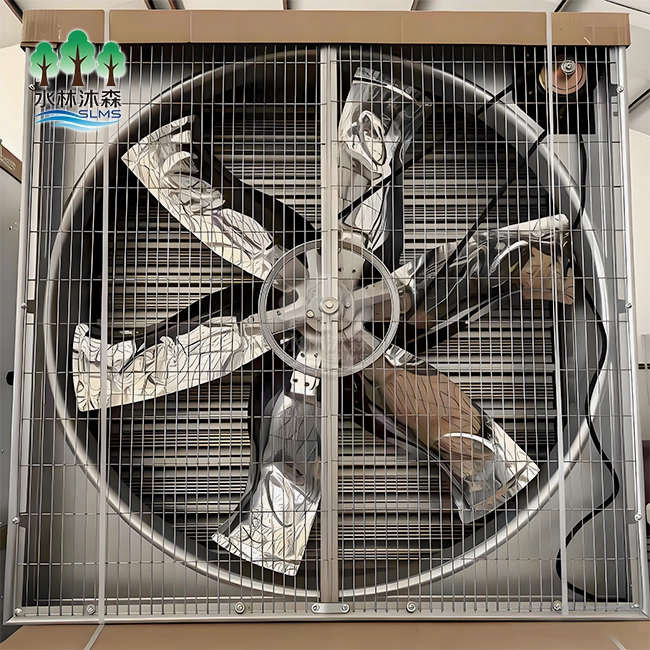
As a general rule, grill areas should have at least 5 to 7 cubic feet per minute (CFM) of air flow per bird during the summer. Our 50-inch exhaust fans move 28,000 to 38,000 cubic meters of air per hour, which is about 16,500 to 22,400 cubic feet per minute. This is enough air flow for 150 to 200 square meters per unit. That means that each fan can hold between 2,000 and 2,800 market-weight chickens when set up in a tunnel system. Layer farms usually need less air volume per bird, but they need more accurate minimum airflow control to deal with droppings and keep hens from getting too cold.
Durability Factors That Determine Total Cost of Ownership
Equipment is constantly being damaged in poultry barns. In just a few months, ammonia gas will eat away at regular steel, and dust in the air will clog motors and bearings. Premium exhaust fans protect against these risks by using high-quality materials and designing them in a way that makes them last longer than 40,000 hours of use. High-strength galvanised steel frames don't rust, and 304 stainless steel construction lasts even longer in places that use harsh methods to handle manure.
The 1.1 kW motors that power our units have entry protection grades of IP55 or IP56, which keep dust and water away from the electrical windings. The fully sealed design and Class F insulation make it possible to keep running even in the high and low temperatures and high humidity that are common in production sites.
Evaluating Supplier Reliability and Support Infrastructure
It doesn't matter how well your equipment works if you can't get new parts or expert help when it breaks down. Well-known companies keep wear parts like belts, bearings, and doors in stock and can ship repairs within days instead of weeks. Our company offers installation movies and technical documents that help your maintenance team understand how to set up and do regular maintenance tasks.
On-site installation help makes sure that the fans are placed correctly and the controller is programmed correctly from the start, so there is no need for expensive trial-and-error that happens with self-installed systems. The free warranty for one year protects your investment during the important break-in time, which is when production flaws usually show up.
Installation, Maintenance, and Troubleshooting of Negative Pressure Fans
Without proper installation of a Livestock Ventilation System Negative Pressure Fan, even the toughest equipment breaks down early. How well you place your fans will determine whether the air flow is even throughout the building or if there are dead spots where ammonia builds up and birds get sick. The wall strengthening has to be able to hold up the 80 kg unit weight plus the wind loads that come with storms. To keep the energy from dropping and overheating the motors, the wire gauge for the 380V power source must be correct.
Professional Installation Delivers Long-Term Reliability
Installers with a lot of experience put exhaust fans at exact times that are estimated by the width of the building and the speed of air that is needed. They use waterproof glue to fill in the gaps around the fan frames. This stops air from leaking, which lowers the system's efficiency and lets rain in. When shutters are properly adjusted, the blades open all the way while the fan is running. Shutters that are stuck or not lined up right stop movement by 30% or more, which means the fan can't do its job. During on-site installation, our expert team takes care of these details, putting the whole system into service and teaching your staff how to use the controls.
Maintenance Protocols That Extend Equipment Lifespan
Cleaning the shutter gears and fan blades once a month gets rid of the dust and feathers that build up on them. For types that are driven by belts, the tension needs to be checked every 60 days. With our direct-drive setup, this maintenance job is not needed at all. Motor bearings don't break down early if they are oiled every three months with high-temperature grease made for farming settings. Every year, the blades should be checked for balance and cracks in the fan frames or the structure where they are attached. Keeping detailed service records helps find trends that show when a part needs to be replaced before it fails catastrophically.
Common Issues and Resolution Strategies
When airflow drops, it's usually because of dust on the screens or inlets, not a problem with the fan motor. Using a manometer to measure standing pressure lets you know if resistance has gone above and beyond what was intended. Most of the time, strange noises are caused by blade imbalance or fitting hardware that isn't tight. If these problems aren't fixed right away, they will lead to faster wear. If the fan only works sometimes, it's probably because of a problem with the driver or a temperature monitor that has moved. Our support team helps with online debugging to keep downtime to a minimum and service calls to a minimum.
Enhancing Ventilation Efficiency and Animal Welfare with Negative Pressure Systems
Controlling the climate correctly with Livestock Ventilation System Negative Pressure Fans has a direct effect on the health and productivity of chickens, which are important for a farm's bottom line. Low levels of ammonia (less than 25 parts per million) protect lung health and stop airsacculitis, which slows growth. Keeping the relative humidity between 50 and 70% keeps the air from getting too dusty and stops water from building up, which helps bacteria grow. The temperature stays the same (within 2 to 3°F) throughout the building so that all the birds can grow in the same settings.
Integration with Automated Climate Control Technology
Modern controls keep an eye on temperature, humidity, and static pressure all the time, and they automatically change the settings of the fans and the inlets. Variable frequency drives slowly increase the speed of the fan instead of turning it on and off. This lowers the cost of electricity while keeping the surroundings fixed. These systems keep track of past data that helps find patterns and make settings work best across production cycles. Our equipment works perfectly with controls that are standard in the industry. This gives you the freedom to add more technology as your business grows.
Documented Performance Improvements from Optimized Ventilation
When compared to naturally ventilated facilities, commercial broiler farms that use properly built negative pressure systems see feed conversion gains of 0.05-0.10 points. When applied to groups of 25,000 or more birds, mortality decreases of 1% to 2% have a direct effect on profits. Layer farms note that when humidity stays within goal ranges, shell quality gets better and the number of cracked eggs goes down. Energy tracking in tunnel-ventilated homes shows that cooling costs are 15–25% lower than in homes with circulation fans alone, even though exhaust fans use more electricity.
Procurement Guide: How to Source and Purchase Negative Pressure Fans for Poultry Farms
When looking to source Livestock Ventilation System Negative Pressure Fans, you need to think about more than just the price. Total cost of ownership includes prices for installation, ongoing energy use, repair parts, and replacement costs in the long run. Buying in bulk lowers the price per unit, but you need to have enough space and cash flow to take advantage of the big savings. Customisation choices let you change the specs to fit odd building sizes or voltage needs that are popular in foreign markets.
Evaluating Manufacturers and Distribution Channels
Established companies with focused research and development (R&D) teams are always improving ideas based on data from the field and new needs in the industry. Our five-engineer development team comes out with at least three new products every year, taking user comments and new technology into account. Production centers with full quality control test every unit, from checking the raw materials to putting them together for the last time. This makes sure that all units work the same way. Working directly with manufacturers cuts out the middlemen and gives you access to tech help and the ability to make changes.
Budget Development and Cost Analysis
The 50-inch exhaust fan has a medium-sized capacity that makes it good for flexible growth as buildings get bigger. The cost of starting up equipment is usually between $800 and $1,200 per unit, based on the materials used and the motor's specs. When done by skilled farm contractors, installation costs an extra $200 to $400 per fan. At $0.10 per kilowatt-hour, the annual working costs for each fan that runs all the time add up to about $95; however, the real costs depend on the temperature and the ventilation strategy used. When making a budget, comparing these numbers to expected increases in productivity helps show that capital investments are worth the money.
Warranty Coverage and After-Sales Support Considerations
Our one-year guarantee covers expert help and replacement parts in case of manufacturing flaws or material fails. Extended service agreements let you plan your repair budgets ahead of time and give you priority help when your equipment breaks down. Having new parts in stock instead of having to special order them cuts down on downtime during fixes. These help features set trustworthy sellers apart from cheap ones that disappear when problems arise.
Conclusion
High-density poultry businesses that are profitable are different from those that are having trouble with disease outbreaks and bad performance because they have good environmental control. When it comes to keeping birds healthy and reducing energy use, Livestock Ventilation System Negative Pressure Fans are the best way to go. Consistent output results start with choosing equipment that is made to last in agriculture, comes with helpful technical support, and is placed correctly. The features and specs listed here will help you find solutions that meet the needs of your building and help you reach your working goals.
FAQ
What repair times are best for getting the most out of a fan?
Cleaning the screens and blades once a month keeps dust from building up and blocking airflow. Using agricultural-grade high-temperature grease to grease the bearings of a motor every three months greatly increases its life. Full exams once a year check the balance of the blades, the strength of the frame, and the electrical links. This finds small problems before they become big problems.
In northern regions, can negative pressure devices work well?
As part of minimum ventilation methods, exhaust fans are set to run for 45 seconds at a time and then turn off for 5 minutes. This gets rid of wetness and ammonia while keeping heat in. By using smaller fans in the winter and bigger ones in the summer, you can set the temperature all year long. The right size of opening stops over-ventilation, which can chill birds during cold weather operation.
In comparison to natural systems, how does negative pressure air affect the health of birds?
Controlled air exchange lowers the amount of ammonia in the air, which hurts lung cells and makes people more likely to get sick. Even spread of temperature gets rid of hot and cold spots that stress birds out and make feed less effective. Studies show that when you compare motorised ventilation to natural ventilation in business settings, there are 1-2% fewer deaths and more even market weights.
Partner with Shuilin Musen for Reliable Poultry Ventilation Solutions
Weifang Shuilin Musen Aquaculture Equipment Co., Ltd. has been making farming equipment for eight years and is focused on helping modern chicken farmers deal with environmental problems. Our seller of a Livestock Ventilation System Negative Pressure Fan makes them with high-quality materials that won't rust, low noise levels, and a service life of more than 40,000 hours. The full answer comes with help with installation, expert documentation, and quick help after the sale to keep your business going smoothly. With customisation choices, you can make tools fit the needs of your building and meet voltage standards. Email our team at wangshuaislms@gmail.com to talk about your airflow needs and get full technical specs. You can see all of our products at slms-equipment.com and ask for a meeting to find answers that fit your business's needs.
References
1. American Society of Agricultural and Biological Engineers. (2019). Design of Ventilation Systems for Poultry and Livestock Housing. ASABE Standards EP270.7.
2. Donald, J. (2018). Environmental Management in the Broiler House. Poultry Science Journal, 97(4), 1232-1245.
3. Liang, Y., Tabler, G.T., & Dridi, S. (2020). Sprinkler Technology Improves Broiler Production Sustainability: From Stress Alleviation to Water Usage Conservation. Animal Frontiers, 10(1), 30-38.
4. Midwest Plan Service. (2017). Mechanical Ventilating Systems for Livestock Housing. MWPS-32, Iowa State University.
5. Purswell, J.L., Dozier, W.A., & Branton, S.L. (2012). Effect of Temperature-Humidity Index on Live Performance in Broiler Chickens Grown from 49 to 63 Days of Age. Poultry Science Association Annual Meeting Proceedings.
6. Xiong, Y., Meng, Q.S., Gao, J., 前述, J., Tang, X.F., & Zhang, H.F. (2017). Effects of Relative Humidity on Animal Health, Welfare, and Production: A Review. Journal of Animal Science and Biotechnology, 8(1), 1-10.
Learn about our latest products and discounts through SMS or email