Poultry House Automatic Feeding Trolley
2. Core Specifications: Precisely customized according to chicken coop length, number of cage rows, and cage height.
3. Technical Support: Provides installation videos and other supporting technical support.
4. Installation Service: On-site installation service available.
5. After-sales Service: 1-year free warranty.
6. Product Advantages: The frame is made of hot-dip galvanized square and rectangular tubing, offering high strength, corrosion resistance, and a service life of 10-15 years.
7. Customization available according to customer needs.
Poultry House Automatic Feeding Trolley - Efficient Automated Feeding Solution for Modern Farms
Weifang Shuilin Musen Aquaculture Equipment Co., Ltd. brings 8 years of manufacturing expertise to deliver a robust Poultry House Automatic Feeding Trolley engineered for high-density commercial farms. This trolley has a service life of 10–15 years in ammonia-rich conditions since it is made of hot-dip galvanized square tubing with a zinc coating thickness of ≥80–120 microns. Through automated reciprocating feeding, the system lowers labor expenses by 30% to 80%, while precise adjustable dispensing mechanisms reduce feed waste by 5% to 10%. It incorporates walking control, feeding distribution, overload protection, limit sensors, and emergency stop capabilities to guarantee stable operation throughout laying hen, broiler, and breeder facilities. It is compatible with 3-layer and 4-layer stacked cage systems.
What Makes Our Feeding Trolley Essential for Commercial Poultry Farms
Modern intensive farming requires equipment that reduces manual labor while maintaining feed consistency. Due to conflicting eating preferences, unequal distribution brought on by conventional feeding methods strains flocks and reduces productivity.
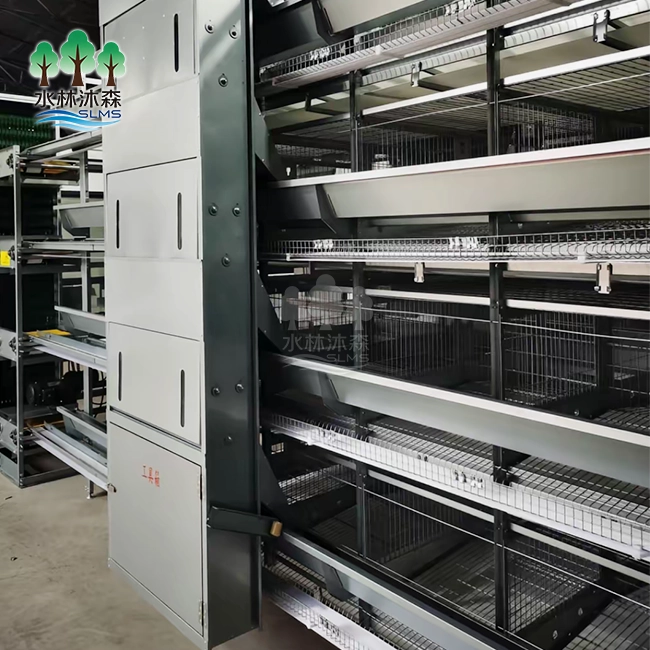
Our Poultry House Automatic Feeding Trolley directly addresses these operating challenges. As it travels along predetermined tracks, the automated device simultaneously delivers precise feed amounts to each cage tier. This uniform distribution prevents hierarchy feeding, in which powerful birds monopolize food while weaker ones go hungry.
The trolley's robust construction allows it to withstand the corrosive conditions encountered in chicken barns. Hydrogen sulfide and ammonia fumes quickly erode standard steel equipment, whereas high-zinc galvanized materials resist these gasses. Your investment maintains structural integrity during its extended operating life.

Technical Specifications
| Parameter | Description |
|---|---|
| Application | Chicken coops, duck coops, and poultry farms |
| Cage Compatibility | 3-layer, 4-layer stackable systems |
| Frame Material | Hot-dip galvanized square and rectangular tubing |
| Sheet Material | High-zinc galvanized sheet |
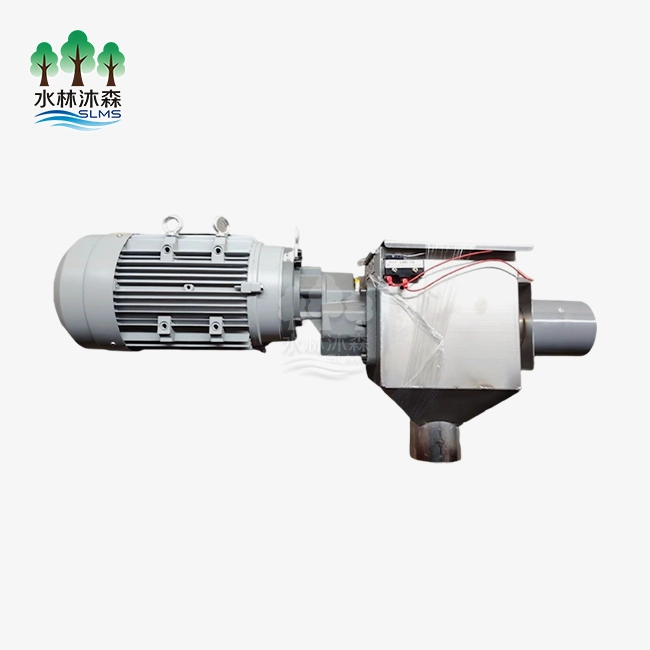
| Main Components | Walking system, control system, feeding system, emergency stop switch, overload protection, limit sensor |
| Service Life | 10-15 years |
| Customization | Available according to coop dimensions and layout |
| Warranty | 1-year free warranty |
| Technical Support | Installation videos and documentation |
| Installation Service | On-site installation available |
Core Advantages That Drive Operational Efficiency
Significant Labor Savings
Workers no longer have to manually distribute feed several times a day thanks to automated reciprocating feeding. By reducing staffing needs by up to 80%, your farm frees up employees to concentrate on facility management and health monitoring instead of tedious manual labor.
Precision Feed Control
Gram-level precision in ration administration is made possible by adjustable discharge mechanisms. For breeder businesses that need to follow specific feeding guidelines in order to maintain ideal body weight and reproductive rates, this accuracy is crucial. You have total control over each tier's daily meal intake.
Universal Compatibility
The trolley can be used with both A-type and H-type cage designs. The technology easily connects with your current infrastructure, regardless of whether your facility is home to breeders, laying hens, or broilers. Perfect alignment with your unique coop arrangement is ensured by customized proportions.
Enhanced Biosecurity
Minimizing human entry into production areas reduces pathogen transmission risks. The automated system creates a physical barrier between staff and birds, protecting your flocks from potential disease introduction while maintaining consistent feeding schedules.
Built-In Safety Systems
Emergency stop switches respond instantly to unexpected obstacles. Overload protection prevents motor damage when blockages occur. Limit sensors ensure the trolley operates within designated zones, preventing collisions and equipment damage.

Diverse Application Scenarios
High-Density Layer Operations
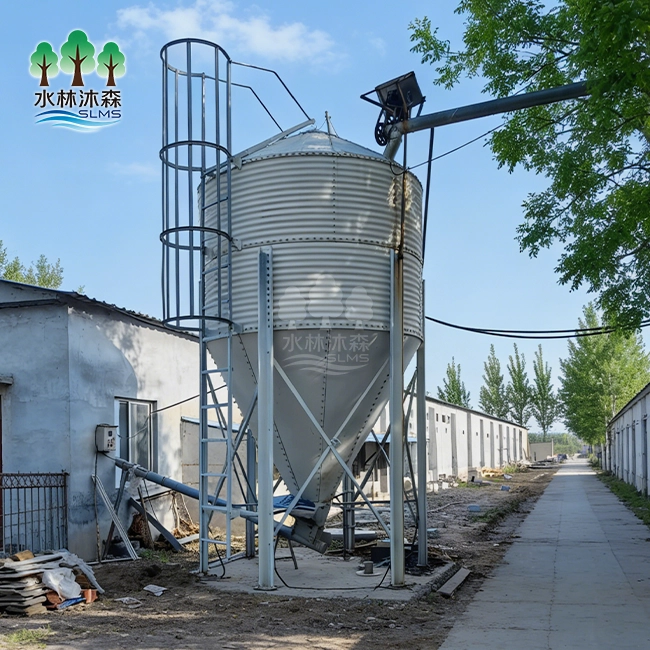
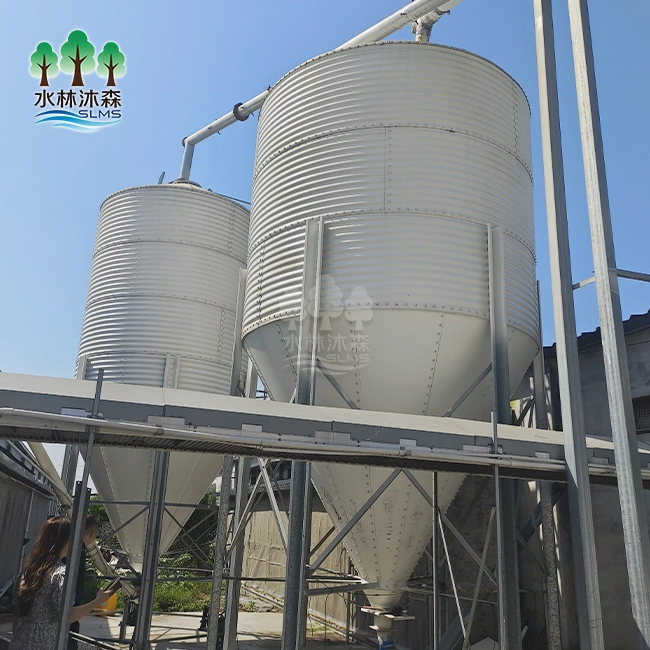
Multi-tier commercial farms housing tens of thousands of birds benefit from simultaneous feeding across all cage levels. The Poultry House Automatic Feeding Trolley integrates with vertical silo systems to maintain continuous ad libitum feeding, maximizing egg production without feed segregation issues.
Broiler Breeder Facilities
Restricted feeding protocols demand exact daily rations to prevent obesity that compromises fertility. The trolley's electronic metering delivers precise amounts simultaneously to all birds, reducing stress-induced aggression caused by competitive feeding behaviors.
Closed-House Environmental Systems
Facilities using evaporative cooling pads create high-humidity conditions exceeding 80%. Standard equipment fails rapidly through corrosion and electrical shorts. The trolley's galvanized construction and sealed components maintain reliable operation in these challenging environments.
Diverse Poultry Species
Beyond chickens, the system adapts to duck coops and other poultry operations. Adjustable feed volumes accommodate different nutritional requirements across species and growth stages.
Quality Control Standards for B2B Procurement
When sourcing automated feeding equipment, rigorous inspection protocols ensure long-term performance and return on investment.
Galvanization Verification
Magnetic thickness gauges confirm zinc coating meets 80-120 micron specifications. This measurement directly correlates with equipment lifespan in corrosive poultry house atmospheres.
Structural Load Testing
Trolleys undergo 48-hour operation cycles at 120% rated capacity. This stress testing reveals potential welding fatigue, chassis warping, or wheel alignment failures before deployment to your facility.
Distribution Uniformity Analysis
Feed output collection at multiple intervals calculates the Coefficient of Variation. Top-tier equipment maintains dispenser uniformity deviation below 2%, ensuring equal rations across all feeding points.
Thermal Performance Monitoring
Infrared imaging during continuous operation detects motor and gearbox overheating. This predictive analysis identifies components prone to premature failure under sustained workloads.

Frequently Asked Questions
Q: How does the feeding trolley prevent feed bridging with mash feed?
A: The hopper is designed with an inclined angle greater than 60°, which can effectively avoid feed arching and bridging. For scenarios using high-moisture powdered feed, you can select models equipped with local vibration motors to sustain steady feed discharge without manual auxiliary operations.
Q: Is it possible to separately adjust feeding volume for each tier?
A: High-end feeding systems are fitted with independent feeding adjusting structures for every cage tier. You can allocate different feed portions according to poultry ages on different layers, shut down feeding for vacant areas temporarily, or customize feed supply for flocks with special health needs.
Q: How do feeding trolleys cope with slight track misalignment?
A: Ordinary trolleys work best on completely straight rails. Premium versions adopt bogie wheel structures that can adapt to track deviation within ±5mm. If track displacement is severe due to foundation settlement, structural rectification for the rail foundation is necessary instead of altering the trolley itself.
Q: What service life can wheels achieve in heavy-dust poultry houses?
A: Nylon and polyurethane wheels can run normally for 3–5 years under conventional breeding environments. For farms filled with plenty of calcium powder dust, hardened steel wheels paired with double sealed bearings can avoid early wear and damage, only needing annual lubrication upkeep.
Contact Us
Ready to transform your feeding operations? We're here to help you every step of the way.
Reach out to discuss your specific requirements and learn how our poultry house automatic feeding trolley can benefit your farm. Our team will work with you to design the perfect solution.
Email: slms-equipment.com@slms-equipment.com
Learn about our latest products and discounts through SMS or email