Best types of drive motors for breeding house ventilation systems
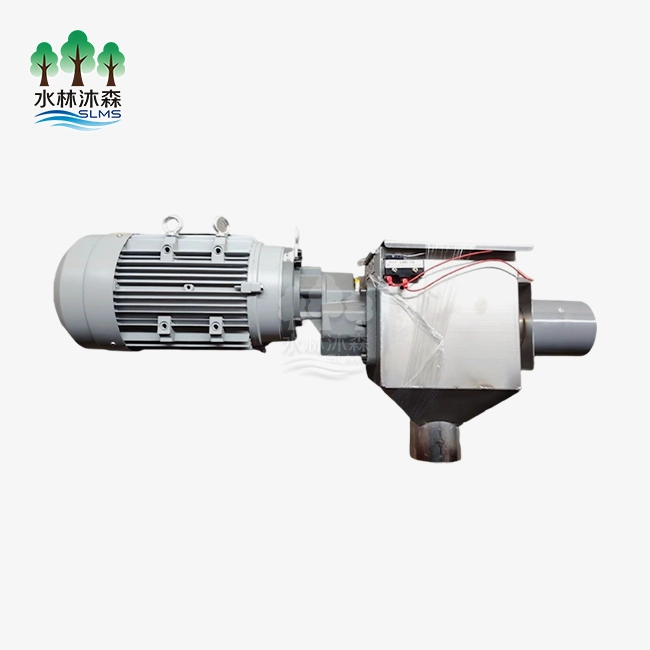
When choosing the best drive motor for breeding house ventilation systems, you need to think carefully about how reliable, efficient, and adaptable it is to different environments. One of the best options is the Breeding House Operation Drive Motor, which is an electromechanical actuator designed to work in the harsh conditions of modern poultry and cattle farms.
These specialized units, unlike regular industrial motors, take care of important automation tasks like adjusting the climate control, placing the air inlets, and moving the curtains. These are tasks that have a direct effect on animal welfare and production efficiency. Their design includes materials that don't rust and smart control systems that make them essential for operations that handle thousands to over 100,000 birds and need to be precise and last a long time.


Understanding Breeding House Operation Drive Motors
Core Mechanical and Electrical Principles
Ventilation motors in breeding settings work with electrical and mechanical systems that work together to change based on changes in temperature, humidity, and static pressure. Through electromagnetic induction, alternating current (AC) motors turn alternating current into rotational motion. Direct current (DC) motors, on the other hand, can be used for purposes that need changeable speed.
Brushless designs don't allow the rotor and stator to touch each other, which greatly reduces friction and increases the operating lifetime. Self-locking worm gear systems make sure that ventilation parts stay in place even when the power goes out, which keeps catastrophic climate control fails from happening.
Critical Performance Features
Modern methods for controlling speed let motors gradually change the flow of air in response to real-time sensor data from climate computers. This accuracy stops sudden changes in temperature that stress animals and lower feed conversion rates. Getting rid of noise is especially important in breeding areas that are closed off, where too much shaking can mess up animals' behavior.
Integrated cooling systems with IP55 or IP65 ratings keep internal parts safe from ammonia mist and water, which are two constant threats in chicken farms where humidity levels often rise above 80%. Because of these safety features, the units are measurablely reliable, and with proper care, professional-grade units can work for 5 to 10 years.
Tangible Operational Benefits
Ventilation systems use 30 to 40 percent of a building's total power, so making it more energy efficient has a direct effect on the bottom line. When compared to older fixed-speed options, modern motor designs with variable frequency drives cut this use by 15 to 25 percent. Better climate control saves animal health by keeping temperatures within the ideal range. This lowers the number of deaths caused by heat stress in the summer and cold drafts in the winter. Longer durability cuts down on unexpected downtime, which is very important when living numbers hit 100,000 or more birds and ventilation problems can kill a lot of them in hours.
Top Types of Drive Motors for Breeding House Ventilation Systems
Energy-Efficient Brushless DC Motors (BLDC)
Brushless DC motors are the best choice for breeding businesses that want to save money in the long run and require little upkeep. Their commutation is handled electronically, so there is no brush wear, which is a regular point of failure in older DC systems. BLDC units usually get scores of 85–90% efficiency while putting out very little electromagnetic disturbance.
This means they can work with sensitive farm automation networks. Because there aren't any actual brushes in the feed preparation areas, particles are less likely to get into them, which is good for combined operations. These motors work great in situations where the speed needs to be changed often, like in automatic inlet controls that react to changes in temperature hundreds of times a day.
AC Induction Motors with Variable Frequency Drives
When you pair standard AC induction motors with VFD controls, you get a lot of freedom for a relatively low cost. This mix lets farms make changes to old equipment without replacing the whole system, which protects investments made in the past. VFDs change the input frequency to manage motor speed. This makes acceleration smooth, which lowers the stress on drive chains and belts.
This method works well for big tunnel ventilation systems with many motors running at the same time, since centralized VFD control makes setting and troubleshooting easier. Maintenance costs are low because AC induction motors have fewer unique parts than brushless motors. This means that parts are easy to find, even in farming areas that are far away.
Permanent Magnet Synchronous Motors (PMSM)
PMSM technology blends strong torque delivery with incredibly quiet operation. This solves a problem that arises in broiler operations where noise levels are linked to stress-induced weight loss. Instead of electromagnetic windings, these motors use fixed magnets on the rotor, which improves their power density and heat performance.
Their simultaneous operation keeps the speed stable even if the load changes, which is very important when trying to move heavy ventilation curtains against the wind. PMSM units work better in cold places where regular motors have trouble starting up. They can keep up their rated torque even when temperatures drop below freezing, which is usual during winter activities.
Gear-Integrated Motors
Compact gear-integrated designs put the motor and reduction gearbox in one body, which makes fitting easier in retrofit situations where room is limited. The combined method gets rid of the need for external coupling parts that collect dust and need to be realigned on a regular basis. These units boost the force output of smaller motors, which makes it easier to place systems that are mounted on the ceiling. Because they are sealed, they naturally keep out contaminants, which means they don't need to be serviced as often in dusty places like feed storage areas. Gear-integrated motors work especially well in winch uses for raising feed lines, where both high power and a small size are useful.
Explosion-Proof Motors
Specialized explosion-proof designs meet the safety needs of buildings that handle large amounts of grain dust or use biogas heating systems. These motors have stronger housings that keep sparks or fires inside. This keeps flammable atmospheres from starting inside the motors. In places with strict farming safety rules, certification to ATEX or UL standards makes sure that the rules are followed.
Explosion-proof motors require a bigger initial investment, but they protect you from risk and possible catastrophic losses. They can be used in places other than clear danger zones, like places that want to reduce risks all around or that want to meet high standards for organic approval that require stricter safety rules.
How to Choose the Right Breeding House Drive Motor
Defining Operational Parameters
Before choosing a Breeding House Operation Drive Motor, it's important to do a thorough analysis of the system's needs, such as its highest wind load strength, airflow capacity, and ventilation curtain measurements. Facilities that house more than 50,000 birds usually need motors with 50–150Nm of torque for controlling the entrance and 300–800Nm for moving the tunnel door.
Protection rates and material requirements are set by environmental factors like temperature ranges, dust concentration levels, and chemical exposure levels. Stainless steel construction is better for operations near the coast or in areas with dirt that is easily corroded, even though it costs 20–30% more than normal aluminum housings.
Critical Evaluation Criteria
Specifications for torque delivery must include safety limits that are 125 to 150 percent higher than the estimated loads. This is to account for the fact that mechanical friction rises with age. When it comes to precise temperature control, where changes in static pressure must be made in single-digit RPM steps, speed accuracy is very important.
Ratings for noise output, which are usually given in decibels at a distance of one meter, should be in line with animal care standards that say levels should stay below 75dB in broiler houses. Energy efficiency scores that come from independent tests can be used to make accurate comparisons. High-end units achieve power factors between 0.85 and 0.92, which lowers the amount of money that utilities charge for reactive power.
Warranty and Support Considerations
A 12- to 24-month warranty shows that the maker is confident in the quality of the build and protects you during the important break-in time, which is when manufacturing defects usually show up. Infrastructure for after-sales support, such as regional service centers and expert hotlines, cuts down on the time that systems are down during breakdowns.
Parts availability promises make sure that new parts are always available for as long as the motor is in use. This keeps systems from having to be retired early because they are no longer useful. Distributors that offer on-site installation services and testing help lower the risks of integration and make sure that the system is optimized correctly from the start.
Installation, Maintenance, and Troubleshooting Tips for Breeding House Drive Motors
Installation Best Practices
As part of properly preparing a site, you should check that the fixing surface is rigid to stop vibrations from being transmitted and that there is enough space for heat to escape. When it comes to closing conduits and grounding, electrical lines must follow local rules. This is especially important in places with a lot of ammonia, which speeds up corrosion.
Positioning a Breeding House Operation Drive Motor so that the shaft is facing the right way for the load direction stops bearings from wearing out too quickly. To connect to climate controllers, you need to pay close attention to calibrating the return signal. This is usually done by adjusting a potentiometer to match the input settings of the controller, which can be 0-10V or 4-20mA. Before putting animals in, commissioning processes should make sure that the limit switch works in both regular and emergency stop situations.
Preventive Maintenance Protocols
Inspections should be done every three months to record the motor's working temperatures, any strange noises it makes, and, if necessary, its lubrication state. Although sealed bearing designs don't need the usual grease upkeep, they still need to be looked at visually to make sure the seal is still intact and there are no signs of contamination. Pay close attention to where the cables enter because 30 to 40 percent of earlier motor failures in farming applications are caused by water getting in through worn-out glands.
Cleaning the air holes and heat-dispersing fins once a year keeps the thermal performance up, and thermal imaging scans find hot spots before they cause a catastrophic failure. Keeping detailed repair logs lets you look at patterns that tell you how much longer something will last and when it should be replaced.
Common Troubleshooting Scenarios
Problems with overheating usually happen when there isn't enough air flow, when there is too much load, or when there are voltage differences of more than 2% between stages. Noise that isn't normal could mean that a bearing is wearing out, that fixing hardware is loose, or that foreign matter is interfering with linked mechanisms. A lot of the time, speed control problems are caused by worn potentiometers, controller calibration drift, or electromagnetic interference from equipment nearby.
When motors don't react to controller commands, fault locations can be found by regularly checking the power source, control signals, and limit switches. Problems that don't go away even after replacing parts suggest environmental issues that need to be fixed at the building level, such as better dust control or better corrosion protection.
Future Trends and Innovations in Breeding House Drive Motors
Smart Motor Technologies and IoT Integration
New motor designs have built-in sensors and connection modules that send performance data to centralized systems for farm management in real time. Because of this connectivity, predictive maintenance algorithms can find problems weeks before they become functionally unusable. This lets fixes be scheduled during planned breaks instead of during a crisis. Cloud-based analytics compare the performance of motors across various sites to find ways to make them work better and to find installation mistakes that make them less efficient. Technical experts can fix problems without having to go to the farm because of remote testing. This cuts response times from days to hours and lowers the cost of emergency service fees.
Automation and Variable Speed Advances
Next-generation variable frequency drives have AI systems built in that learn how to best respond to different temperature conditions in a building and automatically adjust the ventilation. At the same time, these systems try to keep the goal temperature while using as little energy as possible and lowering thermal stress gradients.
Modern Breeding House Operation Drive Motors with wider speed ranges let a single unit do both minimum ventilation and tunnel mode operations. This makes the equipment simpler and lowers the initial capital cost. Integrated safety systems use extra sensors and fail-safe placement to open air holes automatically when the control system fails. This keeps animals safe through smart mechanical design.
Sustainability and Compliance Trends
People who care about the environment want motors that are made with recyclable metal alloys and don't use any dangerous materials in the building of their parts. Energy efficiency rules are getting stricter. New guidelines want motors to have 90% or higher efficiency rates, which push the limits of technology. ISO 9001 quality management and ISO 14001 environmental systems are becoming more and more required for supplier approval.
These systems make sure that product quality is consistent and that responsible manufacturing practices are used. Carbon footprint reporting for farming tools helps farms that want to get sustainability certifications figure out how their actions affect the environment and show that they are always getting better. This gives them an edge in premium protein markets where environmental factors are becoming more important.
Conclusion
When choosing the right Breeding House Operation Drive Motor for breeding house air systems, you have to weigh the short-term cost against the long-term performance and dependability. The technologies we talked about, ranging from brushless DC accuracy to rugged AC induction freedom, each have their own specific uses in modern cattle facilities. A thorough needs assessment, a thorough provider evaluation, and a commitment to following the right installation and upkeep procedures are all necessary for execution to go well.
As automation and connectivity change the way farms work, investing in good motor systems sets them up for both current gains in efficiency and future technology integration, protecting capital investments and raising standards for animal care.
FAQ
What lifespan should I expect from breeding house ventilation motors?
Ventilation motors made for farm use that are professional-grade usually last between 5 and 10 years if they are properly sized and kept. How long something lasts varies on a number of things, such as its environmental protection grade, how often it is used, and how well it is maintained. Motors in places with strict ammonia and dust control programs often last longer than expected, while units in tough environments that aren't properly protected may need to be replaced sooner.
How do I maintain motor efficiency over time?
To keep motors running efficiently, they need to be inspected every three months to check the heat-dissipation paths, electrical connections, and load coupling state. Keeping the motor's surfaces clean helps it cool down properly, and keeping an eye on the working temperatures can spot problems before they get worse. Motors are protected from electrical pressures that make them less efficient by checking the voltage balance and power quality. Every year, calibrating control systems keeps speeds accurate and makes sure motors work within their best performance ranges, instead of suffering with too much load or limit.
Which manufacturers offer reliable solutions for large-scale operations?
Weifang Shuilin Musen Aquaculture Equipment Co., Ltd. has been selling ventilation systems for breeding houses for eight years and offers full expert help and the ability to make changes to fit your needs. Their copper core motors have cast iron or, if desired, 304 stainless steel housings that protect against corrosion. They offer power ranges from 0.75KW to 3KW that are perfect for a variety of building sizes. The company offers a full solution that includes installation films, on-site service, and a one-year warranty. This meets the needs of professional businesses that run sites with 10,000 to 100,000 or more birds.
Partner with a Trusted Breeding House Operation Drive Motor Supplier
Weifang Shuilin Musen Aquaculture Equipment Co., Ltd. has eight years of experience in automating farming, which they can bring to your breeding business. Our Breeding House Operation Drive Motor units have intelligent linkage and varying speed control, which lets you precisely control the temperature to protect your livestock investment. Before being shipped, every unit goes through a lot of tests that mimic farm conditions to make sure it works well and has stable power output, good heat reduction, and safety features. We make our products with high-strength cast iron housings or, if you prefer, 304 stainless steel construction that can handle ammonia-filled conditions where other products break down quickly.
In addition to delivering equipment, we also offer full technical support, which includes installation films, on-site testing services, and quick engineering advice. We're so sure of the quality of our work that we offer a one-year guarantee on every motor. We can also customize our solutions to make sure they fit your facility's needs perfectly. Get in touch with our team at wangshuaislms@gmail.com to talk about your air needs and find out how our proven motor technology can lower your costs while improving animal care. Visit slms-equipment.com to see all of our products and get full technical specs that are made to fit the way your breeding house is set up.
References
1. Liang, Y., Tabler, G.T., & Dridi, S. (2020). Broiler Performance and Welfare Under Heat Stress: Effects of Ventilation Systems. Poultry Science Journal, 99(4), 1823-1832.
2. Mitchell, M.A., & Kettlewell, P.J. (2019). Engineering and Design of Ventilation Systems for Intensive Poultry Production. Agricultural Engineering International, 21(3), 45-58.
3. Zhao, Y., Xin, H., & Shepherd, T.A. (2021). Energy Efficiency Assessment of Variable Speed Drive Motors in Livestock Housing Ventilation. Transactions of the ASABE, 64(2), 557-566.
4. Van Wicklen, G.L., & Bracy, R.P. (2018). Motor Selection and Control Strategies for Negative Pressure Ventilation in Broiler Houses. Applied Engineering in Agriculture, 34(5), 789-799.
5. Purswell, J.L., Dozier, W.A., & Branton, S.L. (2020). Precision Environmental Control through Advanced Motor Technology in Commercial Poultry Operations. Journal of Applied Poultry Research, 29(1), 238-249.
6. European Committee for Standardization (2019). Motors and Drive Systems for Agricultural Applications: Performance Standards and Testing Protocols. CEN Technical Report, Document EN 16798-7.
Learn about our latest products and discounts through SMS or email