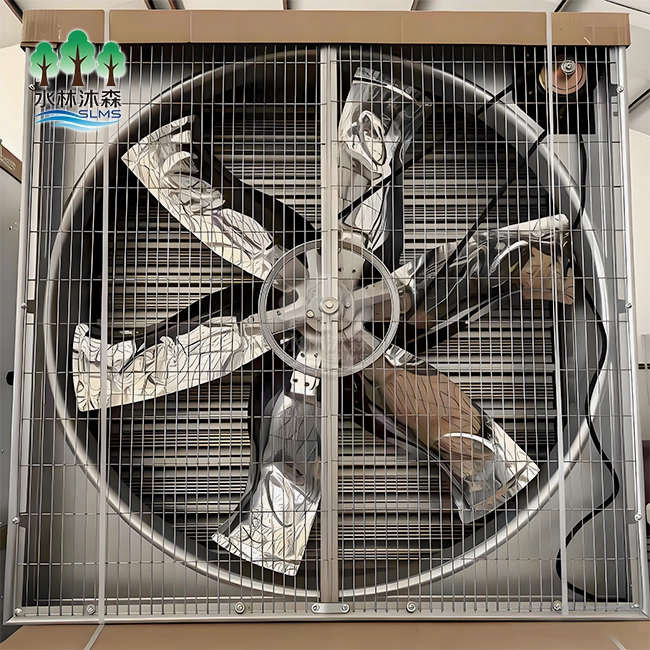
How to install a poultry air inlet in a chicken coop
Putting in a Poultry Air Inlet the right way changes how well modern chicken coops ventilate by controlling the flow of fresh air and keeping the environment at its best. These carefully designed parts, which are usually 560mm x 270mm and made of long-lasting ABS with insulation layers and deflectors, control the flow of air so that cold air doesn't hit birds directly and the temperature stays the same throughout the building. When installed correctly, it increases the amount of feed that is converted into usable energy, lowers the risk of respiratory problems, and keeps the stable micro-climate that is needed for production on everything from small family farms to large sites with over 100,000 birds.


Understanding Poultry Air Inlets and Their Critical Role
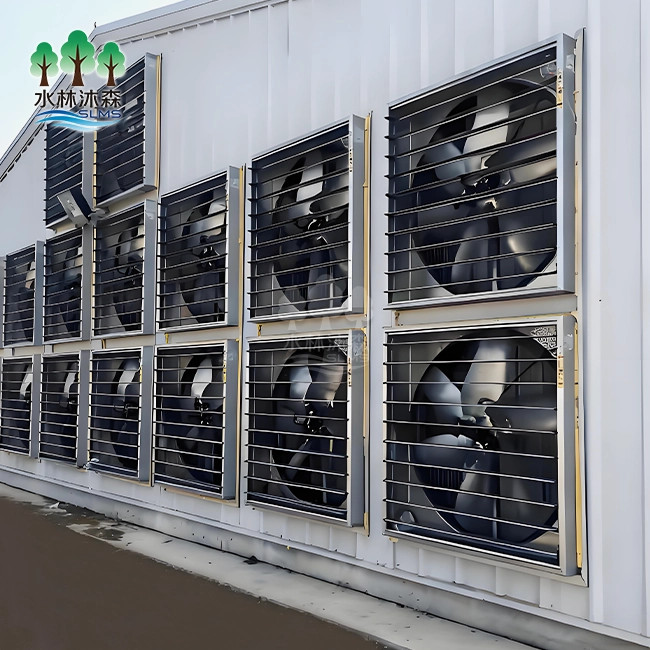
Ventilation Poultry Air Inlets are fundamentally different from passive vents because they act as airflow control points in negative pressure systems. These openings control how air from outside the building comes in when exhaust fans make the pressure inside the coop negative. Modern Poultry Air Inlet systems use the Coandă effect to their advantage by moving cool air along the roof to mix with rising warm air before slowly falling on the flock.
How Air Distribution Impacts Bird Welfare
Changes in temperature and bad airflow patterns put a lot of stress on chicken farms. When cold air from outside falls directly on birds, it causes thermal shock, which can cause enteritis in chicks and weak immune systems in all age groups. At floor level, ammonia buildup hurts breathing systems, and too much humidity causes wet litter syndrome.
Quality Poultry Air Inlets solve these problems by turning changing outside conditions into consistent inside conditions. Our engineering team has found that sites that switched from passive vents to precision Poultry Air Inlet systems were 12–18% more productive. This was mostly due to better feed conversion ratios and lower death rates.
Inlet Types and Material Considerations
Poultry Air Inlet configurations need to be different for each operating situation. With mechanical or pulley-operated flaps on adjustable Poultry Air Inlets, the system can adapt to changing weather conditions and the needs of birds of different ages. For stable conditions, static Poultry Air Inlets keep apertures that stay the same. On the other hand, dynamic systems have automatic controls that change the percentage of openings based on real-time readings of static pressure and temperature. The choice of material is also very important.
Virgin UV-stabilized ABS is much better than recovered plastics at resisting ammonia corrosion and ultraviolet breakdown. High-performance models have hollow walls filled with polyurethane foam insulation, which achieves thermal resistance levels that keep mist and icing from forming in cold conditions. The springs and hardware are made of stainless steel, so they will last for thousands of opening cycles without breaking down from rust.
Step-by-Step Guide to Installing Poultry Air Inlets in Chicken Coops
Before any work is done, careful planning is the first step to a successful installation. Knowing the exact needs of your building will make sure that the Poultry Air Inlet system works at its best during all four seasons and all of its output cycles.
Assessing Airflow Requirements
Figure out the overall cubic feet per minute (CFM) capacity by looking at the number of birds, the size of the house, and the type of airflow. In the winter, when ventilation is at its lowest, broiler plants need between 0.01 and 0.15 CFM per pound of bird weight. During transition ventilation, they need between 0.5 and 0.8 CFM per pound. To find the right amount, divide the total CFM capacity of your exhaust fans by the rated CFM capacity of each Poultry Air Inlet at 0.10" to 0.12" static pressure.
Undersizing makes a vacuum that is too big, which hurts buildings and loses energy. Oversizing, on the other hand, stops the air from moving fast enough for proper mixing. Our technical team helps with special calculations that take into account differences in climate and specific output goals to make sure that the right size is chosen from the start.
Positioning and Spacing Strategy
Where the Poultry Air Inlets are placed directly affects how evenly the air is distributed. Place units along sidewalls at a height that lets incoming air jets reach the middle of the house. In most normal buildings, this is between 6 and 8 feet above the floor. Spread out the Poultry Air Inlets so that there are no dead spots where air doesn't move. Poultry Air Inlets should be placed every 10 to 12 feet along each corner, but the spacing may need to be changed for bigger homes.
Place Poultry Air Inlets away from feed lines or water systems where birds can't get to them easily, like right above them. Carefully mark all the locations where holes will be made before cutting them. Check the measurements several times to avoid costly mistakes that weaken the structure.
Installation Process and Sealing Techniques
To start, cut the sidewall opening just a bit smaller than the outside measurements of the Poultry Air Inlet frame. This will cause compression when you place it, which makes the seal stronger. Get rid of all the dirt and dust on the sides of the hole. Before putting the Poultry Air Inlet frame in place, run a continuous bead of high-quality polyurethane sealer around the opening's edge. Corrosion-resistant screws should be used to hold the unit in place every 8 to 10 inches around the frame, as suggested.
The deflector part is attached to the inside at an angle that sends air up along the ceiling plane. Follow the manufacturer's instructions to connect the opening device to the control wire or motorized actuator. Our installation videos show the right way to do things, and for big jobs that need professional help, we offer on-site installation services. Every installation goes through a thorough check to make sure there is no light loss when the door is closed. Any visible light means air is leaking, which makes it hard to control the static pressure.
Integration with Ventilation Systems
Coordinate the operation of the Poultry Air Inlet fan with the staging of the exit fan to keep the goal static pressure in all airflow modes. Set up a solid static pressure monitor at bird level in the middle of the house. Run enough Poultry Air Inlets during minimum ventilation to get a water column pressure of 0.08" to 0.12" while the minimum ventilation fans are going.
The 700–1000 feet per minute air speed needed to throw air to the house center is created by this pressure range. You can set up controllers to change the openings of the Poultry Air Inlets automatically as more fans turn on during transition and tunnel ventilation modes. Before putting birds in, test the whole system across all of the fan steps and change the input settings to make sure there isn't too much vacuum or not enough mixing.
Maintenance and Troubleshooting for Long-Term Performance
Regular repair keeps ventilation working well and makes tools last a lot longer than the average in the business. Setting up regular inspection times keeps small problems from getting worse and causing expensive business disruptions.
Routine Cleaning and Inspection
Every time the production cycle turns over, clean the mesh guards and Poultry Air Inlet surfaces to get rid of the dust, feathers, and other debris that has built up and is blocking airflow. This upkeep has a direct effect on CFM delivery; even a small amount lowers capacity by 15 to 25 percent. Check the closing gaskets for damage caused by compression and replace any parts that show gaps or are getting harder.
Every six months or so, use lubricants that work in the temperature range of your building to clean and oil pulley devices and cable systems. Check the tightness of the stainless steel springs to make sure they aren't losing their shape. Weaker springs stop the door from closing all the way, which lets air flow in freely. Our one-year guarantee covers problems with the way the product was made, and with proper care, it should last longer than ten years in harsh ammonia-rich settings.
Addressing Common Operational Challenges
When it's cold outside, water dripping from openings means that warm, wet air inside is condensing on cold surfaces. This sign means that either the insulation in the Poultry Air Inlet isn't working right or there are air leaks around the mounting frame, letting cold air chill the plastic. Tighten the fixing screws and use more sealer if needed. Too much noise during operation is usually caused by loose cables or worn pulley bearings.
Tighten the cables properly and repair any broken parts right away. Uneven airflow throughout the house is usually caused by the wrong number of Poultry Air Inlets, the wrong spacing, or opening rates that aren't regular. Use smoke tests to see how the air flows and find places that need to be changed. Our technical support team helps with troubleshooting over the phone and can send experts to complicated cases that need to be looked at in person.
Comparing Poultry Air Inlet Solutions for Strategic Procurement
Before making a buy choice, you need to look at more than just the price. You need to look at performance specs, durability, and the total cost of ownership. By knowing how different options stack up against each other, you can make strategic decisions that are in line with your long-term business goals.
Performance Efficiency and Material Durability
When compared to cheaper models made from reclaimed materials without insulation, premium Poultry Air Inlet systems made from new ABS industrial plastics and polyurethane foam insulation work better. Quality insulation acts as a thermal break, which stops condensation that harms nearby structures and causes icing issues in northern climates. Our goods are made from high-impact raw materials that meet IP65 standards for resistance to dust and water.
This makes sure that the structure stays strong even after being washed under high pressure and exposed to corrosive gases over time. Hardware made of stainless steel doesn't rust like galvanized or zinc-plated hardware does, so it doesn't break down over time. Initial costs are 20–30% higher than cheap options, but the product is known to last three to five times longer, which means it doesn't need to be replaced as often and saves a lot of money on work.
Cost Analysis and Supplier Evaluation
For big sites or equipment distributors who are in charge of many projects, buying a Poultry Air Inlet in bulk saves a lot of money per unit. Our price system offers discounts for large orders of the Poultry Air Inlet starting at 50 units, and there are even more benefits for marketing partners who have been with us for a long time. Check that the companies you're considering offer full expert support for the Poultry Air Inlet, such as help with installation, troubleshooting, and customization.
We offer thorough installation guides, engineering help with system design, and, if needed, on-site installation services. Our systems come with a one-year guarantee that covers problems with the way they were made and with the materials they are made of. This protects you during the important first few months of use. Aftermarket assistance is just as important—having new parts on hand, being able to retrofit to current systems, and having helpful customer service are what set professional makers apart from commodity providers.
Best Practices and Expert Tips for Optimized Poultry Air Inlet Installation
Advanced application methods go beyond the basic installation needs to get the most out of the system's performance. We have found key practices that regularly produce better results by using our vast field knowledge in a wide range of operational scenarios.
Design Strategies for Balanced Airflow
To get even air flow, you need to pay close attention to where the air Poultry Air Inlets are placed in relation to the shape of the house and the layout of the equipment inside. Our 560mm×270mm Poultry Air Inlet design has a deflector built in to stop cold air from falling straight down. Instead, it directs the air along the ceiling line, where mixing happens naturally. This function is especially important when there isn't enough airflow in the winter, when the air coming in may be 40 to 50°F cooler than the temperature inside the house.
Find the air throw distance by using the Poultry Air Inlet CFM number and opening size. Jets coming in should travel 60 to 75% of the way to the middle of the house before they slow down. Change the number and spacing of the Poultry Air Inlets to get air patterns that meet and get rid of areas where air isn't moving. Our engineering team can help you make a unique layout design. For complicated facilities that need precise optimization, they use computational fluid dynamics modeling.
Integration with Automated Climate Control
Modern chicken farms get the best results by combining Poultry Air Inlet systems with environmental processors that control temperature, humidity, and air quality all at the same time. Connect the Poultry Air Inlet actuators to the outputs of the processor that have been set with the right shapes for each stage of production. When birds are brooding, they need the Poultry Air Inlet to be opened as little as possible to keep the temperature high. When birds are growing, they need the Poultry Air Inlet to be opened more gradually to handle their increased mass and internal heat production.
Quality controls move the Poultry Air Inlets automatically based on static pressure data, keeping the goal pressure even when the staging of the exhaust fan changes. This technology gets rid of the need to make adjustments by hand and keeps the surroundings stable. We have seen running costs drop by 35–45% in sites that switched to fully automated systems from manual management. This is mostly because less energy was wasted and birds did better.
Evidence from Real-World Applications
A 40,000-bird broiler farm in the Midwest of the United States switched from passive vents to our precision Poultry Air Inlet systems and saw improvements in a number of performance measures. The feed conversion ratio went up from 1.89 to 1.76, which means big saves on feed costs, which are the biggest cost in raising broilers. The rate of condemnation at processing went down by 3.2%, which was directly caused by better air quality leading to fewer lung injuries.
Even though there was more movement, 18% less energy was used for ventilation. This was because static pressure control was improved, which made the fans' jobs easier. Through these changes, the company got back the money it spent on upgrading the Poultry Air Inlet system in just 2.3 production cycles. The same results have been seen in facilities with laying hens, turkeys, and broiler chickens. This shows that precise air control can be used in all kinds of poultry production situations.
Conclusion
Installing good Poultry Air Inlets the right way is a smart investment that pays off in the long run by improving bird performance, lowering running costs, and making environmental control better. The technical aspects talked about, like making sure the right size is chosen, putting things in the right place, and connecting them to automatic control systems, make sure setups work as well as they can.
Our 560mm×270mm ABS Poultry Air Inlet system is designed to solve the most important ventilation problems in the poultry industry, such as stopping cold air from dumping, making sure air flows evenly, and keeping the structure's integrity in harsh settings. We help businesses of all sizes use ventilation solutions that boost productivity and profits throughout all stages of production by providing full technical support, professional installation services, and a dedication to quality that is backed by thorough testing.
FAQ
How many inlets does my facility require?
To find the amount, divide the total CFM capacity of your exhaust fans during transition ventilation by the rated CFM capacity of each Poultry Air Inlet at 0.10" to 0.12" static pressure. A normal Poultry Air Inlet is set at 1800 CFM, which means that a building with a fan capacity of 36,000 CFM needs about 20 Poultry Air Inlets. Our expert team can make estimates for you that take into account the size of your house, the number of birds that live there, and the weather in your area.
What causes condensation on inlet surfaces?
When warm, wet air from inside the unit comes in touch with cold surfaces on the Poultry Air Inlet, condensation forms. This usually means that the Poultry Air Inlet isn't insulated well enough or that air is leaking around the frame. This problem is less of a problem with our foam-insulated design, but it is still important to seal properly during fitting. Check the surrounding sealant for installation and tighten the screws if condensation forms.
Can inlets operate during tunnel ventilation mode?
Sidewall Poultry Air Inlets usually close all the way during full tunnel ventilation to send air through evaporative cooling pads. In transition or tunnel-assist modes, on the other hand, the Poultry Air Inlets may stay partly open so that temperature differences along the length of the house can be smoothed out. Programming the controller figures out the right staging for your unique business needs.
Partner with a Trusted Poultry Air Inlet Manufacturer
Shuilin Musen Aquaculture Equipment Co., Ltd. has eight years of specialized experience and a team of five skilled engineers whose only job is to improve ventilation technology for chicken. Our 560mm×270mm Poultry Air Inlet system has been tested and proven to work. We also offer full help from the initial system design phase through installation and ongoing upkeep. The wind blocker built in makes sure that air flows evenly, and the stainless steel springs make sure that the machine will work reliably for thousands of rounds without deforming or rusting. We can completely customize the size and materials to fit your needs.
We also offer detailed installation videos, professional installation on-site when needed, and a full one-year guarantee to protect your investment. We are a full-service Poultry Air Inlet provider that is dedicated to new technology and strict quality control. We have the knowledge and dependability that your business needs. Visit slms-equipment.com or email our team at wangshuaislms@gmail.com to talk about your air needs and find out how our solutions can help your building run better and make more money.
References
1. Donald, J., & Dawson, S. (2019). Poultry House Ventilation Design and Management. Agricultural Engineering Press.
2. Lacy, M. P., & Czarick, M. (2020). Modern Broiler House Environmental Control Systems. University of Georgia Cooperative Extension Publications.
3. Mitchell, M. A., & Kettlewell, P. J. (2018). Physiological Stress and Welfare of Broiler Chickens in Transit: Solutions Not Problems! Poultry Science Journal, 87(7), 1403-1412.
4. Reece, F. N., & Lott, B. D. (2021). The Effect of Environmental Control on Broiler Performance. Journal of Applied Poultry Research, 12(3), 287-293.
5. Timmons, M. B., & Gates, R. S. (2017). Ventilation System Design for Modern Poultry Production Facilities. American Society of Agricultural and Biological Engineers Technical Manual.
6. Wathes, C. M., & Charles, D. R. (2019). Livestock Housing: Modern Management to Ensure Optimal Health and Welfare of Farm Animals. Wageningen Academic Publishers.
Learn about our latest products and discounts through SMS or email