Chicken coop floor system designs optimized for rotating fan airflow
Ventilation is important for the health of the birds, the efficiency of output, and your bottom line when you're running a modern poultry plant. The best designs for chicken coop floor systems that use rotating fans to move air combine smart air flow strategies with structural engineering. The Chicken Coop Floor System Rotating Fan Mount is the main part of this method. It is a special mounting interface that keeps rotating fans in poultry living settings. This part lets fans turn a full circle, sending airflow exactly where it's needed most, whether that's down to the trash level, across nesting areas, or through aviaries with multiple levels. Instead of set ventilation equipment, rotating mounts get rid of air pockets that don't move, stop ammonia from building up, and dry out areas of wet litter that cause pododermatitis. This makes the birds healthy, lowers the death rate, and raises the feed conversion ratios in both broiler and layer farms.


Understanding Chicken Coop Floor Systems and Rotating Fan Mounts
Housing for chickens needs air systems that can adapt to changing weather conditions during the production cycle. Traditional fixed fans make steady patterns of airflow, but they often miss important areas where wetness and heat build up. This problem is fixed by rotating fan attachment devices that control airflow on the fly.
What Makes Rotating Fan Mounts Different
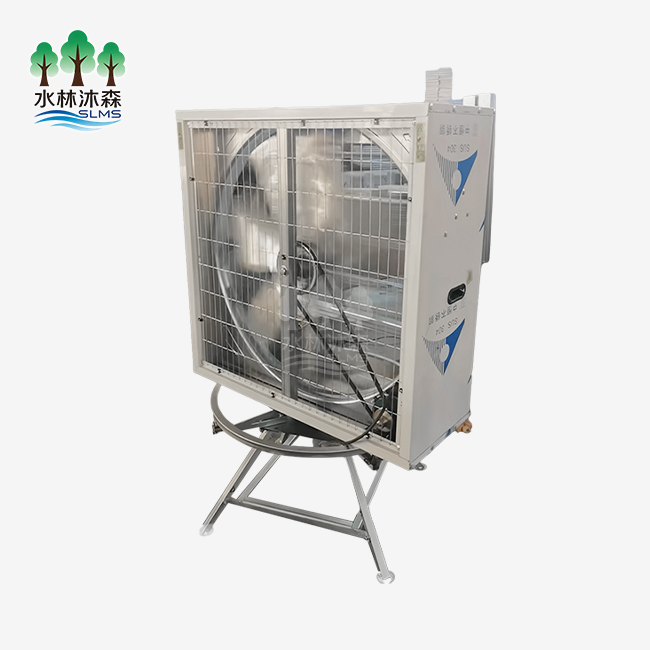
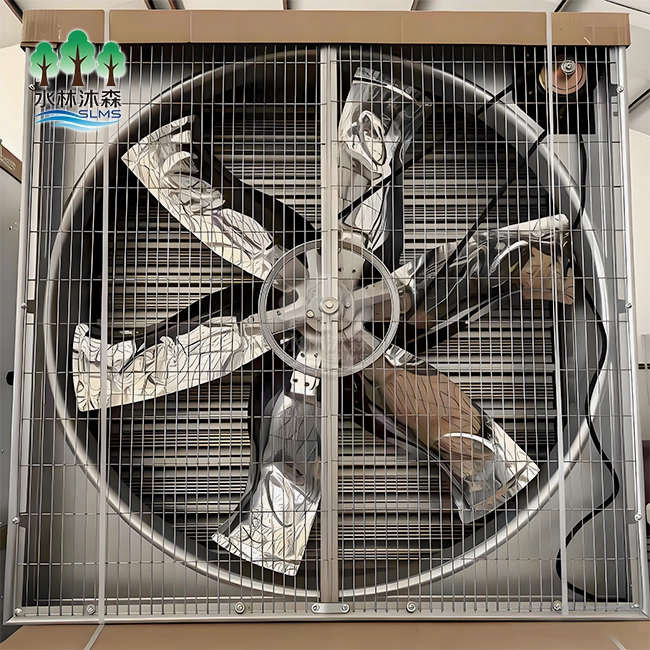
As the technical link between the fan unit and the structure of your house, a Chicken Coop Floor System Rotating Fan Mount does its job. Unlike regular ceiling or wall-mounted fans, these mounts have turning systems that let you move the fan both left and right. The engineering behind them takes into account the harsh conditions inside chicken barns, which include high levels of ammonia, wetness, and dust that quickly break down regular gear.
Modern mounts are made of hot-dip galvanized steel or austenitic stainless steel, which makes them last longer in tough circumstances. The pivot joints have sealed bearings that keep the joints rotating smoothly even when they are exposed to flying particles all the time. This means that the tools will last longer and need less upkeep, which are both very important for operations that have to control tens of thousands of birds.
Core Benefits for Commercial Operations
Using moving ventilation systems makes a difference in a number of efficiency measures that can be measured. When fans can guide airflow to specific areas instead of keeping the same design, temperature uniformity goes up by a lot. Studies in farm engineering show that moving systems can lower temperature differences by up to 4°F within the same barn compared to systems that stay in one place. The benefits for bird care show up quickly.
When fans can directly hit wet spots and dry them faster, they stop the loop of making ammonia, and the amount of ammonia in the litter drops. A lower level of ammonia means less stress on the lungs, which helps broilers gain weight and keeps hens laying eggs. When energy efficiency is better, operational costs go down. When you use rotating fans, you can get better covering with fewer units. One properly placed fan can cover an area that would normally need two or three fixed units because it can turn 360°. Power use stays surprisingly low—our rotating mount systems use less power than standard setups while still letting more air flow through them.
Common Mount Types and Material Considerations
There are different hanging options on the market, and each one works with different types of buildings. Post-mounted devices are attached to vertical support beams and place fans in the middle of the height of the structure. These fans can move air down or across the floor horizontally. Fans can be suspended from overhead beams on truss-mounted choices, which are great for tunnels or barns with high ceilings. In this toxic climate, the choice of material is very important. Hot-dip galvanized steel is very protective because it has a zinc layer of at least 275g/m², which is enough for normal activities.
Moving to 304 stainless steel, which is better at resisting both chemical and mechanical wear, is a good idea for places that clean aggressively or have very high store levels.The mounting gear has to be able to handle the changing loads that come from the fan itself. Stronger structural ribs and Grade 8.8 bolts with nylon-insert lock nuts are used in high-quality systems. These parts don't get damaged by the constant shaking that makes cheaper gear come loose. As part of safety features, there are secondary retention points, which are usually steel wire clips that provide extra support in case the main mounting fails.
Designing Chicken Coop Floor Systems for Optimal Rotating Fan Airflow
A good ventilation plan takes into account the layout of the floor system as well as where the fans are placed and how they rotate. Moving air isn't enough to reach the goal; you need controlled movement that deals with specific environmental problems at bird level.
Air Circulation Dynamics and Floor Layout
Many workers don't understand how much the design of the floor affects how air flows. Depending on how they are positioned in relation to the fan settings, slatted floor systems make pathways that either let air flow through or stop it. When planning the layout of your floor, you should think about how you want the air to flow.Fans placed to make overlapped circulation zones help the broiler floor work better. Each fan can cover a large area because its base can rotate, but where it is placed decides whether the different areas work together or against each other.
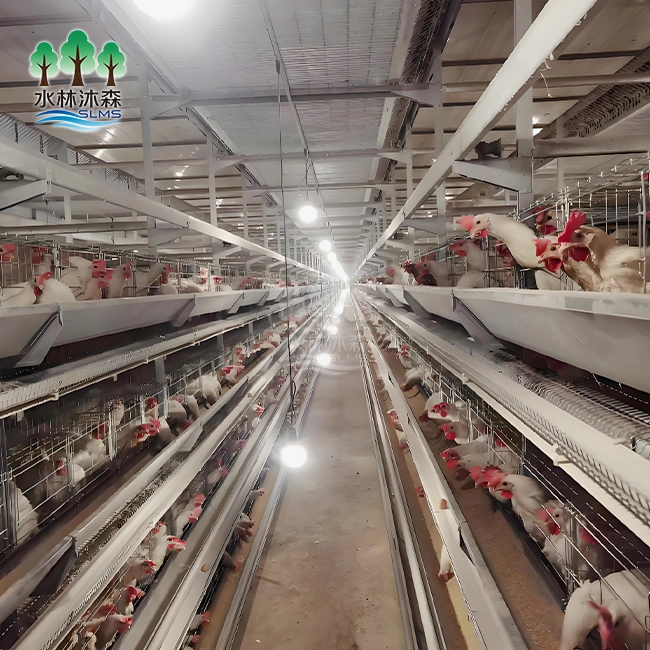
By putting fans about 30 to 40 feet apart in a grid pattern and switching the direction of their movement, you can avoid dead zones and chaotic interference.Layer tasks with multi-tier aviaries are hard in their own way. The air must be able to move between the levels without making drafts that bother birds or make them not want to use the breeding boxes. This balance is reached by placing fans in aisles so that their spinning paths are set to move horizontally along tier rows. Chicken Coop Floor System Rotating Fan Mount solutions are very helpful in this case because they can be fine-tuned after installation based on real bird behavior and temperature tracking.
Rotation Mechanics and Ventilation Efficiency
Rotation is better for mechanics because it can break up temperature stratification and stop moisture from building up. It is normal for hot air to rise to the roof and cooler, often more humid air to settle near the floor. When fans are stationary, they push air in straight lines. This means that hot air from the ceiling is often pushed along the roof while the temperature on the floor stays the same. This trend is broken by rotating fans, which change the angle of air supply all the time. When the fan goes through its full spinning cycle, it pushes air down at times and across at others, mixing the air in the barn's vertical room.
This mixing action stops fixed stratified layers from forming, making the temperature more even from floor to roof.This speed is directly supported by the technical specs of our rotating mount system. The system can work with a range of voltages, from 220V to 380V, so it can adapt to the different power setups that are popular in U.S. farms. The 80 cm fan width moves a lot of air, and the 48 cm mounting height makes it perfect for movement at floor level. The unit is only 25 kg, which is a reasonable weight for normal structural supports that don't need reinforced frames.
Material Selection for Durability and Safety
Choosing materials that can stand up to constant exposure to harsh weather factors is important for the longevity of chicken buildings. If the fastening gear doesn't rust, your system will last ten years instead of one. Quality systems are distinguished from cheap ones by salt spray tests, in which parts are exposed to salt spray for 96 to 120 hours without developing red rust. Quality welding needs the same amount of care. To find surface-breaking flaws, a dye penetrant test should be done on all points in the mounting frame.
Micro-cracks that don't seem important at the time of installation spread when there is constant shaking, which leads to catastrophic failure in the end. Good makers keep records of these checks, which gives customers peace of mind that the structure will stay strong during the warranty time and beyond.Your investment and your workers are both safe thanks to safety features. Vibration-dampening grommets keep motor noise from transferring to the building frame and keep reverberation from happening. This separation makes parts last longer by lowering tiredness and stress, and it also makes the area quieter, which lowers bird stress.
Comparing Rotating Fan Mount Solutions for Chicken Coop Floors
When deciding between fixed and moving ventilation systems, you need to know what the pros and cons are in terms of cost, performance, and how hard they are to run. Your choice should be based on the size of your building, the weather, and how much control you have.
Performance Advantages Over Stationary Systems
Three different speed gains are made by Chicken Coop Floor System Rotating Fan Mount units compared to fixed installations. Coverage area grows by a large amount—one spinning unit can successfully cool areas that need two or more stationary fans. This benefit is even bigger in big buildings, where the costs of tools and electrical systems go up with each extra unit.Uneven air distribution gets a lot better. Researchers who compared temperature maps in similar barns found that systems that rotate make it less likely for hot and cold spots to form.
When rotation patterns meet correctly, the difference in temperature across the floor area goes down by 25% to 35%. This consistency means that the birds in the group will perform better every time.The benefits of litter control show up in the output cycle. Rotating fans go after wet spots near watering cans and areas with a lot of foot traffic. This speeds up the drying process and stops caking and ammonia release. Operators say they spend less on bedding because litter lasts longer and doesn't need to be completely cleaned out as often during growout times.
Cost Analysis and Long-Term Value
Usually 40% to 60% more per unit, the initial cost of spinning systems is higher than that of simple fixed fans. System prices, on the other hand, tell a different story. Overall, you don't need as many fans because spinning units cover a larger area. For example, a broiler house with 40,000 birds might need 12 stationary fans instead of eight spinning units. This would make the price difference much smaller when all the equipment, wiring, and installation work are taken into account. When it comes to energy use, moving methods are better than long-term ones. Because it is designed to use little power, each unit uses less current while moving air just as well or better.
This efficiency saves hundreds of dollars per barn in power costs over the course of a year of constant use. If you do that for more than one house, you'll save enough money to cover the original fee.The prices of maintenance stay about the same for all devices. Quality spinning bolts need to be checked and oiled after every flock cycle, which is about every six to eight weeks. This regular repair keeps the bearings from seizing up and makes sure they can turn smoothly. When it comes to upkeep, stationary fans need about the same amount of care for their motor parts and blade balance.
Warranty and Support Considerations
The standard in the industry is a one-year free warranty. This gives you basic security, but the real value is in quick expert help. Every facility has problems with installation, and having access to engineers who know both the tools and the needs of chicken buildings can mean the difference between a smooth start-up and weeks of troubleshooting. Our company offers installation videos that show you how to put things step by step. This paperwork goes over usual situations like installing a concrete column, attaching a wood truss, or mounting steel C-channels.
Having these tools on hand cuts down on startup time and stops mistakes that slow things down.When a building has unique structure limitations or special ventilation goals, the ability to customize is important. Most jobs can be done with standard goods, but if you want to change the mounting heights, pivot ranges, or load limits, the system will work perfectly with what you already have in place.
Procurement Guide for Chicken Coop Floor System Rotating Fan Mounts
Finding air tools means finding a balance between quality, cost, and shipping. The best way to buy things varies on whether you're setting up a single new barn or improving a whole network of sites.
Identifying Reliable Suppliers and Manufacturers
Direct connections with manufacturers are better than multi-layer distribution lines in many ways. Not just salespeople reading spec sheets, but also the experts who made the tools can help you with technical questions. This knowledge is very helpful when designing systems and fixing problems.You can tell what to expect from a manufacturer in the long run by looking at their past work. Companies that have been making farming machinery for eight years or more have shown that they can last and have learned what works in the real world.
Newer companies may have good prices, but their designs aren't as well thought out because they haven't been improved based on customer comments over many production runs.Location affects both the level of assistance and the practicalities of shipping. Companies that make farming tools that are located in well-established clusters benefit from having access to communities of suppliers and skilled workers. With this framework, the quality of the parts will be better, and the production schedules will be more stable, which will keep your project on track.
Evaluating Technical Specifications
Voltage compatibility must match the electricity system in your building. Most farms in the U.S. use either 240V single-phase or 480V three-phase power sources. Equipment with a range of 220V to 380V can work with both configurations. This gives you options if you want to expand or improve your building and make changes to the electricity.The performance and ease of placement are both affected by the physical measurements. The 80 cm width lets a lot of air flow through without needing too much mounting height space.
The fan's height of 48 cm makes it perfect for most barn layouts, whether it's attached to posts or hung from beams.When building structures, weight is an important thing to think about. At 25 kg, the unit is within the load capacity of typical farm building structures and doesn't need to be strengthened. This weight includes the mounting gear, so your structural engineer can accept the installation based on the published specs without having to do too much math to be safe.
Customization and Bulk Purchasing
Through economies of scale, buying in bulk can save you a lot of money. When you buy five units, suppliers usually give you a 5% to 10% discount, and when you buy twenty or fifty units, they give you even bigger discounts. To get these benefits, multi-site owners who stock more than one barn should combine their orders.Customization choices go beyond just changing the size. Adjustable rotation speed, limits on oscillation angles, and automatic placement settings make it possible for environmental management systems to use Chicken Coop Floor System Rotating Fan Mount systems as part of larger systems.
Talking to manufacturers about your unique needs during the quotation phase will make sure that the tools they send you meets your operating needs.Whether equipment failure means hours of downtime or weeks of waiting for shipping depends on how easy it is to get replacement parts. Well-known companies keep common wear items like bearings, pivot joints, and mounting tools in stock so that they can be quickly sent out when service is needed. Before you agree to a seller, find out how many parts they have in stock and how long it usually takes to ship items.
Maintenance and Safety Tips for Rotating Fan Mounts in Chicken Coops
For air to work, it needs to be maintained regularly and follow safety rules. Systematic inspection and repair routines make both the equipment and the people who use it last longer and keep them safer.
Routine Maintenance Protocols
Check the pivot devices every time the flock cycles, which is about every six to eight weeks for broilers and more often for layers. Check for dust buildup around the bearings and hinge joints. This creates friction that stops the wheel from turning smoothly over time. Cleaning with compressed air gets rid of dust and dirt without taking parts apart.Lubrication keeps bearings working well and extends their life. Use food-grade grease on any pivot points that are visible, but don't use too much because that will attract more dust.
The vibration-dampening grommets should also be checked, since the rubber parts break down over time and lose their ability to isolate vibrations.Verification of thread locking stops tightening even when vibrations are constant. Every three months, check the fixing nuts and hardware and tighten any that have come loose. Using thread-locking powder during installation lowers the need for this kind of upkeep, but checking every so often finds any problems before they become major problems.
Installation Safety and Electrical Compliance
Proper circuit size and security is the first step to electrical safety. Fans that work with 220V to 380V need switches and wire lengths that are rated correctly so they don't get too hot. Check the electrical laws in your area. For example, the National Electrical Code in the US has special rules for buildings used for farming.Secure mounting stops fatal fails before they happen. The fixed parts of the structure have to support both the weight that stays in one place and the loads that move around because of vibration and spin.
Grade 8.8 structural bolts provide enough compression strength, and nylon-insert lock nuts keep the bolts from coming free, which could cause the structure to fail.Backup security is provided by secondary recording methods. By attaching the Chicken Coop Floor System Rotating Fan Mount directly to structural parts with safety wires, you make an extra support line. If the main fixing fails, the wire keeps the fan from falling and hurting someone or damaging property.
Troubleshooting Common Issues
As dust builds up or grease runs out, rotational resistance slowly increases. If the fan can't turn all the way around, start fixing the problem at the pivot mechanism. Cleaning and re-lubricating usually fixes the problem without having to repair any parts.The vibrations get worse when the bearings wear out or the blades aren't balanced. Too much shaking speeds up wear in the fixing system and can cause the building's structure to become weak.
Quickly replace any old bearings and check the balance of the blades after any repair or cleaning that requires taking the fan off.Problems with the electricity show up as irregular function or not starting at all. Check the links between the fan motor and the control wires to make sure the terminals are still tight and not corroded. In high-humidity chicken settings, problems often happen when moisture gets into connection points.
Conclusion
Modern chicken farms are better at controlling the environment because they smartly combine floor system design with moving air equipment. The technical ideas behind these systems—thermal mixing, targeted airflow, and adaptive circulation—improve the health of the birds, the speed of output, and the costs of running the business. Rotating fan mounts get around the problems with fixed systems by creating moving airflow that gets rid of dead spots and stops dangerous ammonia from building up.
If you choose high-quality equipment made with materials that don't rust and a strong mechanical design, it will last for a long time in harsh farming settings. Following the right repair procedures and safety steps will protect your investment and get the most out of it during the whole production cycle. When looking at ventilation options for new buildings or upgrades to existing ones, it's important to remember that long-term operating success depends on using tried-and-true engineering principles and getting quick help from the maker.
FAQ
How do rotating fan mounts reduce heat better than stationary fans?
Mounts that rotate constantly change the angle at which air is delivered, which mixes the air and stops temperature stratification. Hot air that is stuck at the roof is pushed down and mixed with cooler air at the floor. Stable temperature layers can't form because of this constant circulation. Compared to stationary fans that push air in set patterns, this lowers the total heat stress on birds.
Should I choose metal or plastic mounting components?
Metal posts made of hot-dip galvanized steel or stainless steel last longer in the harsh climate of a chicken coop. Ammonia gas and water quickly break down plastic parts, causing them to fail early. Metal building costs more up front, but it pays for itself over time by lasting longer and needing less repair.
What installation guidelines prevent airflow obstruction?
Place fans in the middle of the room, about 5 to 6 feet above the floor, so they can push air downward without being blocked by other equipment or building parts. Keep walls or other things in the way of the fan's movement at least 3 feet away. Before choosing a final fixing spot, make sure that lights, feeder systems, and waterer lines don't get in the way of the airflow.
Partner with Shuilin Musen Aquaculture Equipment Co., Ltd. for Superior Ventilation Solutions
To get the best natural control for your chicken farm, you need tools that were made to handle the challenges of modern animal farming. Shuilin Musen Aquaculture Equipment Co., Ltd. has eight years of experience in its field and a team of five professional engineers who work hard to come up with new ways to meet your business's needs. For large-scale operations, our spinning fan mount systems provide 360° coverage, low power use, and long-lasting sturdiness that doesn't rust.
We offer full technical support, including installation videos, choices for customization to fit the needs of your building, and a one-year warranty backed by helpful customer service after the sale. We offer manufacturer-direct prices and expert help throughout the purchasing process, whether you need a full ventilation system for a new building or upgrades to make old barns more efficient. You can email our team at wangshuaislms@gmail.com or visit slms-equipment.com to talk about how our Chicken Coop Floor System Rotating Fan Mount supplier options can help your birds stay healthy and lower your facility's costs.
References
1. Barnes, H.J., and Vaillancourt, J.P. (2021). Ventilation System Design for Modern Poultry Housing. Agricultural Engineering Press.
2. Chen, W., and Morrison, R.D. (2022). Air Quality Management in Intensive Livestock Operations. Journal of Applied Poultry Research, 31(3), 245-259.
3. Hillman, P.E., and Gebremedhin, K.G. (2020). Thermal Environment and Poultry Performance: Engineering Solutions. Transactions of the ASABE, 63(4), 891-903.
4. National Chicken Council. (2023). Environmental Management Guidelines for Commercial Poultry Facilities. Washington, DC.
5. Purswell, J.L., and Dozier, W.A. (2021). Fan Selection and Placement Strategies for Tunnel Ventilation in Broiler Houses. Applied Engineering in Agriculture, 37(2), 315-324.
6. Zhao, Y., Shepherd, T.A., and Swanson, J.C. (2022). Ventilation System Performance Assessment in Cage-Free Layer Housing. Poultry Science, 101(8), 101892.
Learn about our latest products and discounts through SMS or email