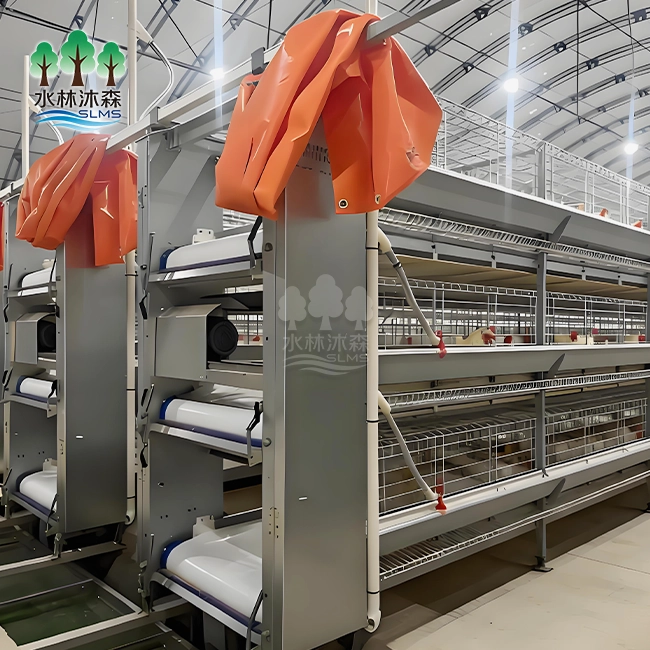
Top Poultry Barn Ventilation Systems for Modern Chicken Farms
Keeping your birds healthy, useful, and comfortable all year is an important part of running a successful chicken farm. At the heart of this problem is making sure the barn has enough air flow. The Livestock Ventilation System Negative Pressure Fan is one of the tools that modern chicken farms all over the United States can't do without.
This special vent unit automatically gets rid of old, ammonia-filled air while letting in fresh, oxygen-rich air through controlled openings. This creates the perfect environment for your flock to grow in the barn. By setting up a controlled pressure difference, these systems take the risk out of environmental management, so you can focus on what really matters: making your business more profitable.


Understanding Negative Pressure Ventilation Systems in Poultry Barns
By letting air out through carefully placed fans, negative pressure ventilation makes a small vacuum inside your chicken coop. This controlled hoover pulls in fresh air through specific openings. This lets you precisely manage the flow of air, temperature, and humidity levels throughout the building.
The principles are simple, but they work amazingly well. There is negative pressure in your barn because of powerful air fans at one end. As these fans push out dirty air, fresh air comes in through movable openings on the sides or at the other end. This constant exchange cycle keeps the right amount of oxygen in the air while getting rid of dangerous gases like ammonia and carbon dioxide that build up as manure breaks down.
The benefits will directly help your bottom line. Better air quality lowers the number of lung diseases that animals get, which cuts their prices and deaths by a large amount. It's easier to plan for temperature control when systems keep the important 64–75°F range for broilers and layers without using too much energy. Controlling humidity stops dangerous moisture buildup that helps mould grow and makes birds less healthy. From working with farms in several states, we know that sites that use good negative pressure systems have significantly higher feed conversion rates and daily weight gains than those that only use natural air.
Positive pressure systems force air into barns, which makes the flow patterns unpredictable and makes it hard to get rid of pollutants. Natural airflow depends on wind conditions that you can't predict, which leaves your flock open to danger in bad weather. Negative pressure gives you control all year, no matter what the weather is like outside. This is why it is the professional standard for raising a lot of chickens on any scale.
Key Components and Design Guidelines for Poultry Ventilation Systems
For an air system to work well, each part needs to be understood in terms of how it fits into the whole. Each part does its own thing to keep the temperature and humidity in the barn at a good level.
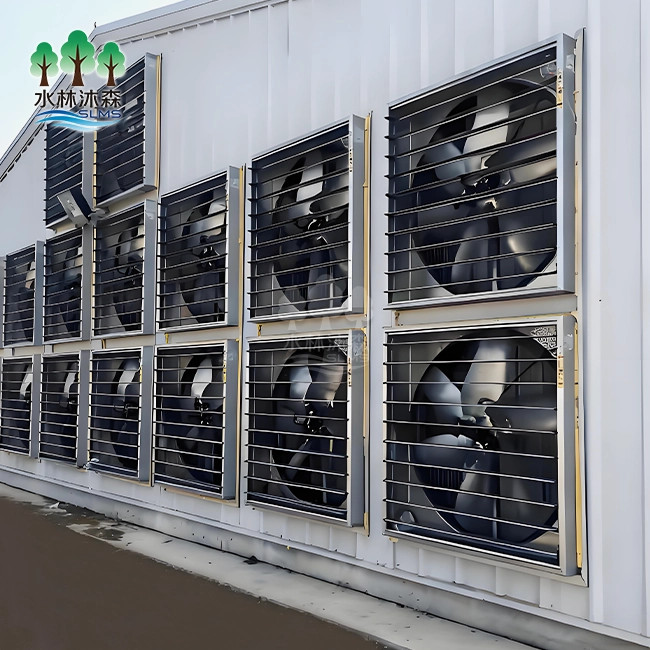
A full negative pressure setup has many parts that are all linked and work together. The system's basis is the exhaust fans, which have strong motors that move huge amounts of air constantly through corrosion-resistant blades. Adjustable vents in air intakes control the flow of new air, keeping out cold drafts in the winter and increasing flow during the hot summer months.
Environmental controls are like the brains of the system. They keep an eye on temperature and humidity sensors all over the barn and change the fan speeds as needed. Many current controllers can connect to apps on your phone, so you can check on things from afar and get alerts when parameters move out of goal areas.
Costly mistakes can be avoided by using the right size. To find out how much wind you need, increase the number of birds by the recommended cubic feet per minute (CFM) per bird, which is usually 5 to 7 CFM for broilers and 3 to 5 CFM for layers at full ventilation.
Think about how long and wide your barn is and how fast you want the air to move—600 to 700 feet per minute is common for tunnel ventilation systems. At full summer capacity, a 40-foot by 400-foot grill house with 25,000 birds needs between 150,000 and 175,000 CFM. To determine the right number of Livestock Ventilation System Negative Pressure Fan units for your business, divide this total CFM requirement by the airflow capacity of each individual fan.
Where you put the fans has a huge effect on how well they work. To avoid fighting natural air pressure, put exhaust fans on the side that faces away from the usual winds. To avoid dead spots, spread the fans out evenly across the exhaust wall. Install air intakes on the sides every 10 to 15 feet, making sure they are at roof height for the best air mixing. Carefully seal all cracks and unexpected holes, because air leaks destroy the pressure difference that your system needs. We've seen farms lose 30% of their possible efficiency just because the areas around doors and service holes aren't sealed well enough.
Performance Comparison and Selection Criteria for Poultry Ventilation Fans
Finding the right tools means looking at a lot of different factors that affect both how well it works right away and how much it costs to run in the long run. There are a lot of choices on the market, and each one has its own benefits for certain uses.
Axial fans are the most common type used for poultry because they have a high volume and a mild pressure, which makes them great for ventilating barns. The propeller-shaped blades on these units' direct-drive motors can move 28,000 to 38,000 cubic meters of air per hour in industrial sizes. Centrifugal fans make more static pressure, which means they can be used in places that need pipes or that have to work against a lot of resistance. However, their higher cost and complexity make them less common in chicken barns.
When deciding between choices, pay attention to the specs that tell you how reliable they will be in real life. Each of our 50-inch industrial exhaust fans can successfully cool and air out 150–200 square meters, making them the perfect choice for commercial chicken farms. These fans have strong 1.1 kW motors that run on standard 380V three-phase power. They move air at a constant rate between 28,000 and 38,000 m³/h, no matter what the temperature is outside or how long they are running. Its 80-kilogram unit weight comes from the fact that it was built with strong materials instead of weak residential-grade parts.
The conditions inside chicken barns quickly break down equipment that isn't up to par. In just a few months, ammonia gas will eat away at normal steel, and constant wetness will help rust form. The blades, frames, and fastening tools of high-end ventilation fans are all made of high-strength galvanised steel or 304 stainless steel. These materials can be exposed to harsh chemicals forever, and they have operating lifetimes of more than 40,000 hours, which is about 10 to 12 years of constant service. The initial investment price is paid back by not having to pay for replacements and keeping output going.
The cost of electricity is a big ongoing cost for the life of your air system. Energy-efficient motors use 15–25% less energy than standard models, which saves a lot of money for businesses that run fans all the time. Instead of just looking at the buying price, figure out the total cost of ownership. At normal business energy rates, a fan that uses 200 watts less per hour saves about $175 a year, or more than $2,000 over the course of 12 years. Differences in efficiency become important when you multiply this by ten or twenty fans.
Maintenance and Troubleshooting for Negative Pressure Ventilation Systems
Setting up regular maintenance plans and fixing issues as soon as they appear are necessary for reliable operation. Proactive care greatly increases the life of tools and keeps output from being interrupted, which costs a lot of money.
Set up a regular checkup schedule that includes checking for wear at key places. Once a month, you should check that the fans are spinning easily and not making any strange noises or vibrations, that the doors open and close all the way, and that the belts (on models with belt drives) stay tight and don't crack. For farms using a Livestock Ventilation System Negative Pressure Fan, it is especially important to inspect the fan housing, shutter seals, and motor mounting bolts during these monthly checks, because negative pressure operation puts extra stress on these components over time.
As part of the machine's quarterly deep maintenance, dust must be removed from the blades, bearing assemblies must be oiled according to the manufacturer's instructions, and the accuracy of the controller sensor must be checked against known standards. Complete electrical testing, motor insulation resistance verification, and replacement of old parts before they fail severely should all be part of the yearly service. These regular investments keep problems from happening at crucial times for production.
Usually, less airflow is caused by dust on the blades, doors that are only partially open, or old belts that slip when they're loaded. Weird vibrations mean that the blades aren't balanced because of material growth or worn bearings. This needs to be fixed right away before the damage spreads to the motor parts. A lot of noise usually means that the fixing gear is loose, the bearings have failed, or the blade has been damaged by a foreign object. Most problems can be fixed quickly if they are found early on through regular inspections. If problems are ignored, they get worse and need expensive fixes or a whole new unit.
When strange problems happen, strong relationships between manufacturers can help you figure out what's wrong. We offer full technical support for all of our ventilation equipment. This includes installation movies that show you how to set it up right, detailed maintenance guides that go over common service tasks, and direct access to our engineering team for tough diagnosing problems.
Our on-site installation services make sure that everything is set up correctly from the start, and our one-year guarantee protects your investment against problems caused by poor making. This all-around support system gives buying managers peace of mind about the long-term dependability of the system.
Procurement and Supplier Guidance for Bulk Purchase of Poultry Ventilation Systems
For large-scale poultry businesses to work, they need to work with providers who can provide full solutions instead of just selling parts. Strategically choosing a provider has a big impact on the success of a project.
Don't just look at product catalogues to figure out how much an organization can really do. Does the company offer focused research and development tools that can be used to make solutions that fit your needs? Our expert team of five engineers comes up with more than three new products every year, making sure that our products keep up with the needs of the business. If they need to speed up production to meet your deadline, will the quality suffer?
We've increased our production capacity to handle both one-off farm sales and multi-site expansion projects that need deliveries to be organised. For large-scale projects, especially those relying on a Livestock Ventilation System Negative Pressure Fan, we coordinate shipping schedules in advance to ensure seamless installation across multiple sites. Make sure they really offer help after the sale and don't just disappear after the payment is processed—reliable after-sales support is critical when your entire ventilation system depends on properly functioning negative pressure fans.
Standard gear doesn't always work perfectly in every case. Reliable suppliers offer customisation options to meet specific operational needs. For example, they may change motor voltages in areas with non-standard electrical infrastructure, improve corrosion protection for installations near salt water, or create custom mounting configurations for retrofit projects in existing buildings. We often change the materials used for fans, the power specs, and how the controls are integrated to meet the unique needs of each customer. This way, we can guarantee the best performance no matter how complicated the installation is.
Comparing unit prices is only one part of smart buying. Tiered discounts are often available for large purchases, which can save you a lot of money when you upgrade multiple barns at the same time. Carefully look at shipping procedures, because combining deliveries saves a lot of money on freight costs compared to buying things one at a time. When comparing prices, make sure to take into account the guarantee coverage, as full coverage lowers the financial risk of unexpected failures.
Think about the payment terms and how they will affect the project's cash flow, especially for growth projects that will take longer to build. A slightly higher per-unit cost from a provider with great customer service, flexible customisation options, and good business terms is often a better deal overall than rock-bottom prices from a source you can't trust.
Conclusion
The efficiency, profitability, and competitive place of your chicken business depend on how well the barn is ventilated. The Livestock Ventilation System Negative Pressure Fan technology gives modern industrial farming the exact environmental control it needs. It gets rid of the uncertainty of natural ventilation and works much better than old positive pressure methods. To be successful, you need to choose equipment that is the right size for farming settings, set up systems according to tried-and-true design principles, and keep parts in good shape by performing regular preventive maintenance.
Strategic relationships with experienced providers give you access to technical knowledge, the ability to customise your equipment, and reliable support for as long as it lasts. This investment pays off in a number of ways, including better flock health, more regular production throughout the year, less work that needs to be done, and better feed exchange efficiency.
FAQ
What maintenance schedule should farms follow for negative pressure fans?
Do eye checks once a month to look for strange vibrations, noises, or problems with how the camera works. For types that need it, maintenance should be done every three months and include cleaning the blades, lubricating the bearings, and checking the belts. As part of the annual thorough service, electrical tests are done, bearings are checked, and old parts are replaced before they break.
Can negative pressure systems integrate with automated farm management platforms?
These days, environmental controls have ways to connect to the internet so they can work with full management tools. This lets multiple barns be monitored from one place, sends automatic alerts when parameters move out of acceptable ranges, and logs data so that environmental trends can be compared to output measures.
How do you determine whether axial or centrifugal fans suit specific installations?
Axial fans work well in direct-exhaust situations like those found in most chicken barns because they can move a lot of air quickly and efficiently. Centrifugal designs are needed when piping causes static pressure resistance or when the need for quieter operation supports their higher cost and more difficult upkeep.
What factors most significantly impact fan operational lifespan?
The quality of the materials decides how long they will last in corrosive chicken barns. Construction made of galvanised steel or stainless steel will never rust when exposed to ammonia. Regularly lubricating the bearings and cleaning the blades will keep them from wearing out too quickly. With regular care, quality units often last longer than 40,000 hours.
Partner with a Trusted Livestock Ventilation System Negative Pressure Fan Supplier
Upgrading the environmental control infrastructure at your chicken plant is a big investment that needs to be done with care. Weifang Shuilin Musen Aquaculture Equipment Co., Ltd. has been making specialised agricultural equipment for eight years and is known for its high quality standards and use of new technology. Our engineering team creates unique ventilation systems that fit the size of your barn, the weather, and your output goals.
We make long-lasting 50-inch Livestock Ventilation System Negative Pressure Fan units that can move 28,000 to 38,000 m³/h of air. They are made to be quiet, don't rust, and have been tested to last 40,000 hours. They come with full one-year guarantees. Installation help, detailed instructions, and quick service after the sale make sure that the job goes smoothly and that the product will last for a long time. You can talk to our team about your needs at wangshuaislms@gmail.com or visit slms-equipment.com to get full specs for buying a lot of equipment.
References
1. Lacy, M.P. & Czarick, M. (2021). Poultry Ventilation Systems: Design and Management Principles. University of Georgia Cooperative Extension Service.
2. Donald, J. (2020). Environmental Control in Poultry Production Facilities. American Society of Agricultural and Biological Engineers Technical Publication.
3. Purswell, J.L. & Collier, S.D. (2019). Fan Performance Testing for Agricultural Ventilation Applications. Mississippi State University Agricultural Engineering Department Research Bulletin.
4. Gates, R.S., Casey, K.D., & Xin, H. (2018). ASABE Standards for Ventilation System Design in Livestock Housing. American Society of Agricultural and Biological Engineers Standards Committee Report.
5. Midwest Plan Service (2020). Mechanical Ventilating Systems for Livestock Housing. Iowa State University Agricultural and Biosystems Engineering Extension Publication MWPS-32.
6. Costantino, A., Fabrizio, E., & Ghiggini, A. (2022). Energy Performance and Climate Control Optimization in Commercial Poultry Houses. Journal of Agricultural Engineering Research, Volume 47, Issue 3, pp. 112-128.
Learn about our latest products and discounts through SMS or email