What is the best poultry barn ventilation system for large farms
For large-scale poultry operations managing flocks from thousands to over 100,000 birds, the best ventilation system is a Livestock Ventilation System Negative Pressure Fan. This system mechanically exhausts stale air while drawing in fresh oxygen-rich air through controlled inlets, creating precise environmental conditions that prevent heat stress, reduce ammonia concentrations, and minimize respiratory disease risks. Unlike natural or positive pressure alternatives, negative pressure systems deliver consistent airflow regardless of external weather conditions, making them the industry standard for modern intensive poultry farming.


Understanding Poultry Barn Ventilation Systems: Principles and Importance
Proper airflow is a key part of raising chickens that produce well. When birds are kept together in a small space, their droppings produce a lot of heat, moisture, and ammonia. Without enough air flow, these situations quickly become dangerous to life. Stress from heat can lower the efficiency of feed conversion by 15 to 20 percent. Ammonia levels above 25 parts per million can hurt respiratory tissues and make them more likely to get diseases from germs.
How Negative Pressure Ventilation Works
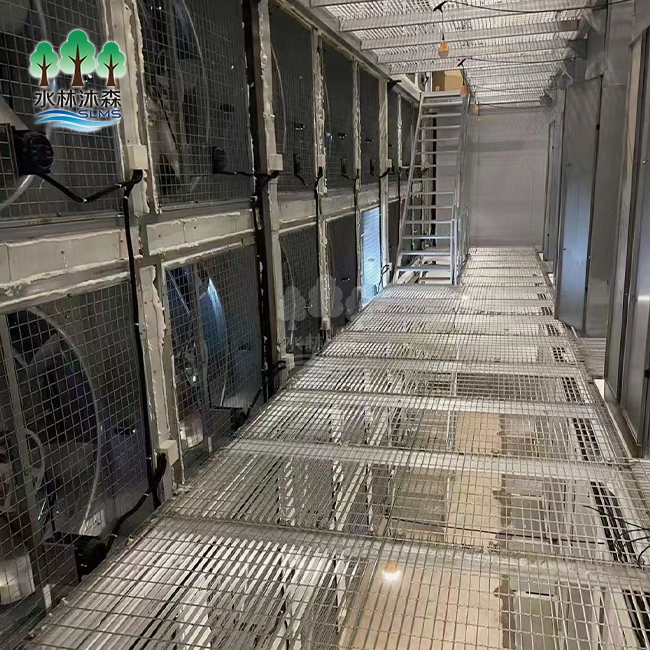
Putting exhaust fans along one wall or the end of the barn is how negative pressure ventilation works. When these fans push air out of the room, they leave behind a slight vacuum, which is usually measured in inches of water. This difference in pressure pushes fresh air from outside to come in through cooling pads or inlets that have been put strategically on the other side. The controlled entry points make sure that air flows evenly along the length of the barn, getting rid of hot spots and still areas.
Why Negative Pressure Outperforms Other Methods
Natural ventilation depends on changes in wind and temperature, which don't always work when it's hot outside or when the weather is calm. Positive pressure systems bring air into the barn, but they have trouble getting rid of dirty air, which can lead to temperature differences. Negative pressure systems let workers exactly adjust ventilation based on flock age, density, and yearly needs by giving them active, measured control over air exchange rates. Agricultural engineering studies have shown that negative pressure ventilation lowers the death rate of industrial broilers by 3 to 5 percent compared to passive ways.
Recommended Airflow Rates
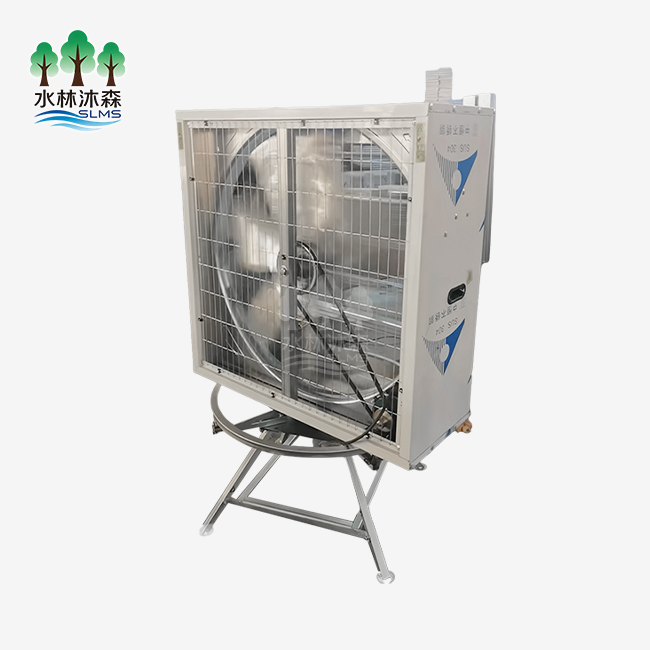
The amount of airflow a bird needs depends on its type and stage of growing. Broiler chickens need about 5 to 7 cubic feet per minute (CFM) of air flow per bird when it's cool outside. During the hottest part of the summer, they need only 1 to 2 CFM per pound of body weight. Laying hens need about 4 to 5 CFM per bird all year, but they need more when they are producing a lot. A 50-inch negative pressure fan that delivers 28,000 to 38,000 m³/h can successfully cover 150 to 200 square meters. This makes it easy for barn designers and equipment purchase managers to plan for capacity.
Comparing Ventilation Methods for Large Poultry Farms
Knowing how different systems work in real farm situations is important for choosing the right air method. There are different ways to run each method, which affects both the initial investment and the long-term costs of running it.
Negative Pressure vs. Positive Pressure Systems
Negative pressure ventilation gets air out of the barn's interior, causing controlled suction that pulls in fresh air through certain openings. This design makes it possible to precisely control the speed and temperature of the air, especially when used with cooling pads that evaporate water. Positive pressure systems bring air into the barn, which can make the wind patterns unpredictable and make it hard to get rid of dirty air from lower areas where birds live.
Negative pressure systems use less energy because they work with the natural differences in air pressure instead of against them. If you get the right-sized negative pressure fan with a 1.1 kW motor, it can move 28,000 to 38,000 m³/h and keep its working temperatures lower than positive pressure equipment of the same size. Negative pressure fans have easier shutter mechanisms that close immediately when the fan stops, stopping backdrafts in cold weather. They also have very different maintenance needs.
Comparing Fan Types and Durability
When used in poultry barns, where ammonia levels are high and metal parts rust, traditional exhaust fans often break down. These corrosive gases don't hurt modern negative pressure fans made of high-strength galvanised steel or 304 stainless steel; they can last more than 40,000 hours of use. This means that it will last for 8 to 10 years of constant use before major parts need to be replaced.
When equipment runs 24 hours a day in multiple barns, noise levels are important. Livestock Ventilation System Negative Pressure Fan systems must balance performance with acoustic comfort; good negative pressure fans work at 65 to 75 decibels, which is about the same volume as a regular talk. This makes the noise level more comfortable for both workers and birds. Belt-driven fans tend to be quieter, but the belts need to be replaced and adjusted more often. Direct-drive types, on the other hand, don't need any of this care.
Automated Control Integration
Automation is the next step in the development of managing air. Modern controller systems have temperature sensors, humidity monitors, and static pressure gauges built in so that the fans can automatically adjust how they work. When the temperature in the barn goes above certain levels, controllers gradually turn on more fan stages. This keeps the conditions at their best without constant human intervention. Compared to managing ventilation by hand, this automated response saves over 40% of the work that needs to be done. This frees up farm staff to focus on checking on the health of birds and other important tasks.
Plus, smart systems keep track of how much energy is used, which helps them find operations that aren't using energy efficiently and lets managers know when equipment needs to be serviced before it breaks down. These preventative features keep the health of the flock safe and keep costs down.
Selecting the Best Negative Pressure Fan for Your Poultry Barn
To choose the right ventilation equipment, you need to make sure that the technical specs match your barn's size, temperature, and how you handle your flock. Bad equipment choices cause poor movement, high temperatures, and, in the end, poor bird performance.
Critical Selection Criteria
The main thing to think about is the airflow ability. Figure out how much air flow your barn needs based on how many birds it can hold at most, and then choose fans that meet or go beyond this need. Standard barn layouts work with a 50-inch negative pressure fan covering 150 to 200 square meters, but customisation options let you match the number of fans and where they are placed to fit your specific building plans.
Using less energy has a direct effect on how much it costs to run for years on end. Fans that get 20 or more CFM per watt are the current standard in the business and use a lot less power than older designs. When looking at different models, make sure you ask for performance data that shows how much airflow is delivered at different static pressure levels. Good fans keep 70–80% of their rated capacity even at 0.10 inches of static pressure, so they will keep working well even as filters and inlets get normal dusty.
Evaluating Manufacturers and Support Networks
Manufacturers you can trust back up their products with full warranties and quick technical support. A free guarantee for one year is a good start, but you should check to see what parts it covers and how fast new parts ship. When equipment breaks down during summer heat waves, it can cause huge group losses, so it's important for suppliers to be quick to respond.
Professional makers are different from basic equipment sellers because they offer installation help. Having access to installation videos, expert documents, and on-site installation services makes sure that everything is set up correctly from the start. If you don't place fans properly, they might leak air around the mounting flanges or work at the wrong angle, which would make them 20–30% less effective.
Customization for Specific Conditions
Not every farm has the same problems to solve. The best ventilation plan depends on how the barn is orientated, the extreme weather in the area, and the types of chickens that will be kept there. Livestock Ventilation System Negative Pressure Fan designs must be tailored accordingly; good providers let you change the motor power, blade materials, and how the controls are integrated to fit these changes. Higher-capacity motors that allow more airflow may be better for operations in very hot areas, while standard configurations are best for farms in moderate climates.
Maintaining and Optimizing Negative Pressure Ventilation Systems
Even the best air equipment needs to be serviced regularly to keep working at its best for as long as it's possible. Systems that aren't taken care of slowly lose their effectiveness, and people usually don't notice until bird health problems show up.
Routine Maintenance Best Practices
As part of the monthly checks, the shutter systems should be cleaned of dust and feathers that have built up. Sticky or partially blocked doors cut airflow by 25–30%, which is why fans of the right size are useless. Clear out the inlet holes of any debris, and make sure that the automatic shutters open and close all the way when the fan cycles.
As part of every three months' maintenance, fan belts should be checked for wear and the right amount of tension on models that use belts. Motor bearings should also be checked for any strange noises or vibrations, and electrical connections should be made sure they are still tight and free of rust. Every three months, compressed air can be used to clean the breathing holes in motors that work in dusty places.
Professionals should check the motor windings, the balance of the blades, and the structural stability of the mounting frames once a year as part of the repair. By replacing worn-out parts before they break, you can avoid problems that come up out of the blue during the busy summer months, when new parts may take longer to arrive.
Enhancing Energy Efficiency
When a fan runs nonstop for months, the energy costs add up quickly. Installing variable frequency drives lets fan speeds rise and fall smoothly based on cooling needs. This cuts electricity use by 30–45 percent during transitional seasons when full ventilation capacity is higher than actual needs. The energy savings from these controls are enough to pay for them in 18 to 24 months.
Keeping the static pressure at the right level also makes things work better. Regularly cleaning air intakes and filters keeps pressure from building up, which makes fans work harder to move the same amount of air. Once a week, check the static pressure gauges and look into any numbers above 0.12 inches of water column. This could mean that there are blockages or inlet areas that aren't big enough.
Monitoring for Consistent Performance
Putting in simple air quality sensors can help find ventilation problems early on. Continuous ammonia tracking lets workers know when levels rise above 15 ppm, which means that air exchange rates aren't working well enough and need to be fixed right away. Temperature sensors placed along the length of the barn show if airflow is even or if it creates hot and cold spots that need the intake to be moved.
Using anemometers to do regular airflow checks twice a year makes sure that fans are still working at their full capacity. Corrosion on the blades or worn motor bearings can cause performance to slowly decline over time. These are problems that can be easily fixed during routine maintenance rather than emergency fixes.
Procurement Guidance for Large-Scale Poultry Ventilation Systems
It takes more than just comparing specification sheets to buy ventilation equipment for large poultry farms. A good procurement process weighs the initial costs of tools against the ongoing costs of running the business, the dependability of the service, and the supplier's ability to provide assistance.
Identifying Qualified Suppliers
Focus your buying on companies that have a history of making air systems for farms. Livestock Ventilation System Negative Pressure Fan solutions are a core part of such expertise; with eight years of experience specialising in livestock equipment, Weifang Shuilin Musen Aquaculture Equipment Co., Ltd. is a great example of a supplier who combines technical know-how with full service support.
Their group of five professional engineers comes up with custom solutions that work with different barn layouts and climate issues, including tailored negative pressure fan configurations that integrate seamlessly into existing setups. This way, farms don't have to change their operations to fit standard goods, but instead can make sure that the tools they use meets their needs.
Ask for specific scientific information, like airflow performance curves, motor efficiency rates, and certificates for the materials. Reliable sellers back up their performance claims with data from third-party tests. This gives procurement managers trust in the equipment's abilities before they buy it.
Bulk Purchasing Considerations
Volume price systems help big businesses that are adding ventilation to multiple barns or expanding their facilities. Talk about big purchase deals that get you good prices per unit and set delivery times that work with your building plans. Make sure you know early on how to ship the 50-inch negative pressure fan, which weighs 80 kg and needs to be coordinated with a goods carrier, especially for farms that are far away.
Before committing to full-scale orders, ask for sample units to test. Running a fan in your real barn for 30 to 60 days will show you how it works in real life and let you know if there are any problems with the way it works with your current electricity or control systems.
Service Agreements and Long-Term Support
Full help after the sale keeps your investment safe long after it's been installed. Make sure that the companies you're considering offer technical help by phone, email, and video chat. Access to installation videos speeds up the setup process for in-house support teams, and having on-site installation services available makes sure that complicated multi-fan systems are properly set up.
Carefully read the warranty terms to make sure they cover both parts and labour. Knowing what conditions make a guarantee useless keeps you from being surprised with expensive costs. Suppliers who want to build long-term relationships with their customers often offer longer warranties and better prices on new parts for customers who have already bought from them.
Planning for Future Scalability
Over time, poultry businesses grow as markets spread and workers learn how to run them better. Choose ventilation solutions that are made to be expanded in modules, which means that adding more fans doesn't require completely rewiring the control system. This flexibility saves the initial investment and makes room for future growth.
When choosing tools, think about how it can be updated with new technology. Ventilation systems keep getting better by connecting to the cloud, tracking via smartphone, and using AI to make them work better. If you choose systems with architecture that is upgradeable, you can use these new features without having to replace fans and motors that are still working fine.
Conclusion
For big farms, the best chicken barn ventilation system uses tried-and-true negative pressure technology and comes with dependable tools, professional installation help, and detailed upkeep planning. Livestock Ventilation System Negative Pressure Fan units are the cornerstone of this approach; a well-thought-out system with good fans, like the 50-inch types that can blow 28,000 to 38,000 m³/h, makes the best conditions for growth, which directly improves the health of the flock and the efficiency of production.
When farm managers buy equipment, they make sure it lasts a long time, uses little energy, and comes from a source they can trust, particularly by selecting robust negative pressure fan models that are built for continuous duty. This way, the air system will last for decades and protect their investment. Choosing the right system today sets the stage for long-term, profitable chicken farming tomorrow.
FAQ
How often should negative pressure ventilation fans undergo maintenance?
Most performance problems can be avoided by checking the shutter function and intake cleaning once a month. When it's serviced every three months, the electrical lines, belt tension, and bearing state should all be checked. A professional inspection once a year checks the motor's integrity and the balance of the blades, finding wear patterns before they lead to failures.
Can ventilation systems reduce disease transmission in poultry flocks?
Effective ventilation greatly reduces the spread of diseases through the air by continuously removing pathogen-filled dust particles and respiratory droplets. Keeping ammonia levels below 15 ppm by making sure there is enough air flow also saves the cells in the respiratory tract, making them less likely to get sick. Studies show that when negative pressure systems are used correctly, the number of lung diseases drops by 20 to 30 percent.
What energy savings result from switching to negative pressure ventilation?
When farms switch from positive pressure or natural ventilation to automated negative pressure systems, they usually save 25 to 35 percent of their energy costs because they can precisely control airflow and stop over-ventilation. By matching fan speeds closely to cooling needs throughout the day and throughout the seasons, variable frequency drives can save up to 40 to 50 percent.
Partner With a Trusted Livestock Ventilation System Negative Pressure Fan Manufacturer
Weifang Shuilin Musen Aquaculture Equipment Co., Ltd. has been making specialised equipment for eight years and can help with large-scale air options for chicken. Our 50-inch negative pressure fans with 1.1 kW motors and 28,000–38,000 m³/h movement keep the temperature stable in barns that house thousands of birds. We back up our equipment with full installation instructions, warranties that last for one year, and expert help that is tailored to the needs of your location. Our engineering team changes the fan materials, motor specs, and how the controls are integrated to fit the climate and design of each barn.
This makes sure that the fans work at their best from the start. Email our experts at wangshuaislms@gmail.com to talk about your air needs and get specific information about the tools that will work best for your business. You can look at our whole selection of products at slms-equipment.com and get in touch with a Livestock Ventilation System Negative Pressure Fan supplier who cares about your long-term success.
References
1. American Society of Agricultural and Biological Engineers. (2019). Design of Ventilation Systems for Poultry and Livestock Structures. ASABE Standards, 12th Edition.
2. Cumberland, P. & Mitchell, T. (2021). Environmental Management in Commercial Poultry Production. Poultry Science Association, Technical Publication Series.
3. Gates, R.S. et al. (2020). "Comparative Analysis of Ventilation System Efficiency in Intensive Poultry Housing." Transactions of the ASABE, Vol. 63, No. 4, pp. 1187-1199.
4. Liang, Y. & Xin, H. (2018). "Energy Performance of Alternative Ventilation Systems for Poultry Buildings." Applied Engineering in Agriculture, Vol. 34, No. 6, pp. 945-956.
5. National Chicken Council. (2022). Animal Welfare Guidelines and Audit Checklist for Broiler Chickens. Environmental Management Section, pp. 34-48.
6. Purswell, J.L. & Dozier, W.A. (2020). "Broiler Environmental Management: Best Management Practices." Journal of Applied Poultry Research, Vol. 29, No. 3, pp. 526-542.
Learn about our latest products and discounts through SMS or email