How to design a modern automated poultry farm layout system
Adding trash management systems to your working framework is the first step in designing a modern automated chicken farm layout system. At the heart of this plan is the Chicken Farm Automatic Manure Handling System, which uses both scrapers and conveyor belts to get rid of waste quickly while still following biosecurity and environmental rules.
By carefully placing automated trash removal equipment in your facility, along with feeding lines, ventilation networks, and cage systems, you can create a smooth process that cuts the need for workers by over 60%, makes the air better, and allows for increased production. With this unified method, keeping a building clean goes from being a lot of work to an automated, dependable process that keeps the business profitable in the long term.


Understanding the Challenges in Poultry Farm Manure Management
Modern chicken farms have a hard time keeping up with the huge amount of waste they make every day. A facility with 50,000 laying hens makes about 4–5 tonnes of manure every week, which creates urgent sanitation needs that can't be met by human means alone. When you don't handle your trash properly, problems start to pile up and affect every part of your business.
Labor Intensity and Operational Costs
The time and effort needed to remove trash by hand is very high, which raises costs and creates scheduling problems. In buildings that don't have enough air flow, workers can be exposed to dangerous levels of ammonia that can be higher than 25 parts per million (ppm). This can cause serious breathing problems. This method requires a lot of work, which takes time and effort away from more useful jobs like keeping an eye on the group and fixing broken equipment.
Environmental and Regulatory Compliance Pressures
When dung builds up, it releases ammonia and hydrogen sulphide into the air, which is illegal in many US states. The Environmental Protection Agency is looking more closely at companies that feed a lot of animals, and those that don't follow the rules can be fined a lot. Aside from regulatory issues, reports about smells from nearby properties also affect community bonds and the ability to run a business.
Disease Transmission and Flock Health Risks
When manure builds up, it makes a great environment for pathogenic bacteria like E. Salmonella and E. coli. These pathogens weaken the immune systems of flocks, lower the rate at which feed is converted into meat, and raise the death rate. The money that is lost because of disease outbreaks is much higher than what is needed to buy automatic trash management systems. To solve these problems, which are all connected, we need a planned method based on automation and smart building layout.
Core Principles of Designing a Modern Automated Poultry Farm Layout System
Waste management infrastructure should be built into the layout as a foundational element, not as an afterthought. This way of thinking about things makes sure that the tools used to clean up the manure works well with the systems for feeding, ventilation, and managing the group so that everything works well and is safe.
Strategic Placement of Waste Removal Infrastructure
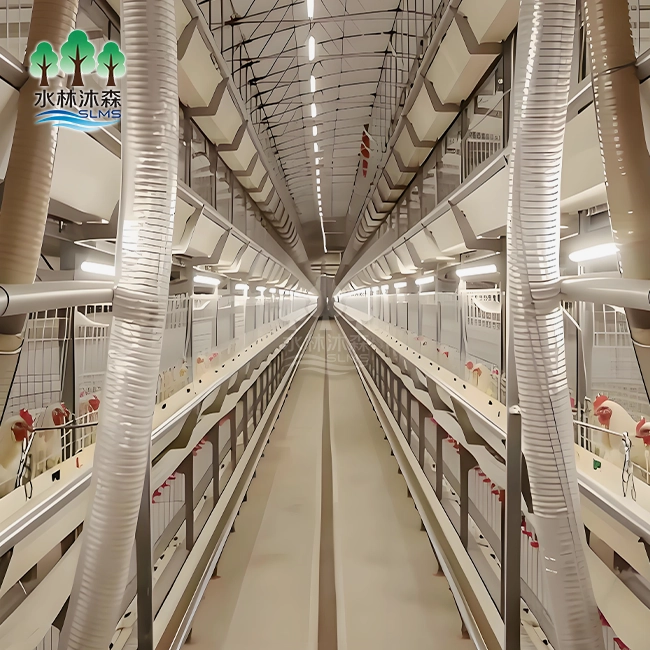
To put in place collection points and conveyor systems, you need to carefully look at the size of your facility and how the production flows. Long conveyor belts placed under each level of an H-frame cage system that houses 80,000 birds on multiple levels collect waste all the time. At the ends of the facility, these belts meet at transverse conveyors that lift the material to outside collection vehicles. This layout keeps the air quality in the work area at its best and reduces the amount of waste that builds up inside.
In order to do maintenance work, the layout must include passageways for equipment access that are at least 1.2 meters wide. Drive motors and tensioning mechanisms need covering that keeps electrical parts dry and away from toxic gases while still letting them be easily inspected on a regular basis. Placement choices have a direct effect on how well something works and how much it costs to maintain over time.
Integration with Ventilation and Environmental Control
Automated systems for getting rid of trash work best when they are combined with negative pressure air designs. Cross-ventilation fans placed at regular intervals create airflow patterns that move ammonia away from areas where birds live while the conveyor system physically gets rid of the source of the emissions. When compared to facilities that only use ventilation, this two-pronged approach lowers ammonia levels by 70–80%.
Some more advanced designs build manure drying tubes right into the frame of the cage. Warm air from temperature control systems moves through perforated moving belts and lowers the amount of water in waste from 75% to less than 50% before it leaves the building. This process of dehydration not only cuts down on weight and transportation costs, but it also makes organic fertiliser that can be sold, turning a cost of waste management into a source of income. Chicken Farm Automatic Manure Handling System integrates seamlessly with these drying tubes, automating the collection and transfer of partially dried waste to storage or processing areas, thereby further reducing labour and improving overall efficiency.
Scalability and Customization Considerations
Layout plans need to take into account both current operational needs and the need for growth in the future. Installing modular conveyor systems in stages across several houses or production areas doesn't stop current operations. The specs of the equipment should fit the size of your building. Belt lengths should be between 30 and over 120 meters, and the drive systems should be able to handle the matching material loads.
Customisation goes beyond physical dimensions and includes parameters for how things work. With variable speed controls, workers can change how often the birds are removed based on the flock's size, the type of food it eats, and the time of year. This adaptability makes equipment work better in a wide range of production situations, ensuring reliable waste management whether you're raising broilers with 42-day production cycles or keeping laying flocks for 18 months.
Comparison and Selection of Poultry Manure Handling Systems for Your Layout
To choose the right waste management technology, you need to compare different system designs based on your business goals, budget, and the features of your building. Knowing the technical and financial trade-offs between various approaches helps people make smart purchasing decisions that provide the most long-term value.
Manual and Semi-Automated Approaches
Using wheelbarrows and trucks for traditional removal needs little initial investment but high ongoing labour costs. Manual operations usually have two to three full-time workers per 20,000-bird facility whose only job is to handle waste. In addition to the direct costs of labour, this method creates inconsistency, biosecurity holes, and safety concerns for workers, all of which lower the efficiency of operations.
In the middle are semi-automated systems, which use mechanised scrapers or drag chains but still need to be supervised and fixed from time to time by hand. When compared to fully human methods, these systems cut down on the work that needs to be done by about 40%. However, they are not as reliable and consistent as fully automated methods. Breakdowns of equipment require instant human backup, which makes operations unpredictable and makes planning the workforce harder.
Fully Automated Conveyor Belt Systems
When it comes to heavy-duty cage operations, conveyor belt technologies deliver better results. A high-quality polypropylene belt with a width of 1.0 to 1.2 mm is very durable in corrosive conditions and can work for more than eight years with proper upkeep. These systems remove trash before it builds up and releases harmful gases. They can work continuously or on times that can be programmed.
Premium systems are different from cheaper ones because of their technical specs. At temperatures between -30°C and +50°C, belt materials must stay flexible and not crack or lose their tensile strength. Cycoidal gear motors with IP55 ratings are used in drive systems that keep dust and water out, so they can work reliably in harsh farming settings. Misalignment of the belt, a common failure mode that disrupts operations, is stopped by anti-deviation mechanisms that include crowned rollers and automatic tensioning.
Scraper Systems for Specialized Applications
When conveyor belts don't work, steel scraper systems are the best option. This is especially true in A-frame cages or facilities with deep manure pits. Heavy-duty stainless steel scrapers on steel cables or solid chains move along the length of the building and push the stuff that builds up toward collection points. These strong systems can handle heavy, wet waste mixed with bedding materials, which means they can be used for floor-raising grill operations.
Most of the time, scraper systems need stronger structural support than belt conveyors and make more noise when they're working. As part of maintenance, the wire tightness and scraper blade wear must be checked regularly. While these things are taken into account, scrapers work reliably when their specific technical features match up with operational needs.
Chicken Farm Automatic Manure Handling System can be effectively paired with scraper-based setups to automate the removal schedule, reduce manual intervention, and synchronise cleaning cycles with bird stocking density, thereby offsetting some of the noise and maintenance drawbacks while maximising the reliability of the scraper mechanism.
Best Practices and Maintenance Tips for Optimizing Automated Manure Handling Performance
Systematic maintenance protocols and proactive management practices are needed to make sure that equipment lasts as long as possible and works reliably. These operational standards keep things clean, keep breakdowns from costing a lot of money, and protect your investment in automation infrastructure.
Routine Inspection and Preventive Maintenance
Setting up weekly inspection schedules makes sure that potential problems are found early, before they get worse and cause equipment failures. Important checks include making sure the belt tightness is correct, the drive rollers are lined up correctly, the motor temperature is being monitored, and the electrical connections are solid. Tracking accuracy and material handling efficiency are directly affected by belt tension. If the tension is too low, the belt will slip and wear unevenly, and if it's too high, the bearings will fail faster and more energy will be used.
As part of regular maintenance, the drive mechanisms should be cleaned thoroughly, the bearing assemblies should be oiled, and the structural supports should be checked for signs of corrosion every month. Using food-grade lubricants on roller bearings cuts down on friction and heat production, which greatly increases the life of the parts. Every year, galvanised building parts need to be inspected, and a touch-up coating needs to be put on any areas where the zinc layer is wearing away to stop rust from spreading.
Troubleshooting Common Operational Issues
The most common problem in operations is belt deviation, which is usually caused by uneven material loads, roller misalignment, or tension mismatches. To fix deviation, you need to make sure that the drive rollers keep the correct crown configuration and adjust the passive guide rollers in a planned way. Premium systems have automatic sensing features that find deviations and make necessary adjustments, reducing the need for manual intervention.
Blockages happen when too much over-sized trash or material builds up on a conveyor belt, making it unable to move. Most blockages can be avoided by putting debris screens at feed points and making sure they are cleaned out regularly. When blocks do happen, the drive systems are protected from overload damage by shutting down right away and clearing them by hand. Torque-limiting clutches are used in modern systems. These automatically disengage when resistance goes above safe levels. This protects against catastrophic failures.
Environmental Management and Odor Control
Cutting down on the amount of water in gathered dung makes the smell much weaker and makes it much less likely that pathogens will survive. When you combine forced-air drying systems with conveyor infrastructure, you can get rid of wetness quickly, especially when you use the heat that is wasted by climate control systems. Keeping the moisture level of manure below 60% stops the activity of anaerobic bacteria that make hydrogen sulphide and other smelly compounds.
Strategic ventilation coordination makes sure that airflow patterns move smells away from sensitive areas while still meeting the needs of animals for comfort. Adding biofilters or chemical scrubbers to air streams can help reduce smells even more for businesses that are close to residential areas.
Chicken Farm Automatic Manure Handling System complements these ventilation strategies by rapidly removing manure from the housing area, which significantly reduces the primary source of odours before they can be dispersed by airflow, thereby enhancing the effectiveness of both biofilters and scrubbers. Environmental management practices like these keep relationships with the community safe and make sure that rules are always followed, which is important for the business's long-term success.
Case Studies and Practical Recommendations for Implementing Automated Layout Designs
Implementation experiences in the real world can help you make better decisions about design, technology, and operational outcomes that affect how you plan. It's easy to see how strategic investments in automation pay off at different scales and production models by looking at different operational scenarios.
Large-Scale Layer Operation Implementation
A Midwest facility that layers 120,000 birds put in place a full automated waste management system with polypropylene conveyor belts running under six-tier H-frame cages. The new system replaced a semi-automated scraper system that needed constant maintenance and fixes. After the operation was put into action, the number of hours spent managing waste dropped by 65%. This gave staff more time to focus on flock tracking and improving egg collection.
Monitoring of the air quality showed that the amount of ammonia in the air dropped from 22 parts per million to less than 8 parts per million across the production area. This directly led to a 3.2% increase in feed conversion efficiency. With the moisture reduction system built into the belt conveyors, the farm was able to sell dried dung as organic fertiliser, which brought in $18,000 a year and helped pay for the costs of running the equipment. Based on the cuts in labour and the money made from selling fertiliser, the return on investment calculations showed that the capital would be fully recovered in 4.2 years.
Mid-Scale Broiler Operation Customization
A broiler farm with 35,000 birds needed a custom solution that could handle multiple production cycles a year and full facility cleaning between flocks. For pressure washing environments, the design team asked for a belt system with quick-release tensioning mechanisms and motor housings that are waterproof to IP66 standards. Instead of galvanised steel, 304 stainless steel was used for structural parts so they could handle harsh cleaning methods without rusting.
The customised system's performance supported the design choices—the equipment stayed functionally sound through 24 production runs spanning four years, with no structural damage. The facility said that the cost of labour had gone down by 58% compared to the old way of getting rid of trash by hand. Accessibility features on equipment made it possible for maintenance staff to do routine checks of each house in less than 30 minutes, which cut down on downtime and helped meet tight production plans.
Strategic Checklist for Procurement Professionals
When procurement managers look at automated waste management solutions, they need to make sure of a few important details. Material certifications that list the composition and thickness of the polypropylene belt make sure that it will last in harsh environments. Standards for galvanising structural steel should be at least 275g/m² of zinc coating weight, which can be proven by testing with salt spray. Motor specs must include IP grades that are right for farming settings with a lot of dust and high humidity.
Suppliers can do more than just make equipment; they can also help with installation, commissioning, and ongoing technical support. Make sure that any potential suppliers offer clear installation guides, video tutorials, and quick access to technical support channels. Installation services that are done on-site eliminate integration risks and make sure that the system is properly set up. A full warranty, usually lasting at least one year for high-quality systems, protects against premature component failures and manufacturing flaws.
Conclusion
To make a good automated chicken farm layout system, you need to think about everything at once and make waste management infrastructure a key part of supporting operational greatness. Placement of conveyor systems strategically, careful integration with ventilation networks, and choosing the right technologies based on the needs of the facility all work together to make places where automation saves a lot of time, makes things cleaner, and meets all the rules.
Chicken Farm Automatic Manure Handling System serves as the central pillar of this integrated approach, linking conveyor placement, airflow design, and technology selection into a cohesive workflow that minimises labour, maximises hygiene, and ensures regulatory compliance from the ground up. Implementations in the real world show that well-designed systems have measurable benefits, such as lower operating costs, better flock performance, and the possibility of making money from waste products that are processed. Putting money into good automation systems sets up your business for long-term growth in a field that is becoming more controlled and competitive.
FAQ
What System Configuration Best Suits My Facility Size?
Single-belt longitudinal conveyor systems with center collection spots usually work best for operations that house 20,000 to 50,000 birds. Larger facilities that house more than 80,000 birds benefit from multi-tier belt configurations with transverse conveyors that efficiently combine waste streams. The type of cage arrangement (H-frame vs. A-frame) affects where equipment goes and what kind of drive system is needed. Customisation makes sure that the lengths of the belts, the power of the motors, and the size of the structure supports all fit your facility perfectly, so you don't have to worry about performance issues that come with standard solutions.
How Do Temperature Extremes Affect Equipment Performance?
Premium polypropylene belt materials stay strong and flexible in temperatures ranging from -30°C to +50°C, so they can be used in industrial areas across North America with different climates. Motor housings and electrical parts need to have the right protection ratings—at least IP55 for normal environments and IP66 for places that use strict washdown protocols. In places where winters are harsh, operators should run warm-up processes before starting the trash removal process. This will keep frozen material from sticking to the belt surfaces and putting stress on the machinery.
What Maintenance Schedule Ensures Optimal Longevity?
Most operational problems can be avoided by checking the tracking of the belt, the tension settings, and the operation of the motor once a week. Regular maintenance, like lubricating the bearings and cleaning the structure once a month, makes parts last a lot longer. Every year, full inspections should check the integrity of the galvanisation, the electrical connections, and the wear patterns on the mechanical parts to find parts that are getting close to needing to be replaced. When operators follow these rules, their equipment always lasts longer than ten years, which maximises the return on capital investments.
Partner with a Trusted Chicken Farm Automatic Manure Handling System Manufacturer
The Weifang Shuilin Musen Aquaculture Equipment Co., Ltd. has eight years of experience designing and making automated waste management systems for large poultry farms. No matter how many birds you have—10,000 or 200,000—our engineering team makes systems that are exactly the right size for your facility and your production needs. We offer full support, including installation guides, on-site commissioning services, and a warranty that covers your investment for one year.
Our solutions have been shown to cut labour costs by more than 60% while still meeting the durability standards needed by businesses. Under normal conditions, equipment can last up to 8 to 12 years. Email our technical team at wangshuaislms@gmail.com to talk about your facility's needs and get a personalised proposal that uses tried-and-true automation technology to solve your operational problems.
References
1. Agricultural Engineering International Commission. "Automated Waste Management Systems for Intensive Poultry Production." Journal of Agricultural Mechanization Standards, Vol. 47, 2023.
2. National Poultry Technology Consortium. "Design Guidelines for Modern Layer House Infrastructure and Environmental Control Systems." Poultry Engineering Quarterly, 2024.
3. United States Department of Agriculture. "Labor Efficiency and Automation in Commercial Poultry Operations: Economic Analysis and Best Practices." USDA Agricultural Research Service Publication, 2023.
4. International Society of Agricultural Engineers. "Material Selection and Durability Standards for Livestock Waste Handling Equipment." ISAE Technical Standards Manual, 2024.
5. Environmental Protection Agency. "Air Quality Management in Concentrated Animal Feeding Operations: Compliance Guidelines and Emission Reduction Technologies." EPA Region 7 Agricultural Division, 2023.
6. Poultry Science Association. "Impact of Manure Management Practices on Flock Health, Productivity, and Environmental Sustainability." Poultry Science Journal, Vol. 102, Issue 8, 2024.
Learn about our latest products and discounts through SMS or email