What capacity negative pressure fans are used in poultry barns
The size of the barn, the number of birds, and the weather are the main factors that affect how much capacity you need for a Livestock Ventilation System Negative Pressure Fan. For normal chicken farms, airflow needs to be between 28,000 and 38,000 m³/h, and each fan should be able to ventilate 150 to 200 square meters. The right choice of capacity ensures the removal of ammonia, the control of temperature, and the prevention of disease. This directly improves the health of flocks and increases operational profitability in broiler, layer, and turkey production facilities.


Understanding Negative Pressure Fans in Poultry Barn Ventilation
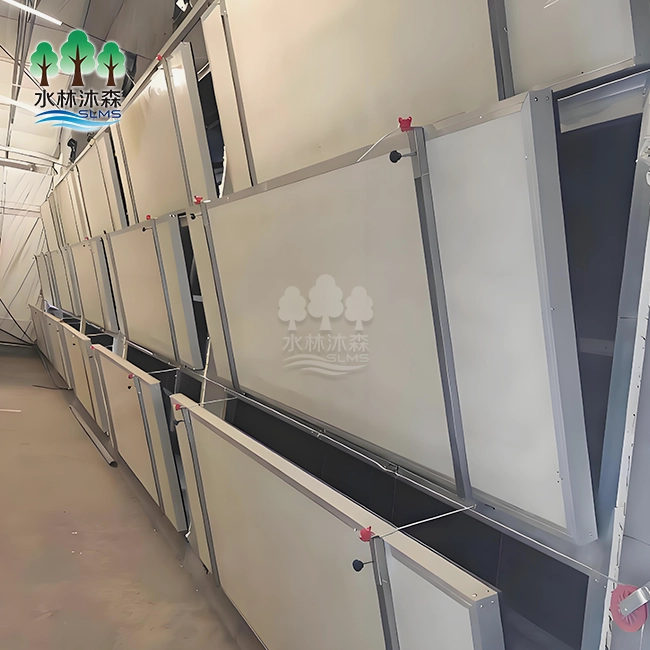
Negative pressure ventilation works by automatically removing old air from the barn. This makes a difference in pressure that pulls in fresh air through controlled openings or cooling pads that evaporate. Positive pressure systems push air into enclosed spaces, which can lead to dead zones and uneven distribution. This method is very different from those.
How Negative Pressure Systems Work
When vent fans turn on, the air pressure inside drops below that of the atmosphere. This usually creates a standing pressure of 0.05 to 0.12 inches of water column. Because of this difference in pressure, outside air has to come in through strategically placed openings. This makes sure that air flows evenly throughout the whole building. The controlled entry points let operators change the speed and direction of the air, which keeps the birds as warm as possible no matter what the weather is like outside.
Key Benefits for Poultry Production
One big benefit is that the air quality is better. Getting rid of high levels of ammonia, carbon dioxide, and water that is too wet protects respiratory health and lowers the risk of disease spreading. Next is energy economy. This is because Livestock Ventilation System Negative Pressure Fans use less electricity than the heating or cooling systems that need to be used to make up for bad ventilation. When temperature and humidity stay in the right ranges, bird performance metrics like feed conversion ratios and daily weight gain get better.
Addressing Common Ventilation Challenges
Building up ammonia is a constant danger in high-density poultry housing because it hurts the lungs and makes the immune system weaker. At floor level, where amounts are highest, negative pressure devices remove ammonia all the time. Controlling humidity is also very important because too much wetness helps pathogens grow and lowers the quality of the litter. If you have exhaust fans that are the right size, they will keep the relative humidity between 50% and 70%. This will keep your lungs from getting too dry and stop wet trash problems that cause footpad rashes and breast blisters.
Determining the Ideal Capacity of Negative Pressure Fans for Poultry Barns
To figure out the exact Livestock Ventilation System Negative Pressure Fan capacity needed, you need to look at a number of interconnected factors that relate to both the facility's features and the needs of the animals. To avoid systems that are too small and break down at peak demand or equipment that is too big and wastes energy and money, procurement managers and farm engineers must find a balance between these factors.
Critical Factors Influencing Capacity Selection
The size of the barn is used to figure out how much air will flow through it. There are 6,750 cubic meters of air inside a building that is 150 meters long, 15 meters wide, and 3 meters high. The number of birds in a cage directly affects how much air flow is needed because each kilogram of live birds creates heat and moisture that needs to be removed.
A grill house with 20,000 birds that are market weight creates a lot more thermal load than the same area with smaller groups. Regional climate conditions are also very important. For example, operations in hot, humid climates need higher airflow rates to cool down effectively through evaporation, compared to temperate zones where temperature control is enough.
Calculating Required Airflow in CFM and m³/h
According to industry standards, chicken barns should have between 4 and 8 full air changes per hour. During warm months, these rates need to be higher. Using our 6-750-cubic-meter barn as an example, 40,500 m³/h of total circulation capacity is needed for just 6 air swaps per hour. Taking this need and dividing it by the output of each fan helps figure out the unit quantity. With a 50-inch fan that can produce 28,000 to 38,000 m³/h, this facility can be served by two units running at medium speed when the weather is mild. Three units, on the other hand, provide backup and maximum capacity for times of extreme heat.
Avoiding Over-Sizing and Under-Sizing Pitfalls
Installing fans that aren't powerful enough can be dangerous during heat waves when the need for air flow goes up quickly. Birds quickly become thermally stressed, and if temperatures rise above critical levels, they can die within hours. On the other hand, too much capacity causes short-cycling, which is when fans turn on and off too often. This shortens the life of the motor and makes drafts that keep young birds cold in the winter.
Staged ventilation systems solve this problem by using different fan sizes. In the winter, smaller units provide just the right amount of ventilation, while larger fans gradually turn on as the temperature rises. Our 50-inch models can cover 150 to 200 square meters and work well with planned arrangements, giving you options for different seasons.
Comparison of Negative Pressure Fans Used in Poultry Barns
Knowing the differences between fan types, drive mechanisms, and building materials helps procurement teams choose a Livestock Ventilation System Negative Pressure Fan that fits their budgets and operational needs.
Axial Versus Centrifugal Fan Designs
Axial fans are most often used in poultry barns because they move a lot of air at a low static pressure. The blade design moves air in a straight line along the motor shaft, which is how high-end models get efficiency ratings of more than 20 CFM per watt. Even though centrifugal fans can handle higher static pressure from shutters that are dirty or inlets that are blocked, they produce less total airflow and take up more installation room. Axial designs work better and cost less in normal grill and layer houses where the static pressure stays below 0.15 inches of water column.
Direct Drive Versus Belt Drive Systems
Direct drive fans don't use belts, pulleys, or the maintenance that comes with them because the blade assembly is directly attached to the motor shaft. This design keeps the equipment's efficiency stable over its lifetime and lowers the noise it makes.
Belt drive systems let you change the speed by moving the pulleys, and they usually run more quietly at lower RPMs. However, belts stretch over time, slip when they're under a lot of weight, and need to be tensioned every so often. Our direct drive models have inverter-duty motors that work with variable frequency drives. This lets you change speeds smoothly without the problems that come with belt drives.
Material Selection and Corrosion Resistance
Compounds in poultry barns, especially ammonia gas and moisture, are very corrosive and break down metals quickly if they are not treated. Standard galvanised steel frames offer basic security, but for more advanced uses, hot-dip galvanisation with zinc coatings that are thicker than 275g/m² or all-steel construction is better.
Our 50-inch units are made of high-strength galvanised steel or 304 stainless steel, so they will last more than 40,000 hours of use, even in the toughest ammonia environments. Equal care should be taken with all blade materials. Stainless steel and fiberglass-reinforced polymer blades don't pit and keep their aerodynamic shapes long after aluminium blades corrode and stop working well.
Maintenance, Installation, and Troubleshooting of Negative Pressure Fans in Poultry Barns
To get the most out of your investment in a Livestock Ventilation System Negative Pressure Fan, you need to follow the right installation procedures and maintenance schedules that keep it running smoothly and save energy.
Installation Guidelines for Optimal Performance
The placement of a fan has a big effect on how evenly air flows and how much energy it uses. For tunnel ventilation, exhaust fans can be mounted on one endwall. For cross-ventilation, they can be spread out along the sides. Keeping enough space around fan housings stops air from circulating again—at least 1.5 times the fan's diameter should be between the output side and any close obstructions.
The electrical connections must match the motor's requirements. For example, our 1.1 kW, 380V models need properly grounded installations and circuit protection that is rated correctly. It's important for structural supports to be strong enough to hold up against an 80 kg unit weight and operating vibration forces for decades without drooping or metal wearing out.
We offer full installation support, including detailed video guides and technical help at the job site. Our engineering team makes sure that the new system works well with the barn's existing infrastructure and controllers. This cuts down on the time it takes to set up and any problems that may come up.
Preventive Maintenance Practices
Regular inspections keep small problems from getting worse and turning into expensive fails. When you clean the shutter mechanisms once a month, you get rid of the dust and feathers that have built up over time. If you don't, they get stuck and airflow can drop by up to 30%. Motors are checked every three months for signs of unusual noise, too much heat, or bearing wear.
Checking the balance of the blades once a year stops failures caused by vibrations. Blades collect uneven amounts of dust, which creates a dynamic imbalance that speeds up bearing wear and structural fatigue. When we make our fans, they go through strict dynamic balance tests with limits below 1 gram. However, they need to be revalidated from time to time for use in the field.
Troubleshooting Common Issues
Less airflow is usually caused by shutters that are too tight, belts that are worn out in models that use belts, or changes in blade pitch caused by corrosion. By measuring static pressure and comparing real airflow to the original performance charts, you can tell if the problem is with the fan itself or with things outside of it, like clogged inlets. Unusual motor noise signals failure, needing quick attention before a full motor seizure happens.
If the temperature goes above what's written on the nameplate, it means that the motor is overloaded. This is usually caused by dust collecting on the blades and making them harder to turn. Our one-year warranty covers problems with the way the equipment was made, and our technical support team is available to help with problems all the way through the equipment's useful life.
Procuring Negative Pressure Fans for Poultry Barns: What B2B Clients Need to Know
The total cost of ownership, supplier reliability, and technical support capabilities all play a role in the long-term success of operations, so strategic procurement for a Livestock Ventilation System Negative Pressure Fan is more than just the initial purchase price.
Evaluating Supplier Credentials and Product Innovation
Eight years of experience making air systems for farms and animals is what Weifang Shuilin Musen Aquaculture Equipment Co., Ltd. brings to the table. Our team of five dedicated engineers is always improving product design. Every year, they come out with more than three new ideas that solve new problems in the industry. This level of scientific detail makes sure that our equipment uses the most up-to-date methods for motor efficiency, blade aerodynamics, and rust protection, instead of old designs that don't work as well or last as long.
Warranty and After-Sales Support Considerations
Agricultural businesses can't have their equipment break down for long periods of time during key production times. Our full one-year warranty covers problems with the way the product was made and failed parts, and our helpful technical support team fixes problems within 24 hours of being contacted. Quick fulfilment is made possible by an inventory of replacement parts and the ability to handle logistics. Critical components ship within 48 hours to keep production running smoothly. This service promise sets trustworthy sources apart from sellers who disappear after the sale is over.
Customization Capabilities for Unique Applications
Catalogue products work well for most installations, but custom solutions are often needed for barns with unique designs or for needs that are unique to a certain area. We can change the motor's specs, add new materials, or change the size of an item to fit the exact needs of an application. Our engineering team works with clients to create custom ventilation plans that keep birds comfortable while keeping costs low for both capital and ongoing use. This adaptability is especially helpful for retrofit projects where standard equipment installation is limited by the way the building is built.
Conclusion
To choose the right capacity Livestock Ventilation System Negative Pressure Fans, you need to carefully look at the barn's size, the number of animals that will be living there, the weather, and your ventilation goals. Standard chicken farms need units that can move 28,000 to 38,000 m³ of air per hour, and each fan needs to cover 150 to 200 square meters. Having the right amount of space stops thermal stress, gets rid of harmful gases, and manages humidity, all of which directly benefit the health of the flock and the efficiency of production.
Calculating capacity isn't the only thing that matters. Material quality, motor specs, and a supplier's ability to help are also very important. The 50-inch models from Weifang Shuilin Musen have been tested and proven to work well. They are also built to last and come with full technical support, making them ideal for hard farming uses.
FAQ
What Formula Determines Required Fan Capacity?
Find the amount of the barn in cubic meters, increase by the number of air exchanges you want per hour (usually 6 to 8 for poultry), and then divide by 60 to get the airflow per minute. A 6,000 m³ barn that needs six air changes an hour needs a total capacity of 36,000 m³/h. To find the unit quantity, divide this by the output of each fan, which adds a backup for equipment rotation and maintenance.
How Do I Identify Underperforming Fans?
Make sure the temperature is the same all over the barn; hot spots mean there isn't enough movement. Check the static pressure in several places; readings that are very different from what was planned indicate that the fan isn't working as well or is limited. Watch how the shutters work and listen for any strange motor noises. Shutters that don't open all the way cut airflow by 25% to 35%. If you look at past and present energy use, you can see that rising power demands may mean that bearings are wearing out or there are problems with the motor.
Can Existing Barns Retrofit to Negative Pressure Systems?
Most standard chicken coops can handle negative pressure air well with only minor changes to the structure. Put exhaust fans on one end wall, add controls for the intake on the other end or sidewalls, and if needed, increase the electrical capacity. To get the right static pressure, older barns may need to have air sealed around doors, gaps, and other openings. Our expert team visits the site and creates retrofit plans that keep downtime and building costs to a minimum while improving ventilation performance as much as possible.
Partner with a Trusted Livestock Ventilation System Negative Pressure Fan Manufacturer
Weifang Shuilin Musen Aquaculture Equipment Co., Ltd. offers engineered ventilation solutions and has been making agricultural equipment for eight years. Our 50-inch Livestock Ventilation System Negative Pressure Fans are built to last, with high-strength galvanised and stainless steel parts and powerful 1.1 kW motors that can move 28,000 to 38,000 m³/h of air. Each unit covers 150 to 200 square meters and has an operating life of more than 40,000 hours. Our one-year warranty and quick technical help back this up.
We know that raising chickens requires tools that works well season after season. Our full service includes installation videos, help with commissioning on-site, and the ability to change motors, materials, and specifications to fit the specific needs of your facility. Visit slms-equipment.com or email wangshuaislms@gmail.com to talk to experienced Livestock Ventilation System Negative Pressure Fan suppliers about your ventilation needs. They are dedicated to the success of your business.
References
1. American Society of Agricultural and Biological Engineers. (2019). Design of Ventilation Systems for Poultry and Livestock Shelters. ASAE Standards EP270.5.
2. Donald, J. (2018). Environmental Management in Poultry Production. Bristol: University of Bristol Press.
3. Midwest Plan Service. (2020). Structures and Environment Handbook: Poultry Housing and Equipment. Ames: Iowa State University.
4. Timmons, M.B. & Gates, R.S. (2021). Poultry Production Systems: Behavior, Management and Welfare. Wallingford: CABI Publishing.
5. USDA Agricultural Research Service. (2020). Ammonia Emissions from Poultry Housing: Mitigation Strategies and Ventilation Design. Technical Report ARS-2020-334.
6. Xin, H., Berry, I.L., & Tabler, G.T. (2017). Feed and Water Consumption, Growth, and Mortality of Male Broilers Under Different Ventilation Rates. Poultry Science, 75(10), 1283-1289.
Learn about our latest products and discounts through SMS or email