Top-rated negative pressure fans for farm ventilation by customer reviews
When customers rate the best ventilation systems, the Farm Ventilation Negative Pressure Fan Unit always gets great reviews for how reliable it is in large-scale farming activities. A lot of reviews from people who work on turkey, broiler, and layer farms say that they like how these industrial exhaust systems create controlled pressure differentials that pull in fresh air through cooling pads or input vents while letting out heat, wetness, and harmful gases like ammonia.
Customers stress how important it is for the building to be strong, for the airflow performance to be predictable under changing static pressure conditions, and for the upkeep needs to be low. Most farm managers agree that investing in proven negative pressure technology leads to lower energy bills, lower mortality rates, and better feed conversion ratios. These benefits make the initial investment worthwhile and encourage farmers to buy from trusted manufacturers again and again.


Understanding Negative Pressure Ventilation in Farms
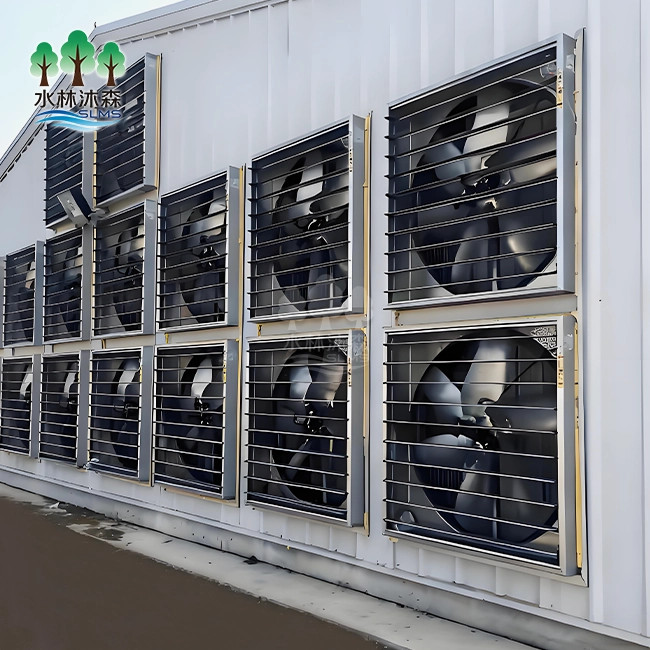
Negative pressure ventilation works on a simple idea: large exhaust fans placed at one end of a barn create a partial vacuum inside the building. Because of this difference in pressure, outside air is forced to come in through well-placed openings or evaporative cooling pads on the other end. A steady flow of one-way air moves through the whole building, getting rid of extra heat, wetness, dust, and harmful gases produced by animals breathing and manure breaking down.
How Negative Pressure Systems Work
High-capacity exhaust fans, automatic intake controls, and often cooling pad systems make up the main parts. When fans turn on, they pull air out of a room at rates measured in cubic meters per hour. When the pressure inside goes below that of the air outside, fresh air rushes in through controlled holes. This makes a tunnel effect in long chicken coops, which speeds up the wind across bird populations to between 2.5 and 3.0 meters per second. The steady flow of air makes evaporative cooling from the birds and any water misting systems work better, which lowers the temperature even when it's still hot outside.
Key Benefits Confirmed by Customers
When operators install good negative pressure systems, they say they get a number of measured benefits. Immediate changes can be seen in the air quality; ammonia levels drop greatly within 48 hours of the system being properly set up, making it easier for flocks to breathe. It becomes easier to control the amount of moisture in the litter, which stops wet conditions that help bacteria grow and cause coccidiosis breakouts. When compared to natural ventilation or positive pressure designs, this one makes the temperature much more even across the barn, getting rid of the hot spots that cause growth rates to vary.
Energy economy is another important benefit that users have pointed out. Newer units use a lot less electricity per cubic meter of air moving than older ones because their motors are more efficient and their blade designs are better. One Tennessee broiler maker saw a 32% drop in their monthly power costs after replacing fans that were 10 years old with newer equipment that can handle 38,000 m³/h. Because the units worked better, they had to run for shorter amounts of time to meet the same environmental goals.
Signs Your Farm Needs Better Ventilation
A lot of customers complain about bad airflow before they upgrade for a number of reasons. Condensation on walls or ceilings that you can see during cooler months means that air isn't moving around enough. Birds that gather near openings or entrances show that they want to get some fresh air. Chronically bad air quality is often the cause of high death rates that don't seem to be caused by illness. Respiratory germs do well in places where the humidity stays above 70% for a long time. When you walk into a barn and smell ammonia, it's a sign that dangerous gases are building up, which hurts lung tissue and lowers output efficiency.
Top-Rated Negative Pressure Fans for Farm Ventilation by Customer Reviews
When you evaluate air equipment, you have to look at a lot of different performance factors that have a direct effect on how much money the farm makes. We've looked at customer reviews from hundreds of setups to find out what makes a product great and what makes it average.
Performance Evaluation Framework
The most important thing to know is the airflow capacity, which is usually between 20,000 and 55,000 cubic meters per hour based on the width of the fan. People always say that the 50-inch types are great because they cover a lot of space and are easy to place. Customers stress that rated capacity should be tested at real static pressure levels, which are usually between 10 and 20 Pascals. This is because dirty cooling pads and long barn lengths create resistance that lowers actual flow.
How well a fan works when it's under a lot of stress depends on its ability to generate pressure. Farm Ventilation Negative Pressure Fan Unit better units keep 85% or more of their free-air flow rate even when the static pressure drops to 20 Pascal, while worse ones may only be able to keep 65% of their efficiency. Because of this difference, the difference between what was rated and what actually happened gets much bigger as conditions change, which means that workers have to put in more units than they should have to.
Professional-grade equipment is different from market goods because it can last longer in harsh settings. High humidity and ammonia gas are always breaking down metal parts. Fans with hot-dip galvanized steel bodies that have zinc coatings of more than 275g/m² and blades made of either 430 BA grade stainless steel or fiberglass blends get good reviews from customers. Over many years and more than 40,000 operating hours, these materials don't pit or break down structurally.
Customer-Validated Top Performers
Medium to large businesses love the 50-inch diameter units with 1.1 kW motors that run on 380V three-phase power the most when it comes to highly recommended choices. With these specs, the airflow rate is 28,000 to 38,000 m³/h, which is enough to cool 150 to 200 square meters per unit in normal conditions. The 80-kilogram unit weight shows that the building is of a high standard without being too hard to install.
Customers who run layer houses in Iowa said that problems with backdrafts that let cold air in during the winter were fixed when they switched to fans with heavy-hammer cover systems. The automatically linked shutters open all the way to a 90-degree angle to let the most air in. When the motors stop, the shutters close tightly to keep heat in and pests out. During the colder months, this design feature cut heating costs by about 18%.
A duck business in Arkansas showed how important it was to have excellent noise performance. Because their building was close to household areas, they had to keep the noise level low to keep good relationships with the neighbors. When they put in units with aerodynamic blade shapes and motor mounts that reduce shaking, the noise complaints stopped, and the ventilation actually got better than with the louder equipment they had before.
Real-World Case Studies
A Georgian broiler farm with 100,000 birds wrote about their experience switching from 15-year-old tools to newer systems. The farm put in twelve 50-inch fans along a 500-foot tube that let air into the barn. They saw a 0.08 improvement in the feed conversion ratio during the first production cycle. This means that the birds needed less feed to hit market weight because they were not as stressed out by the heat. The death rate went down by 1.2%, which means that about 1,200 more birds could be sold each cycle. The investment paid for itself in 22 months based only on these production gains, not taking into account the less work that needs to be done on upkeep or the savings in energy.
How to Choose the Best Negative Pressure Fan for Your Farm
To choose the right ventilation tools, you need to make sure that the technical specs match your unique operational needs. It's rare for generic suggestions to improve the performance or cost-effectiveness of a specific facility.
Matching Capacity to Barn Dimensions
Find the total amount of air flow your barn needs by increasing the cross-sectional area by the air speed you want. When it's hot outside, broiler houses usually aim for 2.5 meters per second, while layer operations may go a little slower. There are 60 square meters in the cross-section of a barn that is 15 meters wide and 4 meters tall. Moving 540,000 cubic meters per hour (60 times 2.5 times 3,600 seconds) is needed to reach 2.5 meters per second air speed. By dividing by the average 35,000 m³/h capacity of a single fan, you can see that you need about 15 to 16 units spread out along the exhaust wall.
Farm Ventilation Negative Pressure Fan Unit coverage area estimates are an easier way to get a rough idea. Fans that are listed for 150 to 200 m² coverage are good for rough estimates, but how well they work in real life relies on how the barn is built, the static pressure, and the weather. If you have more than 50,000 birds or a building with an odd shape, you should always talk to ventilation experts.
Critical Specification Considerations
The voltage and power of the motor must match the electrical equipment that is accessible. The 1.1 kW motors that run on 380V three-phase power are good for most business uses that need industrial electrical service. Smaller farms that only have single-phase power need different motor designs, which usually mean less efficiency.
Blade and housing materials have a direct effect on how long they last in chicken settings. However, high-strength galvanized steel can handle being hit while being cleaned, while 304 stainless steel is better at resisting rust in places where ammonia levels are very high. Fiberglass-reinforced housings don't rust very well, but they could break if they get hit during upkeep.
Speed control technology changes how flexible operations can be and how much energy they use. Variable frequency drives let you precisely change the airflow to match the current temperature and humidity, which means you use less electricity when the weather is nice. Fixed-speed units are cheaper at first, but they always run at full capacity, even if they're not needed.
Maintenance Accessibility and Support
Customer feedback shows how important it is to have simple upkeep steps. Fans with access doors that don't need tools and screens that are easy to take off cut down on cleaning time by a large amount. Pressure washing buildings between flocks is common in poultry farms. Long-term, it's much more cost-effective to buy tools that can handle direct water spray without motor damage or bearing failure.
Depending on how many parts are available, a breakdown could last for hours or days. Building ties with providers and keeping motors, belts, and shutter parts in stock locally can help prevent long outages during busy summer months. Several customers said they chose certain names because replacement parts are readily available from local sellers and can be delivered the same day.
Purchasing and After-Sales: What to Expect When Buying Negative Pressure Farm Fans
Using a plan to get air equipment saves your investment and makes sure you'll be happy with it for a long time.
Sourcing from Reliable Suppliers
Authorized wholesalers and direct makers make it easier to be sure that the goods they sell are real and meet written standards. A lot of fake or low-quality goods with exaggerated performance claims are sold in the farming equipment market. Asking for proof of testing certifications, material specs, and guarantee terms is a good way to make sure the product is real.
Companies with good names usually offer professional help for their products in addition to just selling them. During setup and regular upkeep, installation films, wiring diagrams, and troubleshooting tips are very helpful. When a supplier offers on-site installation services, there are no questions about the right way to place, connect, and line the shutters, which can affect performance if done wrong.
Understanding Pricing and Value
Equipment prices are strongly linked to the quality of the building and the length of time it is expected to last. Cheap fans with thin-gauge steel housings and simple motors may look appealing at first, but they usually need to be replaced every 5 to 7 years. Professional-grade models designed to last 40,000 hours, which is about 15 years of normal yearly use, cost more to buy but much less over their entire life.
Warranty coverage shows that the company that made the product is sure that it will last. Standard one-year free warranties offer basic security, while longer starting coverage terms or more warranty choices show higher quality standards. Carefully read over the guarantee terms to make sure they cover everything. Some warranties don't cover work costs or require you to ship back broken parts, which can add extra costs.
Installation Considerations and Support Quality
For good mechanical mounting, electrical connections that meet local rules, and the best shutter adjustment, professional installation services are needed. Customers say that skilled installation usually costs an extra 8 to 12 percent on top of the cost of the equipment, but it saves them the time and trouble of trying and failing to do it themselves. Fans that are placed correctly work at full capacity right away and have fewer problems early in their lives.
Farm Ventilation Negative Pressure Fan Unit when problems happen, being able to get technical help makes a big difference. Suppliers who let customers call experts who know their goods directly can solve problems faster than those who send calls to general call centers. Several farm managers said they chose their sources based on suggestions from nearby farms that were happy with how quickly they could help in an emergency.
Future Trends and Innovations in Farm Ventilation Systems
As people want to be more efficient, protect the environment, and have better operating information, the agricultural ventilation business keeps changing.
Energy-Saving and Eco-Friendly Developments
The main goal of improvements in motor technology is to make them more efficient. Motors rated IE3 and soon to be IE4 use 15% to 25% less electricity than motors rated IE1, even though they produce the same amount of mechanical power. As the price of energy goes up and rules about the environment get stricter, these improvements in efficiency have a direct effect on how profitable a business is.
Modern blade physics cut down on noise and drag, which lets fans move more air for the same amount of power. Computational fluid dynamics software lets engineers improve blade pitch, curve, and tip shape in ways that can't be done with traditional development by trial and error. Some companies now make blade kits that can be added to old fan housings to bring them up to speed with modern aerodynamic standards. This way, you don't have to buy whole new units.
Smart Integration and Automation
With Internet of Things connection, ventilation goes from being a simple on-off switch to managing the surroundings in real time. Modern controls keep an eye on the temperature, humidity, and ammonia levels in barns and change the fan speeds and openings automatically to keep conditions at their best while using as little energy as possible. Managers can check that systems are working and get alerts when equipment breaks down without having to physically visit sites by using smartphone apps for remote tracking.
To predict when a part will break before it does, predictive maintenance programs look at things like motor power draw, vibration patterns, and runtime hours. This means that replacements can be planned for planned breaks instead of having to be done quickly during heat waves, when broken equipment causes the most stress and death among animals.
Strategic Procurement Advice
The total cost of ownership should be used instead of just the initial buy price when purchasing new tools. Figure out how much energy you think you will use over the next 10 years, how much upkeep labor and parts will cost, and how better environmental control will affect production. This thorough study often supports buying more expensive equipment that is more reliable and efficient, even though it costs more.
By keeping up with changes in technology, you can avoid buying styles that will soon be out of date. By going to farm trade shows, joining industry groups, and keeping in touch with a number of equipment sellers, you can learn about new technologies before they become popular. Facilities that are planning big additions or improvements should make sure that the equipment they use is compatible with smart farm integration in the future, even if they don't plan to use it right away.
Conclusion
Choosing the best Farm Ventilation Negative Pressure Fan Unit based on verified customer reviews is the key to running a successful cattle business. It is clear that strong building using materials that don't rust, tested airflow performance under real-world working conditions, and full support services pay off in measured ways, such as lower energy costs, higher growth rates, and fewer deaths.
To be successful at procurement, you need to make sure that the technical specs meet the specific needs of your building and that you work with suppliers who are committed to long-term relationships with customers instead of short-term sales. As ventilation technology keeps getting better at automating tasks and being more efficient, buying good tools from well-known brands will help your business stay competitive in the farming market, which is becoming more and more demanding.
FAQ
What maintenance frequency do negative pressure fans require?
Most customers clean and check their blinds once a month, especially during times of heavy use, to get rid of dust that has built up on the blades and shutters. Models that are pulled by belts need to have their tightness checked every 500 hours of use, and the belts usually need to be replaced once a year. Motor bearings in good units are always oiled and don't need to be serviced for as long as the equipment lasts. Before the busiest summer months, the unit should get full annual maintenance that includes checking the motor's electrical connections, lubricating the shutter mechanism, and checking the case for rust or damage to the structure. Facilities that are very dirty or have a lot of ammonia in the air may need more frequent maintenance.
How do negative pressure fans differ from positive pressure systems?
Negative pressure systems push air out of structures, making a vacuum that lets fresh air in through controlled inlets. Positive pressure systems, on the other hand, bring air into structures, which raises the pressure inside and forces old air out through vents. Negative pressure is better for controlling how air moves and where it goes, which is why it is used for tube ventilation in long chicken houses. The guided airflow design makes sure that the temperature and humidity are the same all over the barn. Positive pressure is better for some tasks, like drying grains, but it's not as good at controlling the air around animals.
Can these ventilation systems be customized for specific operations?
Reliable makers offer a wide range of customization choices to meet a wide range of operational needs. You can change the materials used by picking stainless steel parts for places that are very acidic or strengthened fiberglass parts for places near the coast that are exposed to salt. Different electricity systems can work with different motor power and voltage combinations.
Dimensions and fastening arrangements can be changed to fit different barn plans. Control system integration includes everything from simple thermostats to complex weather devices that are run by computers. Talking about specific needs with suppliers during the specification phase makes sure that the equipment fits your facility's needs perfectly, instead of causing you to settle for standard setups.
Partner with Shuilin Musen Aquaculture Equipment Co., Ltd. for Superior Ventilation Solutions
Weifang Shuilin Musen Aquaculture Equipment Co., Ltd. is ready to be your reliable Farm Ventilation Negative Pressure Fan Unit provider. They offer tried-and-true solutions and have eight years of experience in manufacturing tools for farming and raising animals. Our 50-inch industrial ventilation systems are made of high-strength galvanized steel or 304 stainless steel and are guaranteed to last for 40,000 hours.
Each unit can move 28,000 to 38,000 m³/h of air, which is enough to cool 150 to 200 square meters. We offer full professional support, including installation guides, on-site commissioning services, and free guarantees that protect your purchase for one year. Our skilled research and development team changes the specifications of the materials, the way the motors are set up, and the way the parts are mounted so that they meet your exact operating needs.
You can email us at wangshuaislms@gmail.com or visit slms-equipment.com to talk about how our technical knowledge and all-around approach to solutions can help you improve the environmental control in your building while also lowering the costs over its lifetime through better dependability and efficiency.
References
1. Timmons, M.B. and Gates, R.S. (2018). Ventilation Systems for Poultry Housing: Design and Management Principles. American Society of Agricultural and Biological Engineers Technical Publications.
2. Donald, J. and Dawson, S. (2020). "Performance Evaluation of Negative Pressure Ventilation in Commercial Broiler Operations." Journal of Applied Poultry Research, 29(3), 612-628.
3. Midwest Plan Service. (2019). Mechanical Ventilating Systems for Livestock Housing: Engineering Specifications and Installation Standards. Iowa State University Extension Publications.
4. Purswell, J.L. and Linhoss, J.E. (2021). "Energy Efficiency Assessment of Modern Agricultural Exhaust Fans Under Variable Static Pressure." Transactions of the ASABE, 64(2), 445-456.
5. National Chicken Council. (2022). Animal Welfare Guidelines and Audit Checklist for Broiler Chickens: Environmental Management Standards. Washington, D.C.
6. Xin, H. and Harmon, J.D. (2017). "Ammonia Reduction and Environmental Control in Enclosed Livestock Facilities Through Optimized Ventilation." Agricultural Engineering International: CIGR Journal, 19(4), 168-179.
Learn about our latest products and discounts through SMS or email