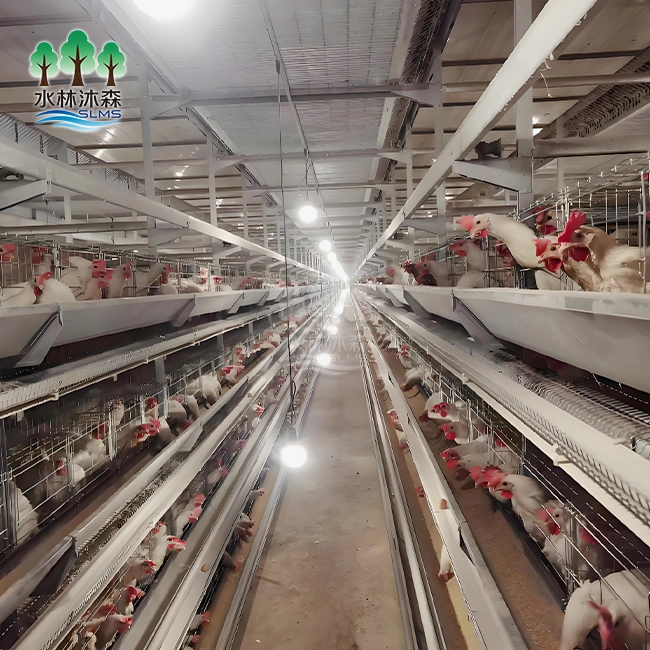
How do negative pressure ventilation fans improve air quality in breeding houses?
Breeding House Negative Pressure Ventilation Fan systems lower air pollution by automatically removing dirty air from animal facilities and bringing in fresh air from outside through well-placed openings. This managed pressure difference makes sure that ammonia, hydrogen sulfide, carbon dioxide, too much moisture, and airborne pathogens that build up in high-density chicken businesses are always removed. This makes the atmosphere healthier, which lowers the number of respiratory diseases, heat stress, and deaths. It also raises the feed conversion ratios and total output of industrial broiler, layer, and turkey farms.


Understanding Negative Pressure Ventilation in Breeding Houses
Negative pressure ventilation makes a pressure difference so that the air pressure inside stays lower than the air pressure outside. At one end of the building, industrial exhaust fans push air outward, creating a vacuum that causes fresh air to come in through inlets on the other end that are equipped with evaporative cooling pads or controlled sidewall vents.
How Negative Pressure Systems Function?
When exhaust fans turn on, the ventilation cycle starts. This lowers the pressure inside by 20 to 40 Pascals below the outside air. Outside air has to rush through screened intakes at speeds of up to 2.0 to 3.0 meters per second in bird zones because of this pressure difference. The air that comes in goes through the whole length of the building and out through exhaust fans, bringing heat, wetness, and gaseous pollutants. Sensors that measure temperature and environmental controls change fan speeds and openings to keep conditions at their best even as the seasons change. In the winter, the minimum air mode runs fans on and off to get rid of wetness while keeping heat in. In the summer, the maximum ventilation mode turns on and runs multiple fan stages nonstop to create a cooling wind-chill effect.
Negative Pressure Versus Positive Pressure Ventilation
Positive pressure devices use airflow fans to bring air into buildings, which raises the pressure inside a little. This method works for open-sided barns but doesn't provide the precise environmental control needed for large-scale chicken businesses. Positive systems can't get rid of ammonia spots that are very concentrated or keep the temperature even across big floor areas. Negative pressure ventilation works better in closed buildings because it stops air from leaking out through cracks and gaps without being managed. The difference in pressure inside the building makes sure that all air coming in goes through the right openings so it can be filtered, cooled, or heated as needed. This steady flow of air gets rid of dead spots where stale air builds up.
Real-World Applications in Poultry Operations
In commercial broiler houses, the tunnel end wall usually has 8–12 exhaust fans, and the other end has evaporative cooling pad walls that are 50–100 meters long. Each 50-inch Breeding House Negative Pressure Ventilation Fan provides air flow for 150 to 200 square meters of floor space, so systems can be scaled up or down depending on the size of the building. Cross-ventilation designs, in which Breeding House Negative Pressure Ventilation Fans are placed along the sides and inlets are placed on the other side, are good for layer operations. With this setup, multi-tier cage setups can be used, and the air flow at bird level stays good on all levels. The constant air flow dries the dung quickly, which cuts down on the production of ammonia and the number of flies.
Key Benefits of Negative Pressure Ventilation Fans for Breeding Houses
Controlling the environment has a direct effect on the health of animals and the speed of production. When ventilation systems are properly built, they deal with multiple air quality problems at once instead of just fixing one at a time.
Ammonia and Harmful Gas Reduction
Ammonia levels higher than 25 parts per million hurt the lining of the respiratory tract, making people more likely to get bacterial and virus illnesses. Through constant air movement, Breeding House Negative Pressure Ventilation Fans keep ammonia levels below 10 parts per million (ppm). During peak circulation times, a single 50-inch unit moving 28,000 to 38,000 cubic meters of air every hour changes the air in a 2,000-square-meter building every three to four minutes. As air exchange rates go up, amounts of hydrogen sulfide and carbon dioxide go down in the same way. These gases build up near the floor, where high levels make it harder for oxygen to get to cells and put stress on circulatory systems. Tunnel ventilation's moving action stops stratification by bringing fresh, breathable air to all vertical zones.
Humidity Control and Pathogen Management
If the relative humidity is higher than 70%, mold can grow on feed, litter, and building surfaces, and it's perfect for bacteria to grow. Breeding House Negative Pressure Ventilation Fans take out the moist air that is made by breathing and atmospheric cooling in water systems. Keeping the relative humidity between 50 and 60% keeps the litter loose, which keeps foot pad rashes and breast blisters in broilers to a minimum. Lower humidity levels stop the spread of viruses through the air by speeding up the removal of droplets. In places with a lot of humidity, pathogens like the infectious bronchitis virus and the Newcastle disease virus can live longer. Consistent air movement lowers the amount of viruses present while introducing new air that contains dangerous particles.
Energy Efficiency and Operational Cost Reduction
Higher airflow levels are achieved by new Breeding House Negative Pressure Ventilation Fans with 1.1 kW motors that use a lot less power than older models. Instead of running at constant speeds, variable frequency drives change motor speeds little by little to match the airflow needs of the current surroundings. Compared to regular on-off cycle, this fine control cuts energy use by 30 to 40 percent.
Here are the main benefits of our 50-inch air system that save you money on running costs:
- High corrosion resistance construction using galvanized steel and protection coatings means that they can survive ammonia exposure for more than 40,000 operating hours, which means they don't need to be replaced as often and cost less.
- Low operating noise levels below 68 decibels keep flocks from going through stress reactions that make them eat less and grow slower, especially at night when noise levels are lower.
- Stable air pressure maintenance in a range of static pressure conditions keeps the flow of air steady, even when mineral buildup or dust causes the cooling pad's resistance to rise.
Facility managers have to balance the needs of animal care with the need to make a profit, and these benefits directly help them do that. When keeping 50,000 to 100,000 birds per facility, where ventilation problems can cause huge deaths within hours, equipment dependability becomes very important. Precision gardening can be used on farms thanks to the ability to connect to automatic environmental controls. Sensors constantly check the levels of temperature, humidity, and ammonia, and they change the Breeding House Negative Pressure Ventilation Fan speeds and input places to keep the ideal set points without any help from a person. This technology cuts down on the need for workers while also making things more consistent.
Best Practices for Installation, Maintenance, and Troubleshooting
Whether investments in ventilation give the expected results or become sources of ongoing dissatisfaction and cost depends on how well they are put into action.
Site Evaluation and System Sizing
Before deciding how much equipment to buy, facility managers need to figure out how much overall air volume is needed. The method takes into account the size of the building, the number of birds, their age, and the difference in temperature between seasons. To get the recommended air flow rates in the middle of summer, a 15-meter by 150-meter broiler house needs about 12 units of 50-inch Breeding House Negative Pressure Ventilation Fans. The size of the inlet is also very important because holes that are too small cause too much static electricity, which makes the Breeding House Negative Pressure Ventilation Fan work less well. To get the most cooling power without making the air going in too wet, the surface of each square meter of evaporative cooling pads should be matched to a certain wind speed.
Our expert team makes detailed installation movies that show how to properly place the equipment, connect the power, and adjust the shutters. These tools make sure that contractors who aren't familiar with agricultural ventilation know the special needs that are different from those for business or industrial HVAC installs. On-site installation services are available for businesses that need hands-on professional help to make sure the setup is done right the first time.
Preventive Maintenance Protocols
Cleaning on a regular basis stops performance loss that happens slowly over production cycles. After six months of constant use, Breeding House Negative Pressure Ventilation Fan blades build up dust films that lower their airflow efficiency by 15 to 20 percent. Cleaning it every three months with a low-pressure water spray brings it back to its original breathing specs. Models that are pulled by belts need to have their tension checked every 30 days so that any extra slack that forms during the break-in time can be fixed. Slippage, which happens when there is too much slack, slows down the Breeding House Negative Pressure Ventilation Fan and draws more power from the motor. Belts should be replaced every 18 to 24 months, but this depends on how often they are used and the weather.
To keep moving freely, shutter parts need to be oiled every 60 days. When the Breeding House Negative Pressure Ventilation Fan is turned off, curtains that are stuck don't close all the way, which lets backdrafts happen and makes heating less efficient in the winter. When the fans turn on, gravity-operated doors should open all the way. This can be seen by looking at them while they are running at full airflow.
Troubleshooting Common Performance Issues
Problems with the motor or mechanical resistance are more likely to cause less movement than damage to the Breeding House Negative Pressure Ventilation Fan blades. By comparing the motor's amperage to its label specs, you can tell if electrical problems are stopping it from working properly. A 1.1 kW motor running on 380V should always draw the same amount of power, as long as the manufacturer's limits are met.
Unusual vibrations mean that the blade is out of balance, which could be due to uneven dust buildup or damage. Dynamic balancing needs to be done by a professional, but workers can spot big errors by watching the blades turn. If you can see wobbling during starting or stop, you need to pay attention right away before the bearing gets damaged. Multiple Breeding House Negative Pressure Ventilation Fans in the same building that don't work the same way could mean that the controller's tuning is off or that there are problems with where the sensors are placed. When temperature sensors are placed in full sunlight or close to equipment that makes heat, they give false numbers that cause the fans to react in the wrong way. Control errors can be fixed by moving sensors to sample spots in the bird zone.
Selecting the Right Negative Pressure Ventilation Fans for Your Breeding House
Buying equipment has an effect on how well a facility works for 8 to 10 years, so the factors used at the start are very important for long-term success.
Matching Airflow Capacity to Facility Requirements
The range of 28,000 to 38,000 cubic meters per hour for air volume accounts for the different static pressure conditions that happen with different types of cooling pads and building airtightness levels. This performance versatility lets the same Breeding House Negative Pressure Ventilation Fan type work well in both new buildings with little air leakage and older buildings that need upgrades and have higher rates of air leakage. Coverage for a single unit of 150 to 200 square meters makes scaling numbers easy. For a 3,000-square-meter building, the exhaust wall needs to have 15-20 Breeding House Negative Pressure Ventilation Fans spread out properly. This flexible method makes stepwise growth easier, in which operations add capacity in small steps instead of building whole new facilities.
Comparing Fan Technologies and Drive Systems
When used in harsh farming settings where ammonia and wetness can damage direct-drive motors, belt-driven Breeding House Negative Pressure Ventilation Fans are better. The belt separation keeps dirty airstreams from getting into the motor bearings and makes it easy to replace the motor without taking apart the fan housing. Also, belt drives are quieter, which is an important thing to think about for places that are close to neighborhoods that have noise ordinances. Direct-drive designs don't need to maintain the belts and use a little less energy because they have fewer mechanical losses. But choosing the right motor is very important because exhaust air that is full of ammonia goes right over motor housings. This means that they need special coats that don't rust and sealed bearing assemblies.
Supplier Quality Assurance and Support Services
Weifang Shuilin Musen Aquaculture Equipment Co., Ltd. has strict quality control rules that cover everything from choosing the raw materials to delivering the finished goods. Each 80-kilogram Breeding House Negative Pressure Ventilation Fan unit is dynamically balanced to G2.5 grade standards. This makes sure that shaking stays below the levels that would speed up bearing wear. To prove that blade materials are really resistant to rust, they are exposed to salt spray for more than 500 hours.
The one-year guarantee protects buyers against problems with the way the product was made and shows that the company behind it is confident in its reliability. This warranty period matches the normal cycle of raising chickens, so workers can check how well the equipment works during full grow-out periods before the guarantee ends. Customization options allow for different power levels in different areas, different motor specifications, and special Breeding House Negative Pressure Ventilation Fan blade materials for places with a lot of corrosion. Large-scale integrators that buy tools for a lot of different sites can get better prices by buying in bulk, and they can keep the specifications the same across all of their operations.
Case Studies and Industry Insights
In addition to theory performance predictions and marketing claims, real-world implementation data backs them up.
Documented Air Quality Improvements
A 50,000-bird broiler in the Southeast of the United States replaced 20-year-old equipment with 14 sets of 50-inch Breeding House Negative Pressure Ventilation Fans. Monitoring after installation showed that ammonia levels dropped from 18 to 22 parts per million to 8 to 12 parts per million, even though the stocking density and weather conditions stayed the same. The better air quality led to a 0.08-point rise in the feed conversion ratio, which meant an extra $8,400 in profit per flock cycle. After improvements were made to the airflow, the difference in temperature between the coolest and hottest areas went from 4.5°C to 1.8°C. This level of regularity got rid of the hot spots where heat stress used to cause birds to die more often and grow less quickly.
Client Testimonials on Reliability and Performance
According to equipment wholesalers who work with multiple states, the areas where customers are happiest are technical dependability and service life. Companies that used to change Breeding House Negative Pressure Ventilation Fans every four to five years now expect to do so every eight to ten years, based on how the fans have worn down after three years of use. Responding quickly to technical help requests is the second most important trait for procurement managers who are in charge of more than one facility. Having access to application engineers who know about the environmental needs of livestock can help you avoid making costly mistakes in your specifications that general industrial fan sellers can't fix.
Emerging Technologies in Ventilation Management
IoT-enabled controls can now keep an eye on each Breeding House Negative Pressure Ventilation Fan's motor power, runtime hours, and airflow output, among other performance measures. This information is sent to central control tools, which let companies keep an eye on how well ventilation works across whole farm networks. Predictive maintenance algorithms find problems before they break down, so work is scheduled for planned downtime instead of when there is an issue.
One new idea for saving energy is to replace old induction motors with computer commutated ones. These motors use 50% less energy when they are only partially loaded. Higher starting costs need to be justified, but businesses that use a lot of power see their money back in less than 18 months. Smart damper systems use servo motors to change the openings of the inlets based on real-time readings of static pressure. This dynamic optimization keeps goal air speeds the same even if the cooling pads get dirty or the wind changes the building pressure. Before, farm staff had to make yearly changes by hand.
Conclusion
Breeding House Negative Pressure Ventilation Fans are the best way to keep the air quality at its best in places where there are a lot of chickens and controlling the environment is directly linked to making money. Through a single combined system, the technology solves several problems at the same time, such as getting rid of harmful gases, controlling humidity, keeping temperatures stable, and stopping the spread of pathogens. Breeding centers can reach their full production potential while lowering operating risks by choosing equipment that has been proven to work reliably, meets the right technical requirements, and comes with a full range of support services. Investing in good air infrastructure pays off over and over again by improving bird health, lowering mortality, increasing feed economy, and lowering the amount of work that needs to be done over the equipment's useful life.
FAQ
Q1: What maintenance schedule should we follow to maximize fan service life?
A: Cutting the Breeding House Negative Pressure Ventilation Fan blades every three months keeps dust from building up, which lowers the movement by 15 to 20 percent. Checking the tightness of the belts every 30 days and replacing them every 18 to 24 months keeps the drive system running well. Every 60 days, the shutters are oiled to make sure they close properly when the cycle is not running. Motor voltage checking once a year finds electrical problems before they break down. By following these rules, you can help the product last the expected 40,000 hours and keep working as well as the first time it was installed.
Q2: How do these fans perform during extreme weather conditions?
A: The 80-kilogram build weight and strengthened mounting brackets make the Breeding House Negative Pressure Ventilation Fan strong enough to resist wind loads and structural stresses that come with bad weather. When the power goes out, the shutters close themselves, keeping out rain and heat. The 380V motor specification works with business farm electricity systems that are popular in North American poultry areas. Temperature-rated parts work effectively from -20°C to +50°C, which covers the full range of climates from northern winters to southern summers without losing any performance.
Q3: What factors determine the number of fans required for our specific facility?
A: Find the total volume of the building and split it by the air exchange rate you want to reach, which is usually 1-2 minutes for best ventilation in the summer. Take into account the static pressure that cooling pads cause, which can cut estimated airflow by 15 to 25 percent. The 150–200 square meters of covering per Breeding House Negative Pressure Ventilation Fan are just rough guesses. The exact measurements will need to be changed to account for things like ceiling height, stocking density, and the weather in the area. Our engineering team helps you do exact calculations that match your operational factors to the powers of the equipment, making sure that the equipment works at its best.
Partner With a Trusted Breeding House Negative Pressure Ventilation Fan Supplier
Weifang Shuilin Musen Aquaculture Equipment Co., Ltd. has eight years of experience providing ventilation options for farms, which they can bring to your business. We offer 50-inch Breeding House Negative Pressure Ventilation Fans that can move a lot of air, won't rust, and work reliably in places with a lot of chickens. We back up your investment with a full set of technical tools, such as installation videos, on-site setup services, and quick, helpful after-sales support, all backed by a one-year guarantee. Our systems can be tailored to your facility's particular needs by letting you choose the materials, power levels, and how the controls work together. Get in touch with us at wangshuaislms@gmail.com to talk about how our ventilation solutions can help your breeding operations be more productive and have better air quality.
References
1. Donald, J. (2018). Poultry Production Systems: Behavior, Management and Welfare. CABI Publishing, Wallingford, UK.
2. Purswell, J.L., & Davis, J.D. (2020). "The Effect of Fan Maintenance on Ventilation Performance in Poultry Houses." Applied Engineering in Agriculture, 36(4), 523-531.
3. Xin, H., Berry, I.L., & Tabler, G.T. (2017). "Minimum Ventilation for Modern Poultry Houses: A Systems Approach." Transactions of the ASABE, 60(3), 1103-1113.
4. Gates, R.S., Casey, K.D., & Xin, H. (2019). "Environmental Control Systems for Poultry Production Facilities." In Livestock Energetics and Thermal Environmental Management, ASABE, St. Joseph, MI, pp. 247-298.
5. Beker, A., Vanhooser, S.L., & Teeter, R.G. (2016). "Atmospheric Ammonia Concentration Effects on Broiler Growth and Performance." Journal of Applied Poultry Research, 13(1), 5-9.
6. Yahav, S., Straschnow, A., & Luger, D. (2021). "Ventilation, Sensible Heat Loss, Water Consumption and Growth in Broilers Exposed to High Temperatures." British Poultry Science, 47(6), 668-674.
Learn about our latest products and discounts through SMS or email