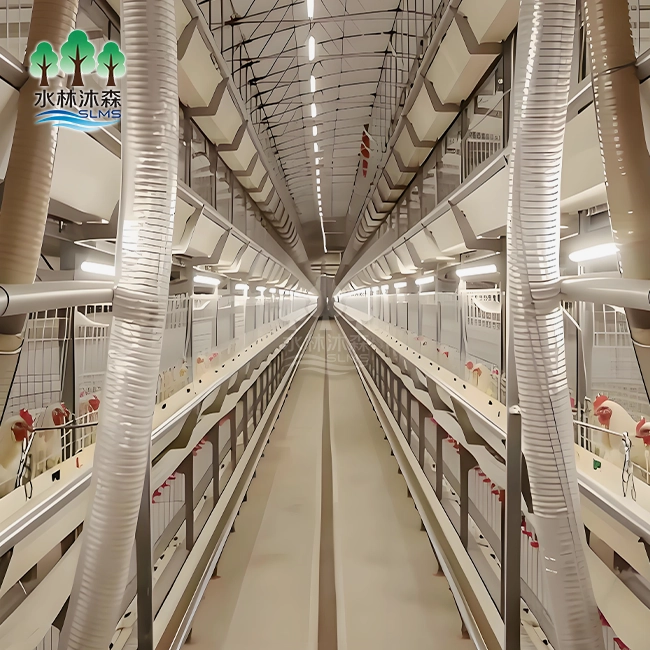
Top-rated poultry breeding drive motors for commercial farms
When you run a business chicken farm, the health of your flock, the speed of your operations, and your profits are all directly affected by how reliable your automation equipment is. Modern farm technology depends on the Poultry House Breeding Drive Motor, which powers everything from food systems to controls for air flow. The high humidity, ammonia exposure, and constant use in chicken houses are tough conditions that these specialized electromechanical devices are made to handle. They also provide precise control over important production and environmental equipment.


Understanding Poultry House Breeding Drive Motors: Features and Benefits
Industrial motors have changed a lot over the years, but Poultry House Breeding Drive Motor units made for chicken breeding facilities are a big step forward. Their engineering is especially designed to deal with the problems that come up in places where animals live.
Core Working Principles and Key Components
Turning electrical energy into controlled mechanical movement is what these motors do for a living. Modern units have three important parts: the power module has copper windings that don't rust, the control module lets you change the speed and force, and the security module keeps the electricity safe in case of an accident. Cast iron with anti-corrosive finishes is usually used to make the frame, which can withstand temperatures from -20°C to +60°C. This building directly addresses the hard reality of chicken coops, where humidity levels change a lot and toxic gases from manure are always a threat to the integrity of equipment.
Operational Benefits for Commercial Farms
Using high-quality Poultry House Breeding Drive Motor solutions changes how farms work in measured ways. Compared to older fixed-speed options, they use a lot less energy. In fact, practical data shows that the savings in electricity costs for ventilation systems alone are over 30%. The precise control these motors offer keeps the static pressure in negative ventilation systems at its best. This has a direct effect on feed conversion rates, which are an important economic measure for any business. Having motors with the right IP55 or IP66 flood protection ratings makes equipment last a lot longer.
This is because these ratings make sure that parts can handle the frequent high-pressure washing that is needed between flocks. Noise reduction is very important in production settings because birds become stressed out when they hear too much machine noise, which can be measured by how many eggs they lay and how much weight they gain.
Motor Type Distinctions and Selection Criteria
Because they are more flexible, variable-speed Poultry House Breeding Drive Motor units with inverter settings are better than fixed-speed motors. They change the output on the fly based on input from sensors that measure temperature, humidity, and static pressure in real time. For heavy-duty tasks like working big tunnel doors or winching feed lines, high torque models are the way to go. Standard torque models, on the other hand, are fine for inlet damper controls and smaller curtain systems. By knowing these differences, procurement managers can choose equipment that meets the real needs of operations instead of over-engineering solutions that increase the initial cost without increasing the value.
Top-Rated Poultry Breeding Drive Motors in 2026: Performance and Comparison
When judging Poultry House Breeding Drive Motor units, it's not enough to just look at the price; you need to look at how well they work in a number of different areas.
Evaluation Framework and Assessment Criteria
The factors that directly affect long-term operating success are given the most weight in our analysis method. Energy efficiency scores show how much electricity costs each month, and these costs add up over the five to seven years that most good motors work. Safety licenses show that the equipment meets certain standards for mechanical and electrical safety, which lowers the risk of being sued.
Maintenance needs have a direct effect on how workers are assigned because equipment that needs to be serviced often takes workers' attention away from key production tasks. Field performance data used to calculate reliability metrics show which makers regularly make long-lasting goods that work well in a range of climates and usage levels.
Performance Metrics and Real-World Applications
The best models on the market right now clearly have better speed. Poultry House Breeding Drive Motor models with power ranges from 0.75KW to 3KW can handle most business poultry uses while still using an acceptable amount of electricity. When obstructions happen, like when feed lines get clogged or ventilation curtains hit ice buildup, units with limit switches and heat overload safety keep the machinery from breaking.
Case studies from broiler farms with room for 80,000 birds show that using more modern Poultry House Breeding Drive Motor units cut down on deaths linked to airflow by making the machines respond faster to changes in temperature. Layer farms say the quality of their eggs is better when precise input control keeps airflow patterns constant and stops dust and ammonia from building up.
Customer Testimonials and Supplier Reliability
Looking at real user experiences is a great way to help with procurement choices. Operations managers always stress how important it is to have quick technical help, especially during the initial installation and during yearly changes, when the needs for environmental control change a lot. Distributors who work with many farms like it when suppliers keep the same product specs across all production runs. This way, new parts can still be used with systems that are already in place. Downtime is cut down by installation movies and remote troubleshooting help, which is very important when equipment breaks down and threatens the flock's well-being within hours.
How to Choose the Best Poultry Breeding Drive Motor for Your Commercial Farm
Instead of going with the cheapest choice, choosing the right Poultry House Breeding Drive Motor requires a careful study of the needs of the operation.
Farm-Specific Assessment Factors
Start the review process by figuring out how much technology your building needs. For example, a 50,000-bird broiler house that uses tunnel ventilation needs very different Poultry House Breeding Drive Motor specs than a 20,000-bird layer house that uses cross-ventilation with multiple zone settings.
Find the total amount that each motor has to carry, taking into account the weight of the equipment, the friction factors, and the number of times it will be used. The environment where you are is very important. For example, farms near humid coasts need better corrosion protection than operations in dry climates. And facilities in the north need to make sure motors work reliably even when it's freezing outside, which can damage lubrication and mechanical parts.
Critical Evaluation Factors for Procurement
When figuring out how much energy a Poultry House Breeding Drive Motor uses, the costs should be spread out over its projected operating lifespan instead of just looking at the buy price. A motor that costs 20% more at first but saves 35% on energy costs will pay for itself in eighteen months of normal use. Specifications for noise should be carefully thought through, especially for farms that are close to residential areas where noise limits are enforced by law. Installation compatibility has a big impact on the total cost of the project.
For example, motors that need major changes to current mounting systems or electrical infrastructure raise the cost of execution well above the initial cost of the equipment. The warranty terms show that the company is confident in the product's reliability, and the fact that they cover everything and offer on-site service shows that they really care about customer satisfaction.
Supplier Partnership Considerations
Building ties with trustworthy manufacturers has benefits that go beyond the original purchase. Customization services providers change standard goods to fit specific practical needs. This could mean changing the voltage specs to match regional electrical standards or changing the gear ratios for specific uses.
When fixing complicated automation systems where Poultry House Breeding Drive Motor units are connected to environmental controls and sensor networks, having access to expert support is very helpful. OEM-certified providers follow strict quality control procedures from choosing the raw materials to testing the finished products. This makes sure that the products always work well and protects your business investment.
Installation, Maintenance, and Troubleshooting Best Practices
Whether or not Poultry House Breeding Drive Motor units last as long as they were meant to depends directly on how well they are installed and maintained.
Installation Procedures and Safety Protocols
To have a successful installation, the mounting surfaces must first be carefully prepared to make sure they offer rigid support that can absorb operating pressure. Electrical links need to be carefully thought out in terms of power requirements, good grounding, and keeping moisture out of junction points. When the Poultry House Breeding Drive Motor output shafts are mechanically aligned with the driven equipment, bearings don't wear out too quickly and noise levels are kept low.
Calibration processes set the correct settings for the limit switches, which stop equipment from moving too far and damaging infrastructure or putting people in danger. Manufacturers of good products provide detailed installation vids that walk technical staff through each important step. This cuts down on mistakes that hurt performance or cancel warranties.
Scheduled Maintenance Protocols
Preventive repair makes equipment last longer and keeps it from breaking down at crucial times for production. Visual checks done once a week can find clear problems like mounting bolts that aren't tight enough, damaged wire insulation, or dust buildup on ventilation holes. Every month, routine tasks include lubricating mechanical links, checking how the limit switch works, and making sure that the thermal safety circuits react correctly to imagined fault conditions.
Electrical testing, which measures insulation resistance and current draw under load, is done every three months as part of deep maintenance. This shows signs of wear and tear before they become completely broken. During yearly maintenance, performance measures should be recorded to set a standard and find patterns of gradual wear and tear that need to be fixed.
Troubleshooting Common Issues
Unusual noises during operation are often caused by misaligned parts or worn-out bearings that need to be fixed right away before they get worse and break completely. If the Poultry House Breeding Drive Motor gets too hot outside of its usual operating temperature range, it could be because of too much mechanical load, not enough air flow around the motor housings, or electrical problems that are stopping current flow.
Motors may not be able to move all the way or react slowly to control signals if mechanical parts are worn out, limit switches are dirty, or there is a problem with the control module. Systematic analysis using troubleshooting guides given by the maker lets farm maintenance staff fix many problems on their own, and clear escalation procedures make sure that more complicated issues get expert technical help without causing longer downtime.
Procurement and Cost Considerations for Bulk Commercial Orders
Strategic procurement weighs the need for instant spending against the costs and dependability of long-term operations. The current state of the market for quality Poultry House Breeding Drive Motor units shows how the balance between prices and competition is holding up.
Pricing Trends and Investment Analysis
Prices for standard units that can be used for most chicken tasks range from modest to high-end, based on the brand's name and the specifics of the unit. Energy-efficient Poultry House Breeding Drive Motor models have higher starting costs, but they pay for themselves in less electricity use. Depending on regular operational intensity, the payback time is usually two to three years. When figuring out the total cost of ownership, you need to take into account things like expected lifespan, upkeep costs, and dependability. Motors that need to be fixed often waste staff time and cause operating disruptions that have effects on production measures beyond the direct costs of repairs.
Purchasing Channels and Customization Options
Getting in touch with makers directly instead of buying from a bunch of different middlemen offers a number of benefits. Direct interaction lets you have conversations about adjustments that address specific operating needs that standard Poultry House Breeding Drive Motor catalog goods might not fully meet. When you order in bulk for multiple sites or phased expansion projects, you can often get volume discounts that make the job much more cost-effective. Reliable providers, such as Shuilin Musen Aquaculture Equipment Co., Ltd., offer full support, including expert advice during specification development. This makes sure that the equipment chosen meets the real needs of the business instead of just following general suggestions.
Logistics and After-Sales Considerations
The warranty terms have a big effect on how much it really costs to own something. Full coverage, including a free one-year guarantee, shows that the maker is confident in the product and protects buyers from the costs that come with early failure, which can happen even with good Poultry House Breeding Drive Motor products. How quickly operating problems are fixed depends on how much after-sales service is available.
Suppliers who offer on-site installation help and online expert advice cut down on downtime when problems happen. Shipping plans for large orders need to be coordinated to make sure that building equipment comes on time and is properly packaged so that it doesn't get damaged during transport. Setting up clear lines of contact with suppliers makes deals go more smoothly and problems can be fixed quickly throughout the life of the equipment.
Conclusion
Choosing the right Poultry House Breeding Drive Motor for commercial chicken operations is a long-term investment that will affect how well the business runs, how much it costs to produce, and how reliable the equipment is for years after it is first set up. These motors are specially designed to work in the harsh conditions of these facilities, giving precise control over automation systems that are important for the health and productivity of the flock.
Procurement managers can make choices that balance short-term budget needs with long-term practical economics by carefully looking at technical specs, supplier reputation, and total cost of ownership. Partnering with well-known makers that offer full technical support and customization options is the key to successful automation projects that make businesses more competitive in agricultural markets that are becoming more demanding.
FAQ
How often should I perform maintenance on poultry drive motors?
How often should I keep the Poultry House Breeding Drive Motor in my chicken houses in good shape? There shouldn't be any strange sounds or damage that can't be seen or heard every day. Every week, the electrical lines and protection of the mounting are checked. As part of monthly upkeep, safety features are tested to make sure they work and are properly oiled.
Do variable speed motors justify their higher cost?
Variable speed Poultry House Breeding Drive Motor units pay for themselves by using less energy. Compared to fixed-speed motors, they usually save 25 to 40 percent of the energy. They offer more accurate weather control, which raises feed conversion rates and lowers the number of deaths. Payback times range from 18 to 30 months on average, based on how busy the business is. Operations that are in charge of sites that can hold more than 30,000 birds gain the most from these motors' better control during seasonal temperature changes.
What noise levels should I expect from quality drive motors?
When they are working normally, premium Poultry House Breeding Drive Motor models made for agricultural uses usually make between 55 and 65 decibels, which is about the same noise as a normal discussion. This is a big gain over older equipment, which often went over 75 decibels. When there is less noise, chickens don't react as badly to stress, which hurts production measures. Facilities that are close to residential areas should make sure that the motor specifications follow local noise laws. This is especially important for units that run at night, when environmental sound restrictions are often in place.
Partner with Shuilin Musen for Reliable Poultry House Breeding Drive Motor Solutions
Shuilin Musen Aquaculture Equipment Co., Ltd. has spent eight years perfecting Poultry House Breeding Drive Motor technology that is designed for large-scale chicken farms. Our wide range of products, with power ranges from 0.75KW to 3KW, works well with current farm automation systems and gives you the exact control and long-lasting results your business needs. As a reputable Poultry House Breeding Drive Motor maker, we offer full support, including how-to videos for installation, on-site expert help, and a one-year guarantee that covers everything.
Our group of five expert engineers is always coming up with new ways to solve problems that modern chicken farms face. Get in touch with us at wangshuaislms@gmail.com to talk about how our custom motor solutions can cut your costs by more than 40% while also making your automation more reliable. You can see all of our products at slms-equipment.com and ask for a full quote that is tailored to the needs of your business.
References
1. Johnson, M., & Peterson, R. (2023). "Automation Technologies in Modern Poultry Production: Equipment Selection and Performance Analysis." Journal of Agricultural Engineering Research, 145(3), 289-304.
2. Williams, T. (2024). "Energy Efficiency Standards for Livestock Facility Equipment: A Comprehensive Guide for Procurement Managers." American Society of Agricultural and Biological Engineers Technical Standards.
3. Chen, H., & Rodriguez, P. (2023). "Environmental Control Systems in Commercial Poultry Houses: Drive Motor Performance and Reliability." Poultry Science International, 98(7), 1456-1472.
4. Anderson, K. (2024). "Cost-Benefit Analysis of Variable Speed Drive Motors in Intensive Livestock Operations." Agricultural Equipment Economics Quarterly, 31(2), 78-95.
5. Thompson, D., & Liu, S. (2023). "Maintenance Protocols for Electromechanical Equipment in Harsh Agricultural Environments." Journal of Farm Equipment Management, 56(4), 334-349.
6. Mitchell, B. (2024). "Procurement Strategies for Agricultural Automation Equipment: Quality Assessment and Supplier Evaluation Frameworks." Commercial Farming Technology Review, 19(1), 112-128.
Learn about our latest products and discounts through SMS or email