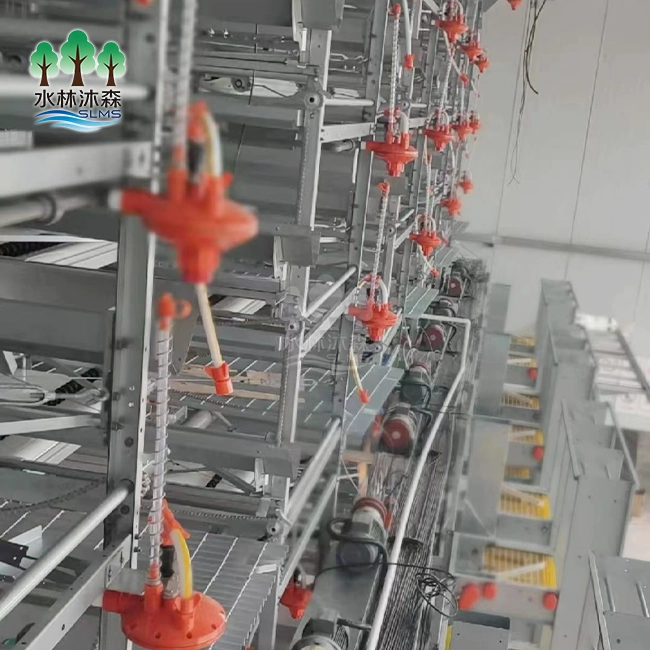
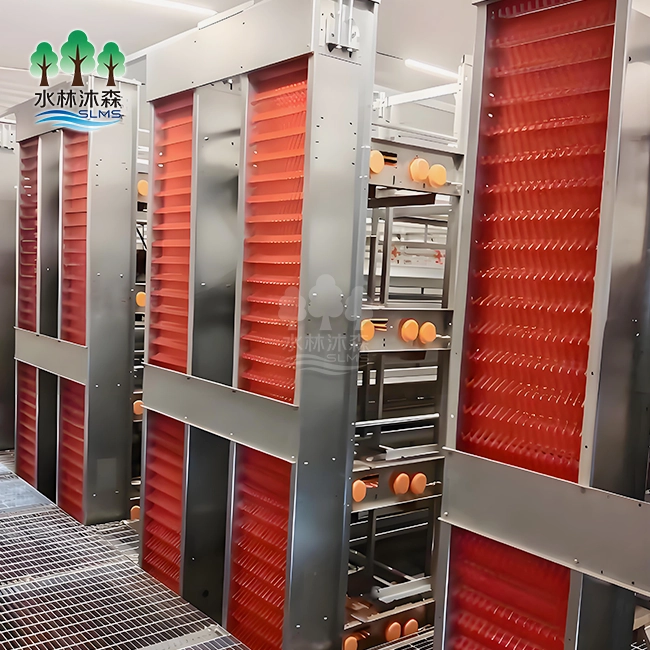
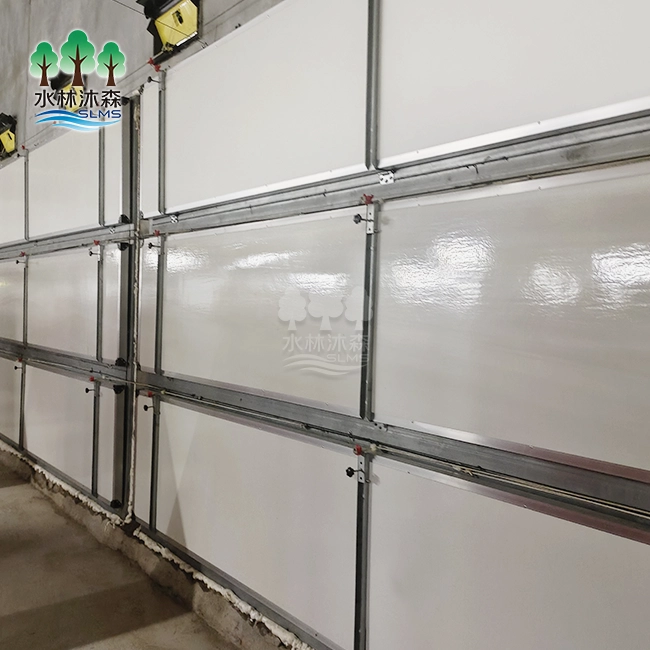
What Are Evaporative Cooling Pad Systems?
When the heat of summer threatens the health and efficiency of your flock, you need to know about current cooling technology. The Poultry Cooling Pad System is a special kind of liquid cooling system made for big chicken farms that have problems with heat stress. These systems work by bringing hot air from outside your chicken house and passing it through wet curved cellulose pads. The water loss lowers the air temperature by 5 to 8 degrees before it enters your chicken house. This thermodynamic process is a more energy-efficient option to mechanical air cooling. It directly addresses the effects of heat waves on intensive farming operations, such as increased death rates, lower feed conversion rates, and higher running costs.


Understanding Evaporative Cooling Pad Systems
We at Shuilin Musen Aquaculture Equipment Co., Ltd. have spent eight years learning more about how evaporative cooling can help modern chicken farms. This basic idea is based on nature's own way of cooling things down—the same way that sweating cools your skin on a hot day.
Core Components and Construction
Any Poultry Cooling Pad System is built around a specially designed cellulose material that is shaped into corrugated designs. Our Model 7090 cooling pads have a unique flute shape, with 7mm wave heights that are set at exact angles. This arrangement makes the most of the touch between water and air while keeping the best airflow resistance. The pads are made of cross-linked high-molecular-weight polyethylene that has been treated with solid salts that keep the structure strong when it gets wet.
The whole system is made up of three main parts that work together. The evaporative surface is made up of the cooling pad media, which is held in long-lasting frames made of aluminum alloy or stainless steel, depending on the conditions in your area. Behind these obvious parts is a system that constantly spreads fresh water across the pad's surface, making sure that it is evenly saturated without flooding. This way of moving the air around stops dry spots that would let hot air skip the cooling process.
We offer two standard thicknesses: 15 cm and 20 cm. Each one meets the needs of different climates and building styles. In very hot, dry places where lowering the temperature is the most important thing, the bigger 20cm design works best for cooling. The 15cm choice works best in moderate temperatures or places where reducing static pressure drop is very important for fan performance.
How the Cooling Process Works?
Knowing how these systems work helps you understand why they are better than standard cooling methods. The main force is negative pressure circulation. Large vent fans at one end of your chicken coop pull air from the other end, where cooling pads are set up. This makes a steady flow of air that pulls air from outside through the wet pad media on its own.
When dry, hot air moves through the structure of the soaked cellulose, water molecules take in heat and change from liquid to vapor. This change in phase takes heat out of the air stream without adding any extra energy. The slightly less hot and more humid air now moves along the length of your barn, soaking up heat from birds and equipment before exhaust fans send it outside. This constant flow of air keeps the temperature inside fixed, even when it's very hot in the afternoon.
The amount of cooling depends on two important factors: the temperature and relative humidity of the air coming in. In dry places with low humidity, the system can lower the temperature by a large amount because the air can take a lot of water. When operations are carried out in wet areas, the cooling benefits are smaller but still very important. The speed of the air moving across the pad, which is usually kept between 1.5 and 1.75 meters per second, affects both how well it cools and how much water droplets move over. When these factors are balanced in a system, it performs consistently.
Advantages Over Traditional Cooling Methods
When compared to other ways of cooling, evaporative pad systems give you real benefits that affect your bottom line. Normal circulation fans only move the air around, not change its temperature. They keep you cool in the winter, but this effect wears off as the birds get older and the density rises. Pad cooling, on the other hand, actually cools the air, which is what thermal comfort is all about.
Misting devices are another popular option. They spray small drops of water into the air or directly on birds. Misting can be useful in some situations, but it raises the humidity in the whole building, which could make the litter wet, which can lead to ammonia production and breathing problems. Pad cooling focuses the evaporation process at the air entry point, which makes it easier to control the humidity along the length of the barn.
When looking at how much energy something uses, atmospheric cooling is clearly better than mechanical refrigeration or air conditioning. Water movement pumps and vent fans are the only things that use electricity, and you'd have to run them no matter what cooling method you use. A well-designed pad system can lower the temperature in a barn by a lot while using much less electricity than several high-speed circulation fans that are working hard to move hot air that hasn't changed.
Improving the health of animals is clear as soon as the work is done. Birds that are affected by heat eat less, grow less quickly, and die more often during bad weather events. By keeping temperatures in the thermoneutral zone, cooling pads keep metabolisms working properly and allow people to eat normally. The results can be seen in your output measures, such as higher feed conversion rates, more even weight gain, and fewer visits from the vet during the summer.
Comparison of Poultry Cooling Solutions: Cooling Pads vs Other Systems
To make smart buying choices, you need to know how different cooling methods stack up against objective standards. We looked at the key performance factors that are most important to big businesses that are trying to keep their margins tight.
Efficiency and Energy Performance
Poultry Cooling Pad Systems are more thermally efficient than other methods, as shown by the fact that they lower the temperature while using less energy. In controlled lab tests, a well-kept pad system gets 70–85% saturation efficiency, which means that the air temperature drops by 70–85% of the most that could possibly be possible given the conditions of entry. This performance stays the same even when the temperature outside changes, so you can count on it to cool you down when you need it most.
Traditional ventilation with only fans doesn't lower the temperature; it just swaps indoor air for outdoor air that is the same temperature. The only thing that makes birds feel good is air moving over their bodies. This effect fades as temperatures rise above 35℃. High-velocity airflow fans use a lot of electricity but don't solve the main problem, which is too much heat.
Misting methods cool things down a bit, but they come with a lot of problems. To cool things down, tiny drops of water must evaporate fully in the air. This must happen without getting birds or litter wet. This means that misting will only work in low-humidity situations and needs careful placement of the tip and control of the pressure. Poultry Cooling Pad Systems usually use 30–40% more water than they need to because a lot of the water that is sprayed doesn't cool anything; it just collects on surfaces or soaks into sleeping material.
Water Consumption and Quality Requirements
Efficient use of water is important for both the economy and the environment. The Model 7090 cooling pads mostly lose water through evaporation into the air flow, so they don't waste much. A drainage system constantly recycles water, and only occasional bleed-off is needed to keep minerals from building up. How much is actually used depends on the temperature, humidity, and flow rate of the air, but it's usually between 3 and 8 liters per hour per square meter of pad area.
How long a system lasts and how much upkeep it needs are closely related to the quality of the water. Hard water with a lot of calcium and magnesium slowly builds up scale on pad surfaces, making them less absorbent and blocking airflow. We suggest keeping the pH of the water between 6 and 8 and using bleed-off on a regular basis to control the amount of dissolved minerals. Simple filter gets rid of particles that could block distribution pipes, and weak acids used once in a while for cleaning get rid of built-up scale.
Misting systems are more aware of the quality of the water because water that is high in minerals leaves white marks on everything it touches. This means that the water cleansing tools might need to be bought more often and cost more. Poultry Cooling Pad Systems can handle small changes in water quality, but keeping conditions at their best can extend pad life from 3 years to 5 years or more.
Durability and Maintenance Demands
The corrosion-resistant materials we use for our Poultry Cooling Pad System frames don't break down when they're exposed to water over and over again. Frames made of aluminum metal are very strong for their weight and don't rust in most places. Stainless steel construction is good for activities that happen near the coast or cleaning centers with harsh chemicals because it lasts for decades.
To take care of the cellulose pad media, all you have to do is keep the surface clean and make sure the water spreads evenly. As part of daily operations, the pad surface should be visually checked to make sure it is evenly wet all over. Dry spots mean that the distribution lines are clogged or that the pump isn't working right. We suggest turning off the water flow once a week during times of heavy use and letting the pads dry fully. This kills algae and stops biological growth that could block airflow.
Deep cleaning once a season gets rid of dust and mineral layers that have built up. Individual pad pieces can be taken off, cleaned, and put back on without any special tools thanks to the flexible design we used. Our distribution network makes it easy to get new parts, mostly the cellulose media. Changing the pads is also a simple process that any repair team can do in less than two hours.
Installation, Operation, and Maintenance Best Practices
Getting the Poultry Cooling Pad System to work well starts with installing it correctly and continues with following strict operating procedures. We came up with these rules after years of working in the field in a range of weather and building types.
Site Preparation and System Sizing
If you don't get the right size for your cooling system, it won't work as well as promised during times of extreme heat. To start the math, you need to know how much air your exhaust fan can move in cubic meters per minute. The needed pad surface area can be found by dividing this airflow volume by the appropriate face velocity (1.5 to 1.75 m/s). Undersizing causes air to move too quickly, which pulls water drops off of pads and into the barn. This makes the floors wet and lowers the cooling efficiency. Oversizing loses money and doesn't make things work better.
Preparing the site includes both figuring out where to put the pad wall and setting up the water system. The pad wall usually takes up one whole end of tunnel-ventilated homes, so the structure needs to be able to hold both the weight of the pad unit and the negative pressure load when the fans are running. When there is enough drainage, water doesn't build up under the pads, which could damage the base or become a mosquito breeding ground. Water supply lines must give enough flow to wet all pad surfaces, even during times of high demand. In retrofit uses, this may mean upgrading the plumbing that is already there.
Our technical team makes detailed installation movies that show the right way to connect and put things together. These visual tips cut down on startup mistakes that slow down the system. When the situation calls for it or the size of the building allows it, we send experienced workers to install your system on-site, making sure it works right from the start.
Integration with Existing Ventilation Systems
Poultry Cooling Pad Systems are not stand-alone answers; they are part of a larger plan to control the temperature and humidity in your barn. Overall efficiency is based on how well exhaust fans, inlet management, and environmental controls work together. The control process should set the fan to run based on the temperature inside, gradually increasing the rate of ventilation as the need for cooling grows. Pad water movement starts when the temperature outside goes above a certain level that you set, usually between 28 and 30℃, and the temperature inside goes up even though there is more wind.
Modern controls keep an eye on both temperature and humidity and change the flow of water to keep too much wetness from building up. In muggy places, this feature is especially useful because evaporative cooling alone could raise the relative humidity above 80%, which would cause trash problems and lung stress. Our water circulation systems are made with variable-speed pumps that react to sensor input and send just the right amount of water to keep the pads saturated without flooding them.
When the inlet is set up correctly, air can only enter through the Poultry Cooling Pad Systems and not through cracks or other unexpected holes. Because exhaust fans create negative pressure, air will flow through any open path. This is why blocking barn ends and keeping doors tightly closed stops hot air from getting in and making cooling less effective.
Operational Guidelines for Optimal Performance
When the system is set up correctly, it doesn't need much maintenance on a daily basis. Water pump rotation, fan staging, and temperature setpoint management are all taken care of by automated controls. Your main job is to keep an eye on performance markers and act when they don't follow normal trends. Sudden temperature rise even though fans are running properly could mean that the pad is drying out because of clogged pipes or a broken pump. If the humidity goes up without the temperature going down, it means that there is too much water flow or not enough air.
Changes in the weather are accounted for by seasonal changes. After being dormant all winter, spring startup includes cleaning pads and distribution systems very well, checking all lines for leaks, and making sure pumps give full flow. By gradually turning on the device over several days, problems can be found before it gets too hot. In temperate countries, autumn shutdown means draining all the water from the lines to keep them from freezing, taking the pumps inside to store them, and keeping the pad surfaces clean.
The maintenance plan we suggest strikes a good mix between thoroughness and realistic time limits. Daily quick checks make sure that the water is spread out evenly and that the pad is still wet. Once a week, the control system is checked to make sure it works and the pump is working properly. Deep upkeep is done once a month and includes cleaning the pads, checking the water quality, and treating mineral deposits as needed.
Procurement Considerations for Poultry Cooling Pad Systems
When choosing the right supplier and system setup, you need to look at more than just the initial buy price. For years after installation, your choice will affect running costs, system stability, and production results.
Supplier Evaluation Criteria
In the farming equipment business, a brand's image shows how good the product is and how reliable it will be over time. Our eight-year history of helping chicken farms in a wide range of climates shows that Shuilin Musen Aquaculture Equipment Co., Ltd. is dedicated to long-term customer success. Our professional research and development team of five dedicated engineers makes three or more new products every year. They make sure that our products include the newest ideas that solve problems that are coming up in the industry.
Product approvals show that the gear you buy meets quality and safety standards that are known to be reliable. At every step of the manufacturing process, from choosing the raw materials to testing the finished product, we make sure the standard is high. We use high-strength galvanized steel and 304 stainless steel in our building to make sure that tools can handle harsh barn conditions without breaking down too soon.
Support after the sale is often what makes the difference between a cooling system working as promised and being a pain to maintain. Every Poultry Cooling Pad System comes with a free 1-year guarantee that covers problems with the materials or the way they were put together. In addition to the warranty coverage, our expert support team is available to help you when you need help with operating questions or fixing problems. Make sure your repair staff has the tools they need for regular service procedures by giving them installation videos and thorough paperwork. When it's necessary, we set up on-site expert visits to fix complicated problems and make the system run better.
Cost Analysis and Budget Planning
The total cost of the setup is more than just the price of the pad and frame. Pumps, pipes, distribution valves, and controls that move water add 25 to 35 percent to the cost of media. Installation work costs depend on the size and complexity of the building, but it's a one-time expense that will save you a lot of trouble in the future. Because of the need to make changes to the structure and work around buildings that are already occupied, retrofitting older buildings usually costs 40 to 60 percent more than building something from scratch.
Operating costs include the energy needed to run the pump, the water used, and the repair of pads on a regular basis. When you look at how much it takes to cool things down by hand or how many people die from heat stress, these costs are pretty small. If you take care of your Poultry Cooling Pad Systems, they should last between 3 and 5 years before they need to be replaced. The constant cost savings we see—over 40% less in labor costs compared to old ways of doing things—come from automated operations that need little guidance.
If you run more than one facility or work with other farms, you might want to look into volume buying for savings of scale. We set our prices so that bigger promises are rewarded while still letting you make changes as needed. Distributors and dealers of tools get a lot of help, like professional training, marketing materials, and early access to new products. This makes ties stronger, which is good for end users.
Customization and Automation Options
Standard Poultry Cooling Pad Systems work well for many tasks, but personalized solutions can be made to fit the needs of a specific building or meet specific performance goals. Our modular design philosophy lets us make setups that are flexible enough to fit non-standard building sizes, work with specialized air equipment, or handle extreme weather that needs more cooling power. The length and width can be changed to make the best use of the wall space you have without affecting the airflow.
Which frame material you choose—aluminum alloy or stainless steel—depends on your budget and the conditions where you live. Coastal areas with salt air contact require stainless steel because it is more resistant to rusting. Standard farming settings work well with frames made of aluminum metal, which lasts a long time and doesn't cost much. During project planning, we talk about these choices to find the best specs for your needs.
Automation integration turns Poultry Cooling Pad Systems from tools that need to be handled by hand into smart temperature control parts. Today's controls keep an eye on a lot of different sensors, like temperature, humidity, and negative pressure indoors and outdoors. They then automatically change the fan speed and water flow to keep conditions at the right level. Monitoring from afar lets management know about changes in performance that need to be fixed, so maintenance can be done before a problem arises. These smart systems are especially useful for businesses that need to manage various barns or buildings in different places.
Conclusion
In conclusion, for big chicken farms that are having trouble with heat stress, Poultry Cooling Pad Systems are a real help. The technology uses tried-and-true thermal principles, designed materials, and careful system design to lower barn temperatures in a reliable and efficient way. Better energy economy, manageable upkeep needs, and consistent performance in all climates are some of the benefits of properly designed pad systems over other ways to cool things down.
FAQ
Q1: How long do cooling pads typically last before replacement?
A: If everything works as it should, good quality cellulose Poultry Cooling Pad Systems should last between 3 and 5 years. Longevity depends a lot on how well the water is managed and maintained. Pads last much longer if the pH is kept between 6 and 8, bleed-off is done on a regular basis to control mineral concentration, and drying processes happen every day. Hard water speeds up the buildup of calcium, which blocks movement and makes cooling less effective, so the system needs to be replaced sooner.
Q2: What climate conditions work best for evaporative cooling systems?
A: The best conditions for evaporative cooling are hot, dry places with low humidity that let a lot of water evaporate. 8–10°C temperature drops are common for operations in dry areas. In humid regions, cooling benefits are smaller but still useful, usually lowering temperatures by 3 to 5 degrees Celsius. The technology is still useful in a variety of situations because any drop in temperature during heat stress makes birds more comfortable and improves their performance compared to birds that are not cooled.
Q3: Can cooling pad systems work with my existing ventilation equipment?
A: Most tunnel-ventilated buildings can easily be retrofitted with Poultry Cooling Pad Systems with only minor changes. The main needs are an exhaust fan with enough power, support for the weight of the pad system, and a way to get water. Existing environmental tools might need new software changes to make sure that activating the pad water and setting up the fans work together. During project planning, our expert team looks at your present setup and figures out what changes need to be made to make the integration go smoothly.
Partner with a Poultry Cooling Pad System Manufacturer You Can Trust
Shuilin Musen Aquaculture Equipment Co., Ltd. is ready to help your business with tried-and-true cooling solutions based on eight years of experience making farming equipment. Our Model 7090 Poultry Cooling Pad Systems lower temperatures by 5 to 8 degrees Celsius and are made to last a long time because they are resistant to rust. We use high-strength galvanized steel or 304 stainless steel, along with carefully thought-out design features that make upkeep easier and increase reliability.
Please email our team at wangshuaislms@gmail.com to talk about your unique cooling problems and look into options that will work for your business. We want procurement managers, farm owners, and equipment sellers to learn how easy and effective it is to deal with summer heat when they work with a specialized chicken cooling pad system provider. You can find full product specs and technical tools at slms-equipment.com.
References
1. Gates, R.S., et al. "Evaporative Cooling Systems for Poultry Production Facilities." American Society of Agricultural and Biological Engineers Technical Paper, 2019.
2. Xin, H., and Harmon, J.D. "Livestock Industry Facilities and Environment: Heat Stress Indices for Livestock." Agriculture and Environment Extension Publications, Iowa State University, 2018.
3. Liang, Y., et al. "Evaluation of Cellulose Evaporative Cooling Pads: A Review of Design, Performance, and Maintenance." Journal of Agricultural Engineering Research, Volume 142, 2020.
4. Donald, J., and Dawson, S. "Poultry Climate Management: Practical Applications of Cooling Systems in Commercial Operations." Poultry Science Association Annual Review, 2021.
5. Simmons, J.D., et al. "Economic Analysis of Environmental Control Systems for Intensive Livestock Housing." Journal of Applied Poultry Research, Volume 29, Issue 3, 2020.
6. Bucklin, R.A., and Turner, L.W. "Methods of Cooling Livestock Housing: Engineering Principles and Practical Applications." Agricultural Engineering Handbook Series, American Society of Agricultural Engineers, 2019.
Learn about our latest products and discounts through SMS or email