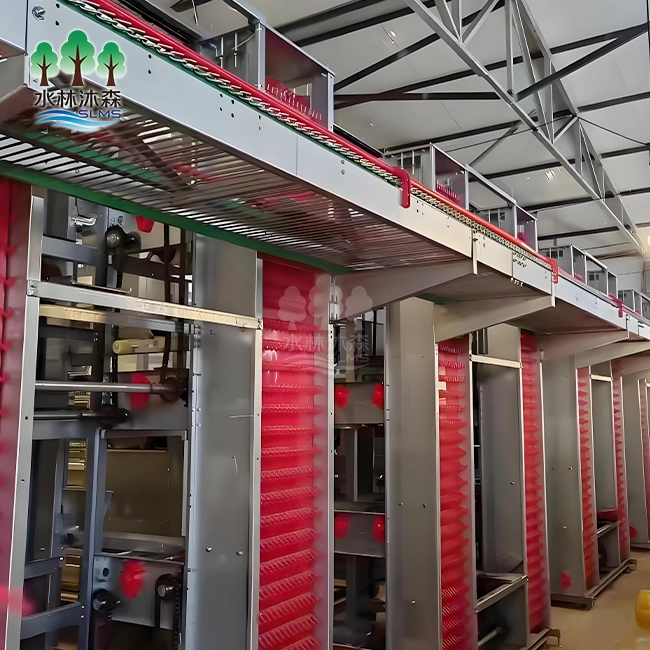
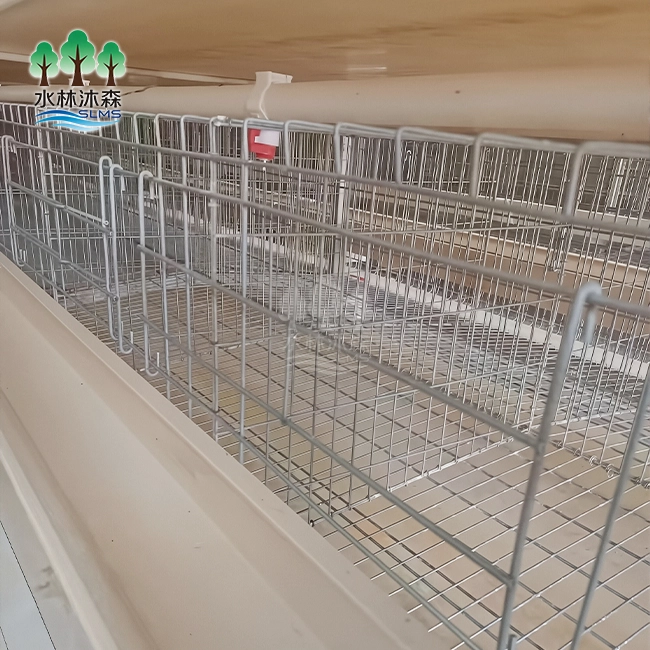
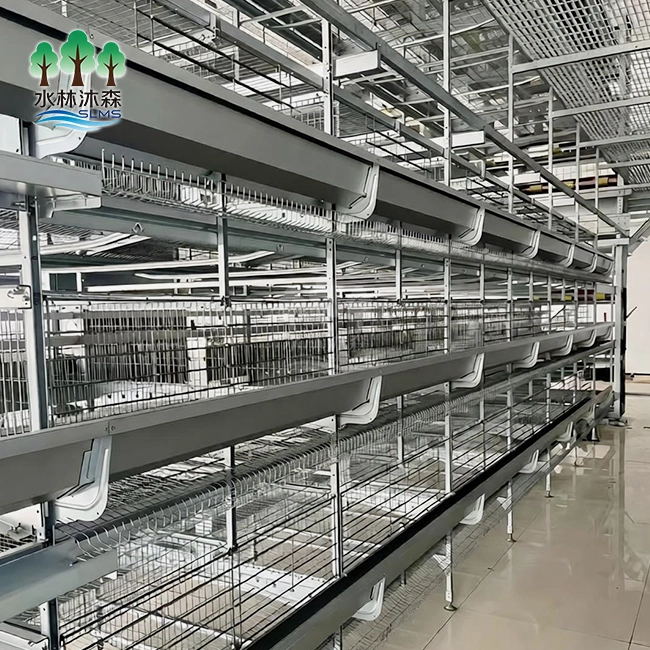
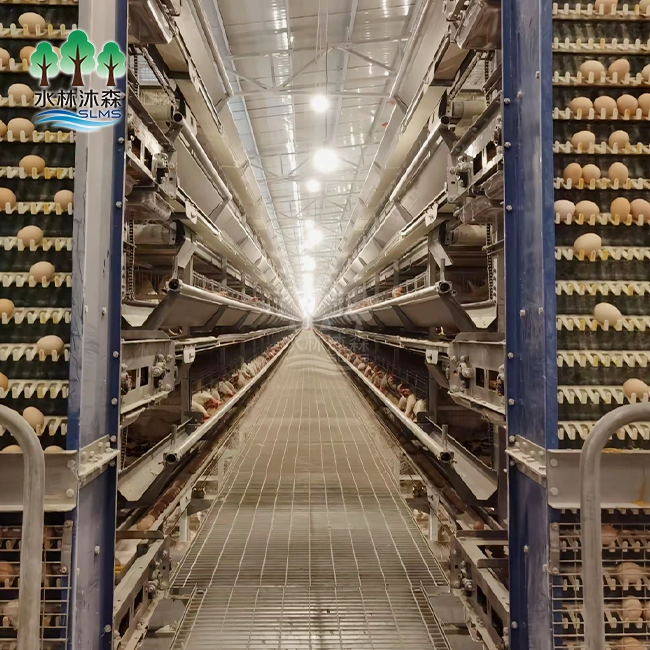
Four-tier Layer Cage
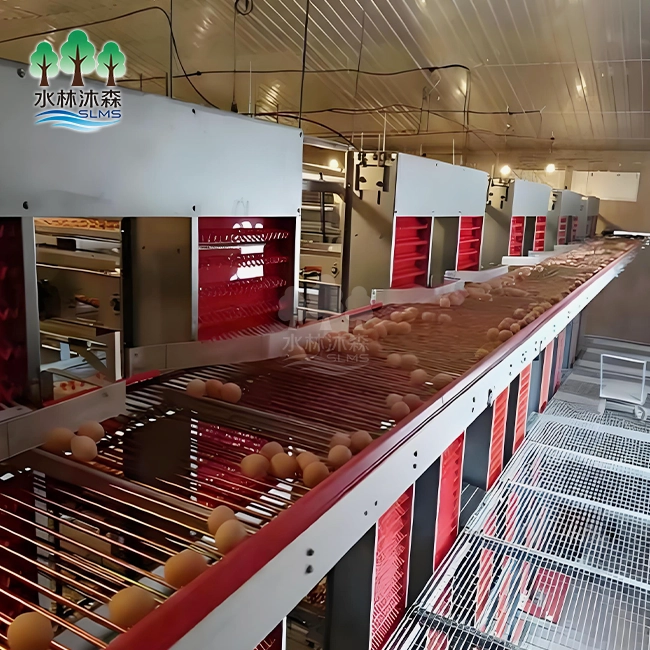
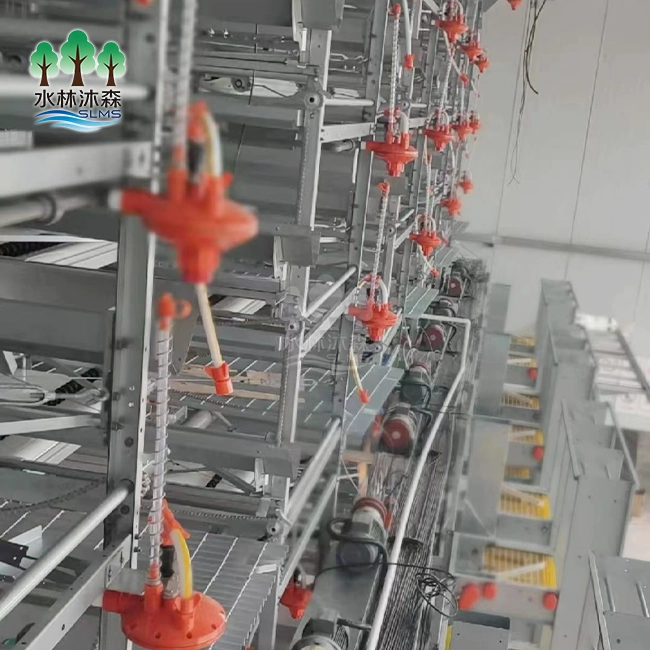
2. Core Specifications: Stocking density 40KG/㎡, corrosion-resistant galvanized iron wire and frame, automatic manure removal, automatic feeding, and automatic watering in modern farms.
3. Product Advantages: Reduces labor costs and improves farming efficiency; the rational design reduces egg breakage rate and flock injury and disease rate, indirectly improving egg production efficiency and shortening the payback period.
4. Customization available according to customer needs.
5. Technical Support: Provides installation videos and other supporting technical support.
6. Installation Service: On-site installation service available.
7. After-sales Service: 1-year free warranty.
Professional Four-tier Layer Cage for Intensive Egg Production
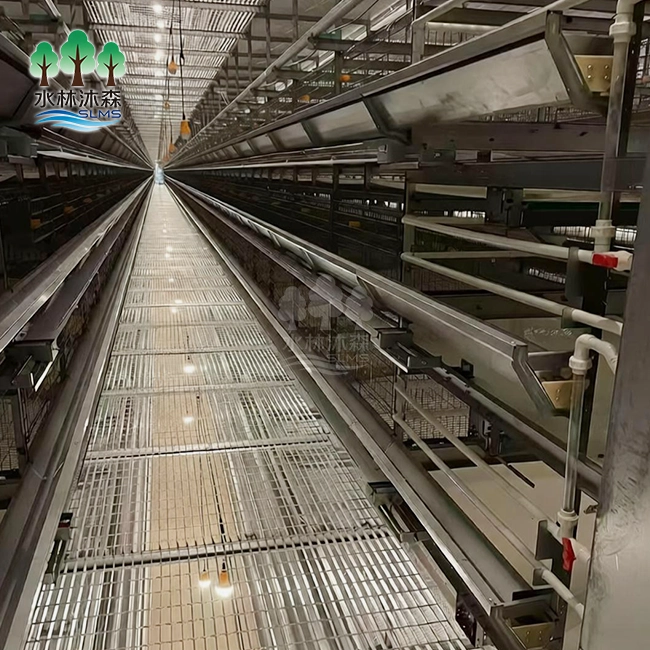
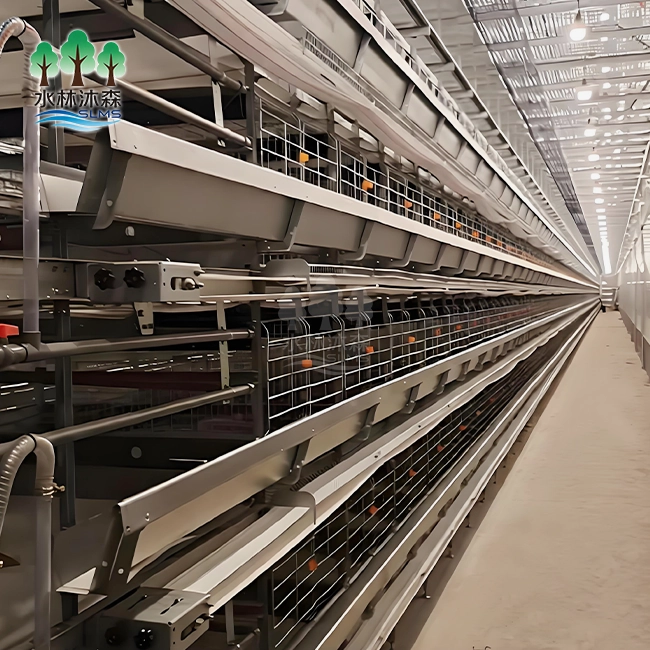
Weifang Shuilin Musen Aquaculture Equipment Co., Ltd. delivers enterprise-grade Four-tier Layer Cage systems engineered with Q235 hot-dip galvanized steel wire achieving stocking densities of 40KG/㎡. Our integrated solution features individual cage dimensions of 45cm(L) × 45cm(W) × 450cm(H) with a precision-engineered 10° bottom slope for automated egg collection. The system combines corrosion-resistant galvanized iron frames with modular feeding, watering, and manure removal systems, reducing labor costs by over 40% while maintaining a service life exceeding 15 years. Backed by eight years of manufacturing expertise and a five-engineer R&D team, we provide customized configurations tailored to your farm's operational scale and environmental conditions.

Technical Specifications
| Parameter | Specification |
|---|---|
| Individual Cage Dimensions | 45cm (L) × 45cm (W) × 450cm (H) |
| Cage Bottom Slope | 10° for easy egg collection |
| Material | Q235 steel wire, hot-dip galvanized |
| Service Life | Over 15 years |
| Stocking Density | 40KG/㎡ |
| Structure Type | H-type four-layer integrated design |
| Core Components | Cage frame, cage mesh assembly, egg collection device, feed trough, nipple drinker, water pipe system |
| Integrated Systems | Automatic feeding, automatic watering, automatic manure removal |
Where Four-tier Layer Cage Delivers Maximum Value
Your Four-tier Layer Cage system adapts seamlessly across three primary commercial scenarios.
For large-scale closed-house operations managing 50,000+ birds, the H-type configuration integrates with climate control systems and automated egg collection chains. This setup completely isolates birds from waste accumulation, meeting strict biosecurity standards required by premium retail suppliers.
In semi-automated open-house environments, the A-type offset design supports 10,000-30,000 bird operations relying on natural ventilation. The stepped structure prevents cross-tier contamination while accommodating scraper-based manure management, ideal for tropical climates where cost-effective ventilation matters.
For retrofit projects, this system maximizes existing building capacity without requiring structural expansions. You achieve 200-250% density increases compared to traditional floor systems while maintaining manageable installation heights under standard 4-5 meter ceilings.
Engineering Advantages That Drive Profitability
The scientific design of our Four-tier Layer Cage directly impacts your bottom line through multiple operational improvements.
Space utilization reaches industry-leading efficiency. By stacking four tiers vertically, you reduce per-bird land costs by 60-75% compared to floor rearing. This proves critical in markets where rental expenses exceed $8-12 per square meter annually.
Automated integration cuts labor requirements drastically. The system's standardized dimensions allow seamless connection with mechanical feeding trolleys and nipple drinker lines. Farms typically achieve ratios of one technician managing 30,000-40,000 birds, compared to 8,000-12,000 birds in manual systems.
Structural durability prevents costly downtime. Our Q235 steel construction with 275g/m² zinc coating resists the highly acidic poultry manure environment. The frame maintains dimensional stability under full load, preventing belt misalignment issues that plague lighter-gauge competitors.
The 10° egg collection slope reduces breakage rates to below 2%. This gentle angle allows eggs to roll smoothly into collection troughs without gaining momentum, directly improving Grade A egg percentages and reducing product loss.

Superior Material Engineering for Long-Term Performance
Your investment security relies on material selection that withstands harsh poultry environments.
We exclusively use Q235 international bridge steel for its superior tensile strength and elastic properties. This material choice ensures cages maintain structural integrity even after years of continuous loading cycles. The high-strength wire resists sagging that causes egg retention problems in lower-quality systems.
Hot-dip galvanization exceeds industry minimums at 275g/m² zinc coating thickness. This process creates a metallurgical bond between steel and zinc coating, providing 3-5 times longer corrosion resistance than electroplated alternatives. You avoid the premature rust formation that compromises both hygiene standards and structural safety in corrosive ammonia-rich atmospheres.
All frame joints use welded construction rather than bolt assemblies. This eliminates loosening issues from constant vibration and provides seamless surfaces that prevent bacterial accumulation in crevices.
Installation and Technical Support Services
We provide comprehensive implementation support to ensure system performance from day one.
Pre-installation consultation includes site assessment for foundation requirements. Our engineers calculate point loads and recommend concrete depths based on your soil conditions, preventing the subsidence issues that jam manure belt systems.
Installation services are available through our certified technical team. We provide detailed installation videos for self-installation projects, covering frame assembly sequencing, belt tensioning procedures, and water line pressure calibration.
Commissioning support includes on-site testing of all automated systems. We verify feed distribution uniformity, check nipple drinker flow rates across all tiers, and calibrate manure belt speeds to your specific humidity conditions.
After-sales coverage includes one-year warranty on all structural and mechanical components, with technical consultation available throughout your equipment's operational life.

Frequently Asked Questions
Q: How do you manage ventilation differences between the first and fourth tiers?
A: The four-tier configuration requires calculated air velocity of 2.8-3.2 m/s to maintain temperature differentials under 2°C between tiers. We recommend installing deflector plates directing cooler air to upper levels first, with exhaust fans positioned to create horizontal airflow patterns rather than vertical stratification.
Q: What foundation specifications does the system require?
A: Unlike lighter three-tier systems, the four-tier cage imposes concentrated point loads exceeding 800kg per support leg when fully stocked. Your foundation needs 30-40cm reinforced concrete footings aligned precisely with H-frame leg positions to prevent differential settlement that causes belt tracking failures.
Q: Can the system accommodate different bird sizes throughout production cycles?
A: The 45cm cage height suits commercial layer breeds from 18 weeks through end-of-lay at 80+ weeks. For larger heritage breeds exceeding 2.2kg body weight, we recommend our modified 50cm height variant to prevent feather damage and maintain welfare standards.
Q: How does manure management work across multiple tiers?
A: Each tier includes an independent polypropylene manure belt with overlap deflectors ensuring waste drops strictly onto the collection belt below. Belt cleaning frequency depends on your climate—typically 2-3 times weekly in temperate zones, daily in high-humidity tropical environments to control ammonia levels.
Q: What is the realistic return on investment timeline?
A: Initial capital expenditure runs 25-35% higher than three-tier systems due to additional materials and automation complexity. However, the 180-200% capacity increase per square meter typically delivers ROI within 2.8-3.5 years, assuming 92%+ production rates and regional egg prices above $0.08 per unit.
Contact Us
Ready to upgrade your poultry farming operation? Our four-tier layer cage's team is here to answer your questions and help you find the perfect solution.
Email: slms-equipment.com@slms-equipment.com
Learn about our latest products and discounts through SMS or email