What are the benefits of using an automated feed delivery system with a silo?
When combined, automated feed delivery systems and bulk storage silos can completely change the way business chicken farms work. A Feed Silo for Poultry stores 5 to 30 tons of feed in weatherproof vessels and delivers exact amounts on predetermined times through built-in auger or chain systems. This removes the need to do the same things over and over again. This method lowers the cost of work by more than 40%, controls the amount of feed that is wasted, and keeps the feed's quality high by keeping it away from water, bugs, and contamination. In the end, this improves the health of flocks, feed conversion rates, and the farms' ability to make money.


Understanding Automated Feed Delivery Systems with Silos
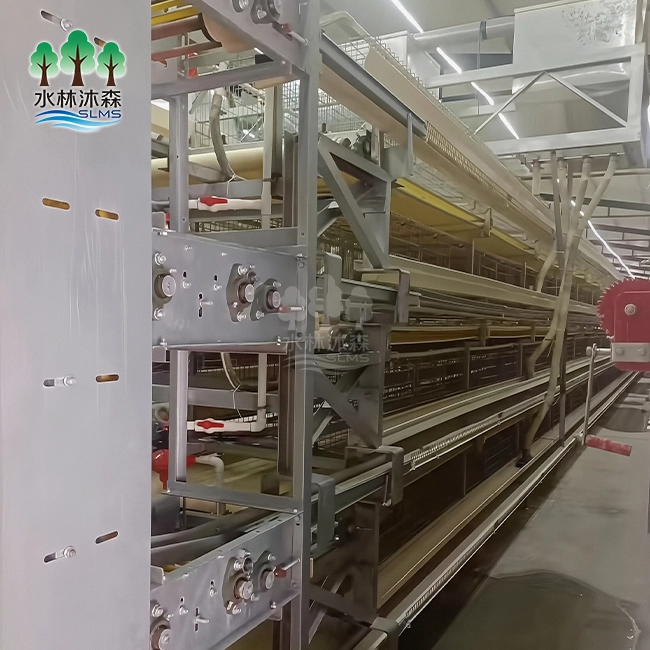
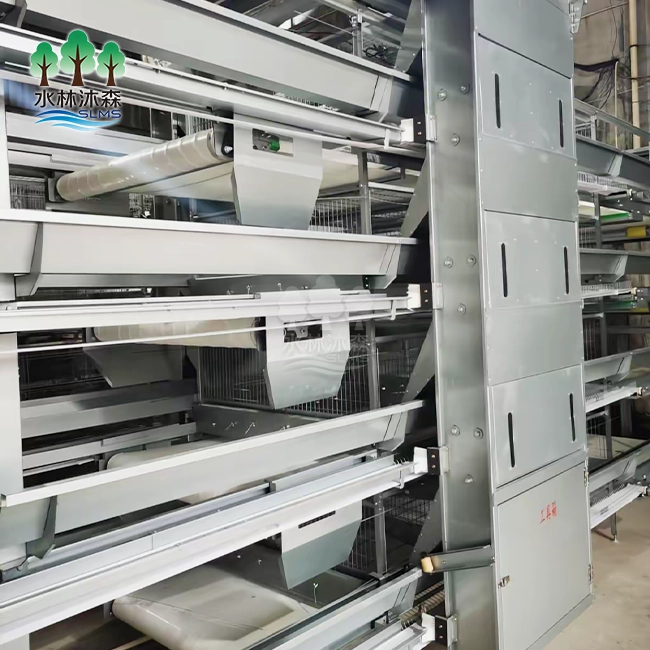
Automatic feed delivery systems are made up of parts that are all linked to each other and work together to keep the feed supply steady without any help from a person. At the center is the bulk storage vessel, which is usually a tall steel silo and is intended to hold chicken feed. These tanks are linked to flexible auger lines, chain disk conveyors, or air fans that move feed straight into the feeding systems in chicken houses.
Components and Integration
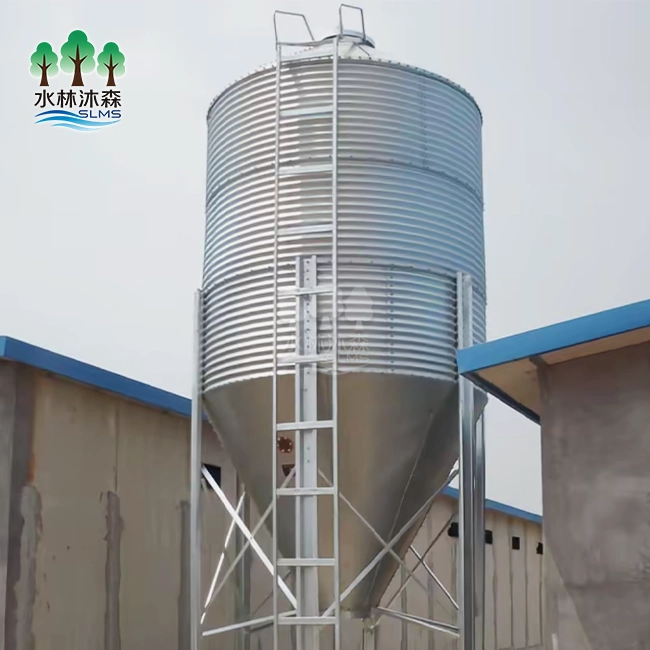
A normal system has a silo for storing feed, supply lines that can be mechanical or pneumatic, customizable control panels, level sensors, and links to pan feeders or feed troughs inside the house. The body of the silo is made of high-zinc-coated steel plates that prevent corrosion in ammonia-rich areas that are common near chicken farms. 304 stainless steel structure is an option that works well in coastal areas or in situations where longevity is important. The assembly is finished with supporting frames, unloading augers, inspection ports, rain caps, and vibrators. These parts make sure that the feed flow is reliable, even when the pellet sizes or mash consistency change.
Vertical Design Advantages
Vertical silos are the most efficient in terms of size because they take up very little ground room while keeping large amounts of feed. The steep curves between 60 and 70 degrees on the conical bottom hopper stop feed from crossing, which can happen with high-fat broiler feeds. This design makes sure that the flow to the delivery device is always the same. This cuts down on downtime and keeps feeding plans in line with the stages of growth of the birds. The raised structure also keeps the feed dry from groundwater and makes it easier for large delivery trucks to get to the feed for filling with air or an auger.
Key Benefits of Using Automated Feed Delivery Systems with Silos
Putting in automated feed systems changes the business and operational flow of a chicken farm. The benefits go beyond just reducing the amount of work that needs to be done. They affect every part of feed management, from how to buy feed to how healthy the flock is.
Enhanced Feed Efficiency and Waste Reduction
Automated systems give exact amounts on pre-set schedules, so there is no overfeeding or spillage like there is with human methods. Load cells built into the legs of the bin give real-time weight information, which lets you keep accurate records of usage and figure out feed conversion ratios. Compared to older methods, this accuracy cuts feed waste by 8 to 15 percent, which is often the single biggest cost of production. Delivering the same amount of food over time also helps the group grow evenly, which lowers differences in market weights and makes handling more efficient.
Significant Labor Cost Reduction
To distribute feed by hand, you have to make several trips to storage places every day, carry heavy bags, and do a lot of hard work, which can't be done as the farm grows. Automated systems, including a Feed Silo for Poultry, get rid of all of these boring, repeated jobs. One large delivery every one to two weeks takes the place of handling bags every day on fields that raise 10,000 to 100,000 birds. By moving workers around, managers can focus on more important tasks, such as keeping an eye on the health of the flock, making changes to the environment's controls, and following hygiene rules. Operations say that after technology was put in place, worker costs dropped by more than 40%.
Superior Feed Safety and Quality Preservation
Weatherproof sealing on bulk storage bins keeps feed safe from rain, humidity, and pests getting in, which are the main ways that mycotoxin and bacterial infection happen. Wild birds and rodents, which are major carriers of Salmonella and other germs, can't get into the protected area. Feed keeps its stable mineral mix while it is stored, which keeps vitamins and medicines working well. This safety lowers the number of diseases in flocks that are caused by bad feed, which saves money on vet bills and lives while keeping production levels steady.
Optimized Inventory Management and Procurement Strategy
Electronic level sensors send real-time data about stockpiles to farm management systems. This lets products be reordered before they run out. This makes it possible to avoid making expensive, last-minute purchases at high prices and to avoid having too much inventory, which ties up operating capital. When you buy in bulk from feed mills, you can save 5 to 12 percent per ton compared to the price of bagged feed. First-In-First-Out operations are also supported by automated tracking, which makes sure that past feed is eaten before its nutritional value drops.
Comparison: Automated Feed Delivery Systems vs. Traditional Feeding Methods
Manual and semi-automatic feed distribution methods that have been used for a long time have a lot of problems that get worse as farms get bigger. Knowing these differences helps buying workers figure out how much money they are making from investing in automation.
Labor Intensity and Timing Inconsistencies
For manual feeding to work, workers have to move bags or buckets around several times a day, which can be tiring and pose safety risks. Timing depends on when people are available, which causes changes that mess up the flock's food schedules and growing uniformity. Automated systems get rid of all of this variation by sending feed at exact times, no matter the weather, holidays, or staffing issues. Programmable controls change plans to meet the nutritional needs of animals of different ages, making sure they get the most food during important growth windows.
Feed Waste and Contamination Exposure
Keeping bagged feed in open barns leaves it open to damage from pests, water, and changes in temperature. When bags get torn while being handled, they leak and draw rats. When delivery is done by hand, feeders often get too full and spill over onto house floors, which cuts straight into profit margins. These loses are stopped by sealed silos with automatic delivery, and controlled storage conditions keep the feed fresh. The sealed path from the bin to the feeder gets rid of any points where people could touch the food and spread germs.
Measurable Return on Investment
Automation needs an initial input of money, but it quickly pays for itself in practical savings. For medium-sized businesses, cutting back on labor alone usually pays for itself in 18 to 36 months. When you add in less wasteful feed, better feed conversion rates, and lower disease costs, the total return on investment (ROI) often hits 200 to 300 percent over the life of the equipment, which is five years. Feed Silo for Poultry plays a key role in reducing feed waste and improving efficiency in such systems. Case studies from integrated broiler farms show that productivity went up by 12 to 18% after automation was put in place. This supports the business case for procurement leaders who are deciding how to spend their money on capital.
Choosing the Right Automated Feed Delivery System and Silo for Your Poultry Operation
To choose the right equipment, you need to carefully look at the factors that are specific to your farm and the supplier's skills. The right method fits the current size of operations and can also be expanded in the future.
Capacity Assessment and Silo Sizing
The amount of space you have for storage should match the size of your flock, how fast it eats food, and how often you want it delivered. When the birds are at their biggest, broiler farms need 50 to 70 grams of feed every day, which means they need a lot of space to store groups of more than 20,000 birds. Layer farms that turn their feed over more slowly may use more than one smaller bin to keep different ration mixes separate. Different farm sizes can be accommodated by capacity choices ranging from 5 to 30 tons per unit. To figure out how much space is needed, multiply the daily flock usage by the number of days of stock you want and then add 20% to allow for flexibility in delivery times.
Material Selection and Durability Considerations
In most settings, high-zinc coated steel (Z275 or Z600 galvanization grades) is very resistant to rust and has a 10 to 15-year service life. 304 stainless steel building is better for operations near the coast or in places with a lot of ammonia because it lasts longer (20 to 25 years), even though it costs more at first. When choosing materials, think about the local temperature, how close the barn is to sea, and how the ventilation is set up. Investing in better materials pays off because they need less upkeep and last longer between replacements.
Control Systems and Monitoring Features
Modern automatic systems work with farm management software, so you can keep an eye on many houses from one place, using your computer or phone. Programmable logic controls let you make food plans that are specific to a breed or that take into account changes in temperature throughout the year. Level sensors keep silos from being empty, and weighing systems keep track of usage patterns to find health problems before they show up as signs. Remote tracking lets managers know right away when a problem with the system happens, reducing the chance of failure during busy production times.
Supplier Evaluation and After-Sales Support
It's just as important to pick the right technical specs as it is to pick a trusted equipment seller. Check the supplier's qualifications, such as the number of years they've worked in the field, the skills of their tech team, and customer references from businesses that are similar in size. Feed Silo for Poultry is a critical component that requires careful evaluation of both design and supplier reliability. Shuilin Musen Aquaculture Equipment Co., Ltd. has been making equipment for chicken farms for eight years and has five professional developers who come up with more than three new goods every year.
Our full range of services includes how-to guides for installation, on-site installation services available all over the world, and a free guarantee that covers all major parts for one year. This support system makes sure that the implementation goes well and that the system will work reliably in the long term.
Implementation Best Practices and Maintenance Tips
Adopting automation successfully needs careful planning and regular upkeep. These habits improve system function and make tools last longer.
Installation Planning and Infrastructure Integration
Plan the installation for when production is slow between groups so that it doesn't interfere with ongoing operations. Make sure that the concrete foundation requirements meet the weight of the silo and the soil's ability to support it. For 20-ton silos, this usually means using C30 grade concrete slabs that are 30 to 50 centimeters deep. Place silos so that delivery lines don't have to go too far and bulk feed trucks can get to them for pneumatic or auger filling. Professional installation services get rid of common mistakes that hurt safety and performance, like putting base bolts in the wrong place or not connecting electrical wires properly.
Routine Maintenance Protocols
Set up regular cleaning times between groups to keep feed residue from building up and attracting bugs or germs. Check the hopper cones and vibrators to make sure they are working right and that gravity flow is not being blocked. Check the auger steps and chain links for wear and replace any worn parts before they cause the system to shut down. Check the setting of the sensors every three months to keep accurate inventory tracking. These preventative steps make tools last longer and protect feed quality and system efficiency.
Operator Training and Ongoing Support
Comprehensive staff training makes sure that workers know how the system works, how to fix simple problems, and how to follow safety rules. Training should cover how to use a programmable device, what to do in an emergency, and how to do regular inspections. Suppliers who offer ongoing technology support are helpful for answering practical questions and making the system work better. When problems happen, having access to installation guides and online troubleshooting help cuts down on downtime and keeps production going.
Conclusion
Automated feed delivery systems that are connected to bulk storage bins are tried-and-true technologies that change the economics and practical efficiency of chicken farms. It cuts down on labor costs by more than 40%, reduces feed waste through exact delivery, improves biosecurity through sealed storage, and streamlines sourcing through bulk buying.
For implementation to go smoothly, it's important to carefully plan for capacity, choose the right materials, and work with experienced providers who can provide full expert support. Feed Silo for Poultry is a key element in such automation-driven setups, directly impacting feed efficiency and system reliability. Automation is a top priority for procurement professionals looking at equipment update projects because it has a clear return on investment, as shown by increased output and lower costs.
FAQ
Can automated feed systems accommodate different poultry types and ages?
Of course. With programmable control systems, you can completely change the food plans and portion sizes to meet the needs of each breed. Broiler farms set up active feeding schedules to help their animals grow quickly, while breeder farms set up limited feeding schedules to keep their animals in good body shape. Layer operations change their plans depending on the stage of production. During peak egg production times, they give more calcium. This feature can be used in sites that raise more than one type of birds.
What are typical energy consumption and operating costs?
Automated meal systems use very little energy compared to the money they save on operations. Auger motors usually use between 1 and 3 kilowatts of power when they're not in use. They only run for 30 to 60 minutes a day during planned feeding rounds. Electricity costs run from $150 to $400 a year, based on the size and rate of the utility in the area. This is less than 2% of the total cost of feed.
How does automated storage improve feed safety compared to manual methods?
Sealed bunkers get rid of the ways that pollution can get into regular storage. Buildings that are weatherproof keep out water, which causes mold to grow and mycotoxin to form. Pest-proof covering keeps rodents and wild birds out, which gets rid of the main ways that Salmonella and other germs get into a building.
Transform Your Poultry Feed Management with Shuilin Musen
Shuilin Musen Aquaculture Equipment Co., Ltd. offers automatic feed delivery systems that have been tested and are designed to work with large chicken farms. Our seller of Feed Silo for Poultry can make systems for you that can hold anywhere from 5 to 30 tons of food. The systems can be made from high-zinc coated steel or 304 stainless steel, depending on your needs.
We have been in the business for eight years and have five professional engineers working on improving our products all the time. We offer full support, including training guides, on-site installation services, and a free warranty for one year. Get in touch with our team at wangshuaislms@gmail.com to talk about your unique business goals and get a detailed quote. You can look through our full product list at slms-equipment.com and learn how our automated solutions cut costs while improving feed efficiency and flock health.
References
1. Appleby, M.C., Mench, J.A., & Hughes, B.O. (2004). Poultry Behaviour and Welfare. CABI Publishing, Wallingford, UK.
2. Bell, D.D. & Weaver, W.D. (2002). Commercial Chicken Meat and Egg Production. Springer Science, New York.
3. Leeson, S. & Summers, J.D. (2008). Commercial Poultry Nutrition (Third Edition). Nottingham University Press, Nottingham, UK.
4. North, M.O. & Bell, D.D. (1990). Commercial Chicken Production Manual (Fourth Edition). Van Nostrand Reinhold, New York.
5. Payne, C.G. (1987). Practical Aspects of Feed Manufacturing and Delivery Systems in Poultry Production. World's Poultry Science Journal, 43(2), 122-133.
6. Sainsbury, D. (2000). Poultry Health and Management: Chickens, Turkeys, Ducks, Geese and Quail (Fourth Edition). Blackwell Science, Oxford, UK.
Learn about our latest products and discounts through SMS or email