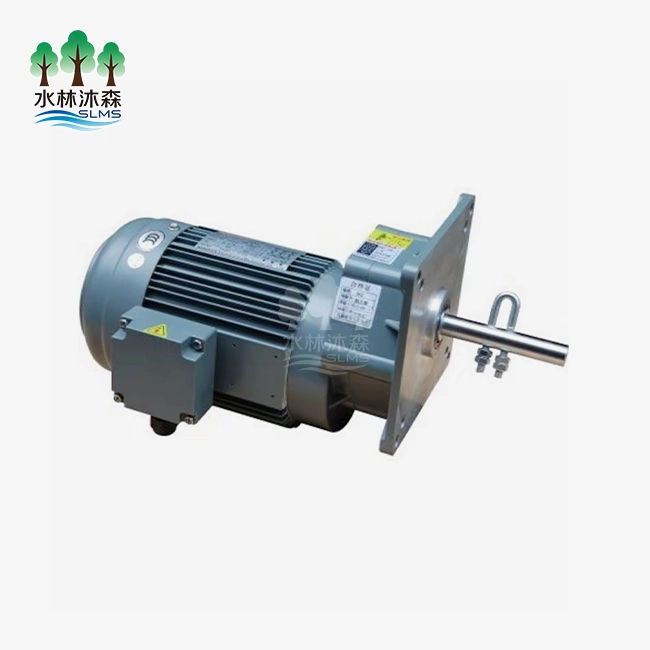
Chicken Farm Breeding Actuator Motor: The Key to Automated Poultry Farming Efficiency
For modern chicken farms, the Chicken Farm Breeding Actuator Motor is a special kind of electromechanical drive system made to power automatic systems. These precise motors turn electrical energy into controlled mechanical motion. This lets air intakes, feeding lines, manure removal systems, and weather controls that are needed to keep big chicken and duck houses breeding well be managed automatically.
Actuator motors are very important in modern automated chicken farming because they allow precise control over systems that work with and affect the surroundings. Automation cuts down on human work by more than 40% compared to old ways of doing things. It also speeds up tasks like feeding and ventilation and makes breeding conditions better by constantly watching the environment. This directly leads to measurable increases in output, such as higher feed conversion rates, lower death rates, and better bird welfare results that meet both market needs and regulatory requirements.
This piece talks about the basics of how breeding actuator motors work, their benefits, how to choose them, and how to buy them. We'll give people in charge the information they need to make industrial-scale chicken farms more efficient by investing in technology in ways that give a real return on investment.


Understanding Chicken Farm Breeding Actuator Motors
Chicken Farm Breeding Actuator Motors are the mechanical backbone of automated chicken farms. They precisely control air, feeding, and weather controls. Unlike regular industrial motors, these special devices can handle the harsh conditions that are common in places with animals, such as high levels of ammonia, high humidity, temperature changes, and chemical washdowns during cleaning cycles.
The Technical Foundation of Actuator Motor Operation
These motors use an integrated system with three main parts to turn electricity input into controlled mechanical movement. The power module has a copper motor inside a cast iron case that reliably outputs force from 0.75KW to 3KW. The control module can receive data from temperature sensors, humidity monitors, and timer units and connect intelligently to environmental management systems. The security module has overheat protection, trip limit switches, and an emergency stop feature to keep the equipment from breaking and to make sure it works safely.
Electric actuator motors are mostly different in how they deliver power and how precisely they can be controlled. Electric types are better at finding their spot and are quieter to run, so they are perfect for places where noise levels might stress out animals. Their torque strengths are very different. Smaller units can handle fine air outlet changes that need 100N of force, while heavy-duty models can handle feed line winching systems that need up to 15,000N of force.
Environmental Control Impact on Flock Performance
Controlling wind and temperature, which are very important for bird health and productivity, are directly affected by actuator motors. The exact placement of the air intakes makes sure that cold air from the outside mixes fully with warm air at roof level before falling to bird level. This keeps the birds from being exposed to cold stress, which lowers their immune systems and slows their growth. This controlled flow keeps static pressure differences that keep air quality high and heating costs low in the winter.
Changes in temperature of more than 3°F can make broilers stressed, which can make them eat less and grow more slowly. Automated actuator control keeps the environment steady by making small changes all day long, which is faster than any human system could do in response to changes in the weather outside. This regular control of the climate leads to better feed conversion efficiency and lower rates of rejects at processing.
Key Benefits of Using Breeding Actuator Motors in Poultry Farms
Using Chicken Farm Breeding Actuator Motors has measured benefits that have a direct effect on how profitable operations are and how well they do in the poultry business.
Automation-Driven Efficiency and Labor Reduction
In important environmental management jobs, automation cuts down on the amount of work that needs to be done by hand and gets rid of the chance of mistakes. Centralized control systems make it possible for one operator to successfully oversee multiple big broiler or layer houses. In the past, this would have required multiple workers to make numerous physical changes throughout the day. This shift in work lets farm workers focus on tasks that really need human judgment, like keeping an eye on the health of the flock and making smart decisions about management.
The stability that automatic systems provide stops the performance differences that come with doing things by hand. The exact time that food is delivered stays the same no matter how tired or available staff is. Adjustments to the ventilation system are made right away when sensors notice changes in the environment. This keeps things running at their best during critical times, like extreme weather events, when human systems often fail.
Energy Efficiency and Operational Cost Reduction
Through smart operating algorithms and optimized power usage, energy-efficient actuator motors make a big difference in lowering electricity costs. Modern units only use power when they are moving; self-locking gear systems keep them in place without constant power input. This is very different from past pneumatic systems that needed an air generator to be running all the time. Cost saves are big for businesses that use a lot of actuators all the time during production runs that last six to eight weeks per flock.
Intelligent linking skills allow combined operation across multiple systems, which stops situations that are wasteful, like running the heating and cooling systems at the same time. Environmental controls combine the positions of actuators with fan speeds and heater operation. This creates mutual efficiency that cuts energy use by 15–25% compared to systems that are controlled separately.
Enhanced Equipment Longevity Through Robust Construction
Actuator motors can handle tough farm settings if they are made of strong materials and are maintained according to best practices. High-strength galvanized steel or 304 stainless steel construction makes it very rigid and resistant to rust from ammonia, water, and chemical washdowns. The copper motor windings and cast iron housing provide temperature stability and mechanical sturdiness that makes the motor last much longer than usual for industrial use.
Protection features, such as IP65 or IP66 grades for entry protection, keep internal parts shut against dust and water getting in during high-pressure cleaning. This sealed construction stops early fails caused by external contamination, which lowers the number of replacements needed and the costs of downtime. When properly defined, actuator motors often have service lives of more than 10,000 operational cycles, which is many years of constant use in production before they need to be replaced.
How to Choose the Best Actuator Motor for Your Chicken Farm
To choose the correct Chicken Farm Breeding Actuator Motor, you need to carefully consider a wide range of technical and practical factors that are specific to the needs and size of the chicken farm.
Technical Specifications and Performance Requirements
Managers in charge of buying things need to think about how the torque needs to match the mechanical loads in their uses. For example, air outlet control needs 200–600N of force and stroke lengths of 300–600mm. Feed line winching, on the other hand, needs much higher torque outputs and longer trip distances. Choosing a power range between 0.75KW and 3KW relies on the type of load, the job cycle frequency, and the speed at which the machine is supposed to work.
Noise outputs should be carefully thought out because loud noises can stress out chicken groups, which can lower egg production in layer farms and slow growth in broiler houses. Precision gear making and vibration-dampening mounting designs help high-quality actuator motors keep their working noise below 55dB. Integration problems can be avoided by making sure that the control type works with current environmental management systems. Check that the intelligent linkage protocols fit the communication standards of your controller.
Supplier Evaluation and After-Sales Support Assessment
Long-term financial value is protected by looking at guarantee terms, the quality of after-sales service, and the name of the provider. A full one-year warranty is important to protect against production flaws and early failures, but how quickly and effectively the source responds to technical support requests shows how committed they really are. Suppliers who give installation films, on-site commissioning help, and quick supply of replacement parts show that they have the operating partnership mindset that is needed to keep downtime to a minimum during busy production times.
The name of a supplier in the poultry tools business is a good way to tell how reliable their products and services are. Companies that have been around for a while and have dedicated research and development teams—like those that release three or more new goods a year—usually offer better technology solutions and more flexible ways to customize their products. Check the qualifications of the seller by calling past customers who run similar-sized facilities, using industry references, and connecting with equipment dealer networks.
Budget Optimization and Volume Procurement Strategies
By matching motor specs with budget limits and buying in bulk, it's possible to use the system in more than one house or add on to the facility in stages. When buying in bulk, prices are usually 10–20% lower than when buying one unit at a time. However, buyers should weigh the instant cost saves against the risks of technology obsolescence and inventory carrying costs. Customization lets you make solutions that fit your exact operating needs without having to pay a lot of money for over-specified equipment that gives you extra performance gaps you don't need.
When figuring out the total cost of ownership, you should include the costs of installation, expected upkeep, expected energy use, and expected service life. Cheaper units that don't have enough security or corrosion resistance often have higher living costs because they need to be replaced more often and have more downtime. When choosing a purchase strategy, the best one balances the initial costs of buying something with how reliable it is and how long it lasts. It also gives preference to sellers that offer complete solutions over those that only sell parts.
Maintenance and Troubleshooting for Breeding Actuator Motors
For Chicken Farm Breeding Actuator Motors to work at their best and last as long as possible, they need to be maintained in a way that fits with production cycles and yearly operating needs.
Routine Maintenance Protocols
Cleaning the outside of things on a regular basis keeps dust and other organic matter from building up, which speeds up rusting even when there are protective coats on them. By checking the fixing bolts for looseness or structural stress, major failures can be avoided before they happen. Most sealed actuator motors don't need to be oiled on the inside, but cleaning the piston rods every so often keeps the seals in good shape and stops them from wearing out too quickly. These maintenance tasks naturally happen during times when flocks are being rotated and houses are being cleaned thoroughly between production cycles.
Seasonal maintenance increase deals with problems that are unique to the environment. Before winter, checks make sure the seals are still in good shape and protect against freezing temperatures. Before summer, checks make sure the ventilation motors can handle higher working demands during times of high heat stress. By keeping track of maintenance tasks and performance notes, you can use trend analysis to find new problems before they cause unexpected crashes during key production stages.
Common Issue Diagnosis and Resolution
Noises that don't make sense during operation are usually a sign of worn gears, joints that aren't sealed, or fixing brackets that aren't tight enough. Response times that are too slow could mean that there are problems with the power source, the controller signals, or the moving parts getting stuck from dirt buildup. Usually, a total loss of operation is caused by an interrupted power source, a broken limit switch, or the start of thermal overload protection after prolonged overload conditions.
The first step in troubleshooting is to carefully separate electricity problems from mechanical ones. Before taking apart mechanical parts, check the voltage from the power source and the output signals from the processor. Check that the movement limit switches are properly adjusted and that the electricity is still flowing. Check to see if there are any barriers or bindings that are stopping the load from moving normally. Most actuator problems can be fixed by cleaning, adjusting, or replacing certain parts instead of replacing the whole unit.
Replacement Decision Criteria
Clear signs that the motor needs to be replaced include gear mechanism wear that causes too much play, case rust that lowers the ingress protection ratings, or repeated thermal overload events that show the motor isn't strong enough for the job. A cost-benefit study that compares the cost of repairs to the cost of replacement helps people make choices that are good for the economy. When the cost of repairs is more than 60% of the cost of a new unit, or when units have been used more than 10,000 times in difficult situations, proactive replacement stops failures that happen during production cycles.
When practical needs change, like when a building grows and needs more ventilation, when new environmental control systems are added and need better feedback, or when energy efficiency is improved with the goal of lowering energy use, upgrades become possible. Modern actuator motors work much better than ones that were put five years ago or more, and they often support replacement just by making operations more efficient and lowering the need for maintenance.
Procurement Insights: Where and How to Buy Chicken Farm Breeding Actuator Motors
To successfully purchase Chicken Farm Breeding Actuator Motors, you need to work with reliable makers that offer more than just selling tools.
Manufacturer Selection and Quality Verification
Working with well-known companies that do their own research and development makes sure you can get the latest technology and keep making the products better. Weifang Shuilin Musen Aquaculture Equipment Co., Ltd. is a good example of this type of manufacturer because it has a skilled research team that comes up with new ways to meet the changing needs of the business. Their eight-year focus on farming and livestock gear shows the kind of long-term dedication needed to make equipment that is truly optimized for its use.
Quality verification includes more than just what the maker says; it also includes strict testing methods. According to ASTM B117 guidelines, salt spray testing proves corrosion protection, which is very important in places with a lot of ammonia. The correctness of the IP rating is confirmed by tests in a dust chamber and with a water jet. Load testing at 150% of the maximum capacity makes sure that the gears are solid and that the overload safety works. Life cycle testing that simulates more than 10,000 operating cycles gives accurate information on the average time between failures that can be used to figure out the total cost of ownership.
Pricing Strategy and Customization Options
Knowing the normal price ranges for various actuator motor specs helps you make a realistic budget and evaluate source quotes. Entry-level units that are good for light-duty tasks start at prices that are fair. Heavy-duty models with advanced features, on the other hand, cost more because they can do more and last longer. The benefits of buying in bulk usually run from 10 to 20 percent, but they depend on how much you order and how full the manufacturer's capacity is.
With customization options, you can meet specific operating needs that normal catalog goods can't. Changes to the stroke length, special mounting arrangements, better rust protection, and built-in feedback systems are all typical requests for customization. Suppliers with a history of design and production flexibility can provide these custom solutions without long wait times or prohibitive price increases, letting facilities get the best equipment for their needs.
Installation Support and Warranty Provisions
Full installation services take away the guesswork from execution and make sure that the system is properly commissioned. Common mistakes that hurt efficiency or pose safety risks can be avoided by having experienced techs help with the installation on-site. Installation videos are useful tools for maintenance teams that are planning future system expansions or fixes. This technical support base cuts down on the time it takes to launch and gives farm workers more confidence in their abilities.
Warranty periods that last for one year after the product is put into service are very important for protecting against production flaws and early failures during the important break-in period. The warranty terms should make it clear what is covered, how long you have to respond, and if new parts are available. Suppliers who keep a large stock of key components show that they are operationally ready to help customers with unexpected equipment problems without long downtimes that throw off production plans.
Conclusion
Chicken Farm Breeding Actuator Motors are one of the most important technologies that makes modern automated poultry operations possible. They provide exact control of the environment, labor efficiency, and operating stability that manual systems simply can't match. The best financial returns are achieved by strategically choosing a supplier based on a thorough technical review, their skills, and the total cost of ownership.
Quality actuator motors are trusted workhorses in harsh agricultural settings because they are built to last using corrosion-resistant materials, smart control integration, and a wide range of protection features. Partnering with well-known makers that offer technical help, the ability to make changes, and quick service after the sale is what builds a basis for long-term operating success across production cycles.
FAQ
What is the expected lifespan of a Chicken Farm Breeding Actuator Motor?
Normal use of quality Chicken Farm Breeding Actuator Motors made especially for poultry uses usually results in working lifespans topping 10,000 full cycles. This means that it can be used continuously for five to seven years in a normal broiler or layer farm following normal feeding and air rules. The actual length depends on how often it is used, how harsh the climate is, and how well it is maintained.
How do electric actuator motors compare to pneumatic systems for poultry applications?
Electric actuator motors are more accurate at placing, run more quietly, and don't need an air generator, which means they use less energy and are easier to maintain. In some situations, pneumatic systems can move things faster, but they need constant pump operation, complicated air distribution networks, and more frequent upkeep. Electric motors are used in most modern chicken farms because they are reliable, efficient, and can work with digital weather control systems.
Can breeding actuator motors integrate with my existing farm automation system?
These days' actuator motors have clever linkages that work with common environmental controller protocols. Most industrial poultry environmental control systems work well with units that have potentiometer feedback or analog signal outputs. Integration problems can be avoided by checking the compatibility of control signals during purchase. Reliable makers give technical specs that explain how to communicate and what signals are needed.
Partner with a Trusted Chicken Farm Breeding Actuator Motor Manufacturer
Shuilin Musen Aquaculture Equipment Co., Ltd. offers high-quality Chicken Farm Breeding Actuator Motor options that are designed to meet the particular needs of automatic chicken operations. With eight years of experience in specialized farming and livestock machinery, we are a trusted partner for farms that want to increase production efficiency through smart investments in automation. We can fully customize our products to meet your specific business needs, and our professional five-person research team is always working to improve product performance.
Our actuator motors are made with a copper motor and a cast iron housing. They can give power ranging from 0.75KW to 3KW and are compatible with clever linkages. They also have a lot of safety features. Each unit goes through strict quality checks to make sure it will work reliably in the hot, wet, and corrosive conditions that are common in chicken farms. We offer installation videos, on-site setup help, and a guarantee that protects your investment for one year.
Contact our experienced team at wangshuaislms@gmail.com for detailed specifications, bulk pricing options, and customized solutions addressing your specific farm automation needs. Visit slms-equipment.com to explore our complete product range and discover why leading poultry operations trust Shuilin Musen as their preferred actuator motor supplier.
References
1. Aviagen. (2018). Broiler Management Handbook: Environmental Control Systems. Aviagen Ltd.
2. Donald, J. (2010). Poultry Housing and Management in Developing Countries. Food and Agriculture Organization of the United Nations.
3. Gates, R.S., Casey, K.D., Xin, H., Wheeler, E.F., & Simmons, J.D. (2008). Fan Assessment Numeration System (FANS) Design and Calibration Specifications. Transactions of the ASABE, 51(5), 1709-1715.
4. Lacy, M.P., & Czarick, M. (2014). Tunnel-Ventilated Broiler Houses: Broiler Performance and Operating Costs. University of Georgia Cooperative Extension Bulletin 1290.
5. Purswell, J.L., Dozier, W.A., Olanrewaju, H.A., Davis, J.D., Xin, H., & Gates, R.S. (2012). Effect of Temperature-Humidity Index on Live Performance in Broiler Chickens Grown from 49 to 63 Days of Age. Proceedings of the 9th International Livestock Environment Symposium.
6. Yahav, S., Straschnow, A., Luger, D., Shinder, D., Tanny, J., & Cohen, S. (2004). Ventilation, Sensible Heat Loss, Water Loss, and Energy Balance of High-Yielding Laying Hens. Poultry Science, 83(4), 652-658.
Learn about our latest products and discounts through SMS or email