Evaporative Cooling Pads – Maintenance for a Longer Life
Businesses that raise chickens have a hard time in the summer because of the bad weather. Birds get heat stress when the temperature in a barn rises above the thermoneutral zone. This directly affects their feed conversion ratios, growth rates, and death rates. Evaporative cooling devices are now common in most chicken farms. The cooling pad is the most important part of these devices. When hot air flows through a Poultry House Evaporative Cooling Pad made of cellulose media that has been soaked in water, the heat is absorbed by the pad and the air coming in cools by 5 to 8°C.
These pads last a long time because of the rules set by the management. They can last anywhere from one season to five years or more if you stick with them. To get the most out of their tools, farm managers and buying experts need to know how to keep them in good shape and the temperature stable.


Understanding Evaporative Cooling Pads in Poultry Houses
But evaporative cooling works very well, even though the science behind it is still very simple. It is better to raise a lot of chickens when the Poultry House Evaporative Cooling Pads are linked to negative-pressure ventilation systems because they change the hot, dry air in the room into cooler, slightly more wet air.
How Evaporative Cooling Works in Modern Facilities
One end of the barn has vent fans that make negative pressure. At the other end, wet cooling media pull in fresh air. Because cellulose is made up of pores, air and water can stick to the surface more easily. Moles of water take heat from the air as they change from liquid to vapor. The temperature drops in a way that can be measured. Designs with cross-flutes, which are often set up at 45°/15° or 45°/45° angles, let air and water mix fully while still preventing breathing problems. Our Model 7090 cooling pads work best when the air speed stays between 1.5 and 2.0 meters per second. This keeps them cool 75% to 85% of the time.
Benefits Beyond Temperature Reduction
Evaporative devices are very useful when they are well taken care of. It is better for birds to eat and convert food when they are in their comfort zone. This means that layers keep laying eggs and broilers gain more weight. Stress levels drop when the temperature drops. This boosts the immune system and makes people less likely to get sick. The cost of running them is much cheaper than standard refrigerators, but they use a lot more energy per unit of cooling. Moving air around all the time gets rid of ammonia, dust, and other air pollutants, making the whole building healthier for people to take in.
Why Cooling Pad Quality Matters
New kraft paper that has been soaked with phenolic resins that don't dissolve in water is used to make premium cooling media. This paper keeps its shape even after being wet for a long time. The paper doesn't fall apart or tear too quickly because of its weight (about 100gsm) and a special plastic treatment. Before they stop working, pads made from recycled materials or that don't have enough plastic break down very quickly. If you buy approved cooling media that has been shown to last, your climate control will last longer and not break down in the middle of the season when it's really hot.
Common Issues Affecting the Longevity of Cooling Pads
The environment, the quality of the water, and the way the Poultry House Evaporative Cooling Pads are used are all issues that make them less useful over time. By finding these problems early on, you can keep them from getting worse and the tools will last longer.
Mineral Scaling and Hard Water Damage
Most of the time, water hardness is what makes a cooling pad last less long. Some minerals that dissolve in water land on the cellulose fibers and form into scale layers as the water drains. These mineral buildups make it harder for water and air to move through the flutes because they get in the way of their busy tracks. The pads wear out faster when fields use water with more than 200 ppm of total dissolved solids. It takes up to 30% less cooling power in just one season because of the white hard layers. Adding bleed-off valves lowers the mineral content of the running water, which makes the pad last a lot longer. As a first step, the water quality should be checked to see if any pre-treatment equipment is needed.
Microbial Contamination and Biofilm Formation
It's easy for algae, bacteria, and mold to grow inside cooling pads because they are warm and damp. If there is green algae growth on the pad, it means that the water either has too many chemicals or not enough ways to dry out. Biofilm growth not only looks bad, but it also stops water from soaking and makes the whole building smell bad. Chickens can get sick from some types of bacteria, and fungus spores can make both birds and people sick by getting into their lungs. When pads are used all the time without being dried every so often, microbial problems get worse. Controlled wet-dry processes, in which pads dry in the cooler morning hours, keep them cool enough during peak temperatures and greatly reduce the risk of contamination.
Physical Damage from Operational Errors
If you clean something the wrong way or with too fast of an air speed, you could damage the machine. Clothes that are washed in high-pressure machines have holes in them where cool air can pass through because the cellulose fibers are so fragile. When distribution lines get jammed, water doesn't cover the whole area evenly. This leaves dry spots where air can move more quickly.
If you go faster than the manufacturer's recommended airflow rate, which is usually 400 feet per minute or 2 meters per second, too much static pressure forms and tears the pad's structure. When you put down the wrong pad width for the fan capacity, the same bad things happen. Because of these mistakes in setup and use, an investment that should last five years turns into a cost that will only last one season.
Best Practices for Maintenance and Troubleshooting
Repair plans that keep Poultry House Evaporative Cooling Pads in good shape help you get the most out of your buy. The steps below cover both routine upkeep and tasks that need to be fixed.
Establishing Regular Cleaning Schedules
While the system is being cooled, it is looked at once a week to find any new problems before they get worse. Look at the pad's surface for dry spots, spots where the water isn't spreading evenly, and clear signs of contamination. If you clean your car once a month, you can get rid of dirt and mineral layers before they get too bad. Do not use any kind of high-pressure washer. Regular maintenance can be done with clean water and a gentle low-pressure rinse.
A deep clean every so often between output runs can get rid of mineral scale and bacteria growth. Calcium buildup can be removed with chemical descaling products that are made just for cellulose cooling media. These products do not harm the paper fibers. When citric acid products are moved through the water transportation system, they get rid of scale quickly and cheaply. After this, fresh water is used to flush the system well. Check the pH balance all the time. Water that has a pH between 6 and 8 stops both acidic damage and alkaline scale from building.
Water Quality Management Strategies
You can avoid a lot of maintenance issues down the road by putting in the right water cleaning parts from the start. Settlement screens can get rid of particles that get stuck in pad flutes and distribution lines. Devices that bleed off water are always letting some of it out. This keeps the mineral percentage from rising too high and causing problems. How much water disappears and how hard the water is will help you figure out the right bleed-off rates.
For instance, farms that use water that is very hard might need to constantly let 5–10% of the water flow away. Some algaecides are safe for birds and tools and can be added to water sources by the EPA. These chemicals stop the growth of bacteria. If you pay attention to how bright and smell the water in your pond, you can quickly find any biological problems that need to be fixed.
Recognizing Early Warning Signs
Many times, a cooling system doesn't stop working all of a sudden. Instead, it gets worse over time, and you can see the signs. It means that the pads are blocked or there isn't enough water covering if the temps aren't the same everywhere in the barn. Bad or musty smells are signs of bugs that have spread and need to be fixed right away. Water that shoots or drips into the building means that the air flow is too fast or the flutes are clogged, so the water isn't going where it should.
If you make the fan run for longer to keep the temperature at the goal, it means that the cooling isn't working as well. You can use normal speed metrics to find signs of degradation if you write them down when setting up the system. Every day, check the temperature of the cooling pad against the temperature of the air coming in to see how well it's working and if it's getting worse over time.
Case Study: Systematic Maintenance Impact
In 2019, an Arkansas chicken farm with 50,000 birds put in place strict rules for taking care of cooling pads. The pads used to need to be replaced every year because of mineral buildup and normal wear and tear. This cost the farm $8,500 per year. The pads survived four years longer after bleed-off valves were added, low-pressure rinses were done every two weeks, and descaling treatments were planned for each season.
It cost about $1,200 a year to keep the cooling system in good shape, but it used 12% less energy because it worked better for longer. The farm saved $7,300 a year and made sure that systems didn't break down in the middle of the season during important heat events. With proper care, these real-life examples show that cooling pads can be turned from pricey things that need to be changed often into long-lasting investments in infrastructure.
Materials and Installation Considerations for Longer Life
The first steps in making sure that equipment lasts a long time are to use the right materials and put them together properly. When you know the differences between the options, you can make smart buying decisions that meet your business's needs.
Comparing Cooling Pad Materials
The best and most cost-effective way to keep birds cool in an industrial setting is to use Poultry House Evaporative Cooling Pads made of cellulose. Cellulose pads are made from bark paper that has been treated with resins that keep water out. They are very good at taking in water and quickly releasing it. Plain brown pads will last for three to four years if you take care of them. Treatied pads with special protective coats last longer on the side that lets air in.
The dark layer, which is normally used to make things stronger, keeps UV light, weather, and mechanical cleaning from damaging the pad face. This can make it last up to five years longer. Synthetic polymer pads are much more expensive and don't let bacteria grow on them, but cellulose choices cool a little better. They can also deal with strong cleaners. For most big chicken farms, treated cellulose pads are the best value for money when it comes to durability, efficiency, and cost.
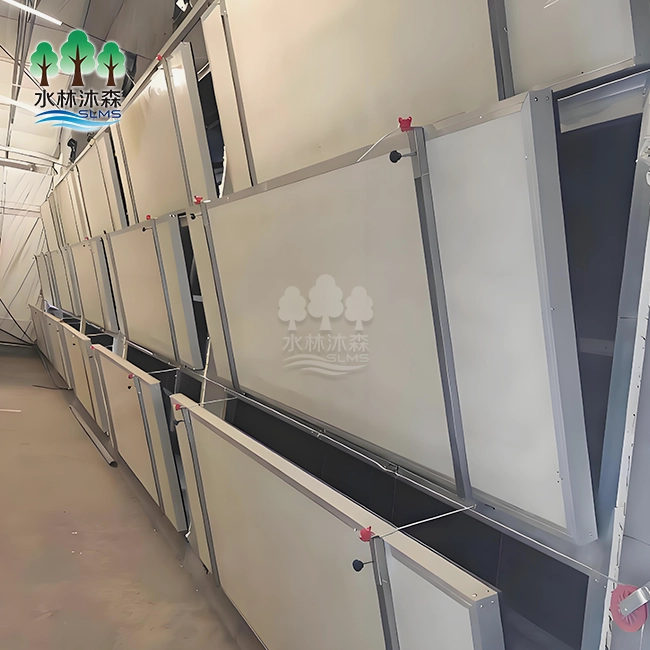
The cooling pads for our Model 7090 are made from high-quality raw cellulose that has been used with a special glue. You can choose between 15 cm and 20 cm thick ones. Because it can cool down more, the 20cm option is better for harsh climates or longer barn sizes. The 15cm choice, on the other hand, is better for warm climates and shorter tunnel lengths. Custom frames made of aluminum alloy or stainless steel keep the cooling media in place and make the construction last longer than the cooling media does.
Installation Best Practices
Putting things together right affects both how well they cool and how long they last. It is important to place pad frames firmly so they can withstand negative pressure forces without warping or making holes for air to escape. You can keep the system going well by closing all the edges around the pad unit. This keeps air that isn't cool from getting in. Care must be taken to level and space out the water distribution system above the pads so that it covers the whole area properly.
Dry places can be damaged quickly by strong winds if there isn't enough spread. Drains put under the pads will keep water from getting into the building, so you can use it again. It is less likely for water to get through the media if the pads are placed on the side with the most wind. Too often, people mess up the fitting because the fan is too small for the pad area. By checking the manufacturer's directions, you can stop air speeds from doing damage.
We can help you with the whole installation process, from detailed video guides to installation services that come to you. Our skilled staff helps plan the system and makes sure it works well with the air systems that are already in place. This helps get rid of common fitting mistakes that hurt how well equipment works and how long it lasts.
Comparing Alternative Cooling Technologies
People who work in procurement can make smart choices about where to put money into infrastructure if they know how evaporative cooling compares to other temperature control methods. Fogging devices add tiny drops of water directly to the airflow. The air quickly cools down as the water evaporates, so they don't need any special media. But to fog, you need good filtered water so the sprayer doesn't get stuck and the humidity isn't as well controlled. If you spray too much, the litter can get wet, which can help germs grow.
Most circulation fans just move air around, which makes it look cooler but doesn't cool anything. When it's really hot, they don't work as well because birds already have a hard time getting rid of heat. You can exactly control the temperature with cooled air conditioning no matter what the weather is like outside, but it costs 5–10 times more to run and requires a big initial investment. Evaporative cooling pads are the most cost-effective way to cool down large chicken farms in places with low humidity. Also, they are reliable in a lot of different building styles.
Procurement Guidance: Choosing and Buying Evaporative Cooling Pads
There are more things to consider than just the price when you buy important tools. Picking service providers you can trust and who will fully support your business is important for its long-term success.
Key Selection Criteria
It is still very important to check the quality of the materials. Ask for samples and do absorption tests before you place large orders. Good pads soak up water quickly (at least 45 mm in five minutes or less) and don't lose their shape when they're wet. You can find out how much glue is in the pad by letting it soak for a long time. Pads that aren't very good have delamination, which is when sheets that are tied together come apart after being in water for a long time. Check the manufacturer's certificates to see if they meet standards for things like fire safety, chemical protection, and the strength of the structure. Look to see if bird clothes have too many toxic organic chemicals that could hurt their lungs.
Dimensional specifications must align with your ventilation system requirements. Calculate the total Poultry House Evaporative Cooling Pad area needed based on the barn's size, the wind speed, and the weather to help you decide. To make sure you get the right amount of cooling for your business, our helpful team helps you figure out the right size. Making things to order is helpful when normal sizes don't fit what you already have. We can make frames in any size you want, and depending on the weather and your budget, they can be made of aluminum alloy or stainless steel.
Evaluating Supplier Reliability
Trying to figure out how reliable suppliers are involves looking at how a seller does business, which is just as important as the goods they sell. Expert help with construction, water quality, and fixing problems keeps your investment safe and stops problems with how it works. Read the guarantee terms very carefully. Our things come with a free one-year promise that covers flaws in the way they were made and normal wear and tear after one year of use.
If your customer service is slow, you might not be able to fix problems quickly in the middle of the season. Implementation risks are cut down a lot when companies offer help on-site during testing and installation. You can get a better idea of how well a seller does what they say they will do by reading reviews from people who have bought from like-sized chicken farms.
Cost-Benefit Analysis for Long-Term Value
The tools' original price is only a small part of what they cost to own in the long run. Take some time to think about how long it should last in the water and working situations where you plan to use it. It's better to buy a high-end pad that costs 30% more but lasts twice as long than a cheap pad that needs to be changed every year. Don't forget to add up the prices of maintenance when you do the math.
It costs a lot to clean things that need special tools or regular professional help. Running costs are affected by energy economy in a big way. Pads that keep working well cut down on the time fans have to run and the electricity they use. Businesses that buy good temperature control equipment are able to measureably more productive. This has been shown by the gardening equipment industry. Most of the time, the better performance of birds pays for the tools in just one production run.
Conclusion
How long an Poultry House Evaporative Cooling Pad lasts depends on how well it is taken care of, what it is made of, and how it is put in place. Pads always last 4-5 years on commercial chicken farms that clean them carefully, check the water quality often, and do upkeep once a year. This changes cooling media from something you throw away to something that will last for a long time. The first step to making sure steady performance is to pick high-quality materials that are right for your environment and building.
To protect your investment in a cooling system, work with companies that offer full expert support, installation services, and quick help after the sale. This article talks about how to take care of the cooling system in a way that keeps long-term costs as low as possible. It includes regular checks, the right way to clean, cleaning the water, and keeping an eye on how well it works. When getting industrial temperature control for poultry, it's best to think about the total value of the investment rather than just the purchase price.
FAQ
What determines cooling pad lifespan in commercial operations?
If you take care of your Poultry House Evaporative Cooling Pad and make sure the water quality is good, it can last for three to five years longer. The operations that last the longest keep the water's pH between 6 and 8, dry it regularly, and clean it gently every so often. It will only last one to two years if you don't take care of it or use hard water that hasn't been cleaned. How long something lasts also depends a lot on how well it was made. Low-cost goods don't last as long as high-quality raw cellulose pads that have been treated correctly with glue.
How should mineral deposits be removed safely?
If you clean with high-pressure water sprays, the strong water will break the cellulose fibers. Chemicals that remove scale and are designed to work with cooling pads should be moved through the system that moves water. Treatments with citric acid work just as well as descaling and don't cost as much. Clean water should be used to flush the system out after the drugs are used. Adding bleed-off valves keeps minerals from building up, which means that descaling doesn't have to be done as often.
Can cooling pads operate continuously during summer?
Too much humidity is created when the machine is running all the time. Birds find it harder to cool off naturally by panting when the relative humidity is above 80%. There is more algae and bacteria on pad surfaces when they are hot. When you use cycle timers or humidity controls, the cooling works better and problems caused by moisture are stopped. It is best to run on pads during the hottest parts of the day and let them dry in the cooler morning hours. This way, you can cool off and protect your gear at the same time.
Partner with Shuilin Musen Aquaculture Equipment Co., Ltd. for Superior Cooling Solutions
For large chicken farms to make money, they still need a good temperature control system. Shuilin Musen Aquaculture Equipment Co., Ltd. has been working with animal environments for eight years and can offer complete cooling solutions that are great for busy farming operations. The Model 7090 evaporative cooling pads are made to last longer. They won't rust, soak up water very well, and don't get in the way of air flow. Frames can be made from stainless steel, aluminum alloy, or wood that is 15 cm or 20 cm thick.
They can be changed to fit any building. We offer skilled installation services on-site and thorough video lessons to help with installation. Our five-person engineering team is also here to help. For one year, we promise that your cooling system will work the same way every season, and we offer ongoing expert help. Large chicken farms that use our Poultry House Evaporative Cooling Pad supplier report labor cost reductions exceeding 40% alongside improved production outcomes. contact us at wangshuaislms@gmail.com or slms-equipment.com to talk about the cooling needs of your building and learn how our combined solutions can help birds and your business.
References
1. Barnes, H.J., & Vaillancourt, J.P. (2020). Poultry Environmental Management: Principles and Practices for Commercial Production. Ames: Agricultural Press International.
2. Chen, L., Zhang, Y., & Roberts, M. (2019). Evaporative Cooling System Performance in Intensive Livestock Facilities. Journal of Agricultural Engineering Research, 48(3), 287-302.
3. Gates, R.S., Casey, K.D., & Wheeler, E.F. (2018). Climate Control Systems for Animal Agriculture: Design and Maintenance Protocols. St. Joseph: American Society of Agricultural Engineers.
4. Mitchell, M.A., & Carlisle, A.J. (2021). Heat Stress Management in Commercial Poultry Production. Avian Biology Research, 14(2), 156-173.
5. Thompson, R.K., Davis, J.D., & Anderson, P.W. (2019). Water Quality Effects on Evaporative Cooling Media Longevity in Broiler Houses. Applied Engineering in Agriculture, 35(4), 621-635.
6. Xin, H., Berry, I.L., & Costello, T.A. (2020). Ventilation and Environmental Control for Confined Livestock and Poultry Production. Raleigh: Extension Agricultural Publications.
Learn about our latest products and discounts through SMS or email