Poultry Cage System vs Free Range Farming Key Comparison Guide
Choosing between poultry cage systems and free range farming directly impacts your operational efficiency, investment returns, and long-term profitability. Modern intensive poultry operations increasingly favor advanced vertical housing solutions like the Eight-tier Layer Cage, which maximizes land utilization while integrating automated feeding, watering, and waste management systems. These systems address critical industry challenges including labor shortages, biosecurity requirements, and space constraints.
Free range farming appeals to niche markets emphasizing animal welfare, yet faces significant challenges in scalability, disease control, and operational consistency. This comprehensive guide examines both approaches through operational metrics, cost structures, and suitability for commercial-scale egg production, helping procurement managers and farm operators make informed decisions aligned with their production goals and market positioning.


Understanding Poultry Cage Systems and Free Range Farming
Defining Modern Cage Systems for Commercial Operations
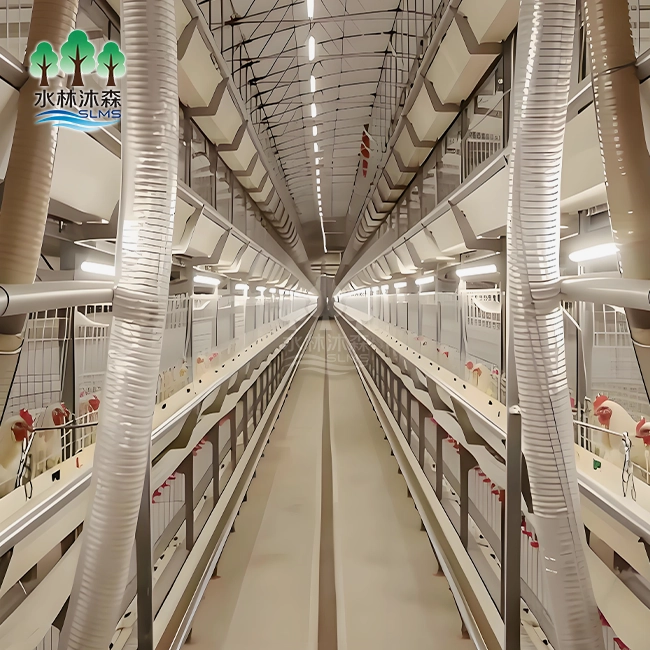
Modern cage systems are engineered solutions made to work in places where a lot of eggs need to be produced. When compared to floor-based systems, multi-tier setups can hold a lot more birds per square foot because they use vertical room. The latest types are made of hot-dip galvanized steel, which is immune to corrosion and means they will last longer than 15 years. Automated parts of these buildings include nipple drinkers, automatic feeding lines, and systems that remove waste using conveyor belts. The design philosophy is based on making controlled microclimates where the temperature, humidity, and air flow are always at their best, no matter what the weather is like outside.
Free Range Farming Operational Principles
Hens can go outside with free range setups, which usually need at least 1.1 square feet of room per bird indoors and outside for ranging. Birds naturally do things like take dust baths, hunt for food, and form social orders. When producers have to keep an eye on the health of their flocks in different areas, protect them from predators, and deal with different egg collection logistics, management gets a lot more complicated. The weather has a direct effect on production uniformity. For example, when it rains or is very hot, egg production goes down. Compliance with regulations varies a lot from one place to another. For example, European Union standards are very different from US Department of Agriculture organic certifications.
Market Positioning and Regulatory Considerations
More and more, consumer tastes are splitting into two groups: value-focused buyers looking for cheap protein and premium buyers willing to pay more for what they think are higher welfare standards. United Egg Producers data shows that about 70% of commercially produced eggs in the US come from cage systems, which are the most common type sold in stores. Prices for free range eggs are 40% to 120% higher than regular eggs, but production costs and supply issues keep them from having a bigger part of the market. Regulatory settings are always changing. For example, California's Proposition 12 sets minimum room standards that affect how things are made all over the country.
Comprehensive Comparison: Operational and Economic Metrics
Space Utilization and Production Density
Stocking densities of 40 kg/m³ are possible in vertical cage configurations, which is much higher than the 6–8 kg/m³ that can be reached in free range systems. A normal three-tier system takes up the same amount of floor room as an Eight-tier Layer Cage that houses thousands of birds. This means that the facility can hold three times as many birds without having to grow its footprint. It is especially helpful in places where land costs are big capital costs that this focus serves. To meet the needs of ranging, free range businesses need a lot more land, and the costs of infrastructure are spread out among fewer birds per site.
Labor Efficiency and Automation Integration
For regular tasks, automated cage systems cut down on the number of people needed to work by requiring about one worker for every 50,000 birds. With mechanical feeding systems, exact amounts of food are delivered on predetermined times, so there is no need for people to operate feed carts by hand.
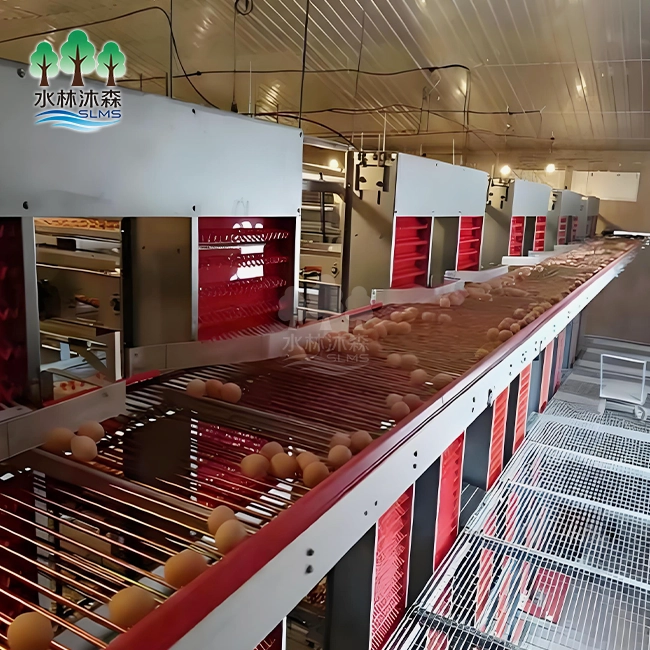
Conveyor systems bring eggs directly to grading stations, so workers don't have to do the same things over and over again. Eight-tier Layer Cage systems further amplify this efficiency by housing more birds vertically, allowing conveyor belts to streamline egg collection from all tiers with minimal manual intervention. Free range operations need a lot more work to do things like managing the pasture, collecting eggs from different areas where the animals roam, and keeping an eye on their health. In automatic cage sites, labour costs make up about 15 to 20 percent of production costs, while in free range operations, they make up 30 to 40 percent.
Disease Management and Biosecurity Protocols
Controlled cage environments keep birds away from pathogens by using automated manure belts to separate them physically. Less ground touch greatly lowers the risk of coccidiosis and the spread of gut parasites. Disease-carrying particles in the air can't get into work areas thanks to air filtering and negative pressure ventilation systems.
Soil-borne pathogens, interactions between wild birds that can spread avian influenza, and predator pressures that can cause stress-related health problems are all problems that free range systems have to deal with. Death rates in well-run cage systems are usually between 4 and 6 percent per year, while death rates in free range operations are usually between 8 and 12 percent per year because the animals are exposed to more of their surroundings.
Economic Analysis and Return on Investment
Building infrastructure, equipment, and installation services can cost anywhere from $45 to $65 per bird capacity for fully controlled multi-tier cage systems. When operations are run efficiently, break-even points are usually reached in 2.5 to 3.5 years under normal production conditions. Feed conversion rates in cage systems are about 1.9 to 2.1 pounds of feed for every dozen eggs laid, while they are about 2.4 to 2.8 pounds in free range settings where birds use their energy for activities like flying and foraging. However, cage-system eggs sell for $1.20 to $1.50 per dozen at wholesale, while free-range eggs sell for $2.50 to $3.50, which helps producers who want to sell to premium markets cover some of their higher production costs.
Deep Dive: Advanced Multi-Tier System Benefits and Features
Engineering Excellence in Vertical Housing Design
Modern vertical housing solutions use H-frame building methods, which give the structure more strength and can handle higher levels of production. The main structure is made of Q235 international bridge steel, which was chosen for its high tensile strength and low deformation under long-term loads. Hot-dip galvanisation uses zinc coats that are thicker than 275 grams per square metre to make a shield against ammonia corrosion that is common in chicken coops. The engineering method solves the problem of thermal stratification by planning airflow patterns that keep the difference in temperature between the bottom and top levels below 2 degrees Celsius.
Integrated Automation Reducing Operational Complexity
Full automation packages turn processes that need a lot of work into controlled systems that don't need much human input. Chain-driven augers are used in the feeding mechanisms to distribute exact ration amounts across all levels at the same time. Delivery times are changed by customisable controls based on the production phase. Nipple watering systems with pressure controls make sure that plants always have access to water while reducing spillage that causes too much humidity.
On set schedules, manure removal conveyors move waste to central collection points where it can be thrown away or composted. The 10-degree sloped cage floors make it easy for eggs to be gently rolled into padded collection tubs. This greatly reduces the number of broken shells compared to floors or angles that are higher.
Durability Standards Supporting Long-Term Operations
The choice of materials has a direct effect on the total cost of ownership over the whole lifecycle of an item. Cheaper cold-galvanized choices break down after three to five years, but high-grade galvanised wire mesh doesn't rust when acidic droppings hit it. The quality of the welding determines the strength of the junction. For spot welds to be able to withstand cumulative vibration and weight stresses, they need a tensile resistance of at least 350 Newtons.
Before shipping, reputable makers put each unit through load-bearing simulations that mimic fully stocked conditions. This makes sure that frame deformation stays within acceptable limits. With regular maintenance, these quality controls can last more than 15 years, which is a lot longer than systems that need to be replaced too soon. This means that the annualised cost of capital is much lower.
Customization Capabilities Addressing Diverse Requirements
Different production sites have very different sizes, climates, and ways of running their businesses, so they need tools that can be used in a variety of situations. Manufacturers that offer customisation services change standard layouts to fit certain building dimensions, change the space between tiers to suit breed-specific needs, or include air needs specific to areas with extreme weather. Eight-tier Layer Cage is one such adaptable solution that can be integrated into these customised designs, allowing high-density rearing while still accommodating site-specific tier spacing and ventilation adjustments.
Some businesses focus on the highest possible density for regular egg production, while others try to change designs to meet the needs of organic standards, which require more room for each bird. During the planning stages, technical engineering teams work with farm operators to come up with custom specifications that match the equipment's powers with output goals and the needs of regulatory compliance.
Procurement Guide: Selecting the Right Equipment Partner
Critical Evaluation Criteria for Supplier Selection
Buying choices aren't just about the original price; they also include the total value delivered over the lifecycle of the tools. The technical skills of the supplier determines whether the suggested solutions really solve practical problems or are just copies of existing designs. Manufacturers that keep dedicated research and development teams and release new products every year show that they want to keep improving their products instead of keeping them the same.
Delivery times are affected by production capacity and the reliability of the supply chain. This is especially true for large installations that need to be put in place in stages. Quality control systems, which are checked by facility audits or third-party certifications, make sure that the equipment delivered meets the standards that were set.
Understanding Pricing Structures and Value Propositions
Instead of just looking at the cost per unit, equipment prices are based on the quality of the materials, the level of technology, and the services that come with it. Base prices usually cover basic setups. Customisation, longer guarantees, or higher-quality products cost extra. Orders that are bigger than the minimum amount qualify for volume savings. For setups housing 50,000 or more birds, prices often drop by 8 to 15 percent.
Suppliers who are open and honest give buyers detailed quotes that list all the parts. This helps buyers understand what affects costs and choose between features and budget. Payment terms range from full payment up front to payments over time. Some sellers also offer financial partnerships that make it easier to get the money you need for growth projects.
Installation and Technical Support Services
A lot of how well equipment works depends on how well it is installed according to engineering standards. When a supplier offers on-site installation services, there are no risks of bad assembly that could cancel guarantees or hurt performance. Installation teams with a lot of experience finish projects quickly, so facilities don't have to be shut down for long periods of time during upgrades or additions.
Full technical support includes more than just installation. It also includes practical training for farm staff, help with troubleshooting during times of high output, and access to installation movies to help with future maintenance. Some companies offer preventive maintenance programs where technicians check on things on a regular basis to find problems before they happen and stop production.
Warranty Coverage and After-Sales Commitments
The terms of the warranty show that the company behind the product is sure it will last and wants customers to be happy. Standard warranties usually cover manufacturing flaws for 12 months, but you can get longer warranties for important parts like automation controls or structure frames. The warranty should make it clear what situations are covered, how long it takes for service requests to be answered, and whether the manufacturer pays for shipping replacement parts.
Whether problems are fixed quickly or cause long production delays depends on the infrastructure for after-sales support, such as the availability of spare parts, the ease of calling a technical helpline, and the size and reach of regional service networks. When manufacturers keep large stocks of parts and quick-response service teams, they reduce the business risks that come with production systems that depend on equipment.
Making the Decision: Strategic Considerations for Your Operation
Assessing Scale and Growth Trajectory
The size of the production greatly affects which farming method works best for the business and the economy. Businesses that want to produce less than 100,000 dozen eggs a year may be able to afford free range systems, especially if they want to sell to high-end retailers or directly to customers. Producers who want to build facilities for more than 20,000 birds need automatic vertical systems, such as the Eight-tier Layer Cage, because they make the best use of space and boost worker productivity. Growth projections are important because modular cage systems can add small amounts of space without completely redesigning the facility, but free range expansions need to buy more land and build more infrastructure.
Balancing Investment Capacity with Production Goals
Options that can be done depend on how much money is available. For example, free range systems need less money to buy the tools at first, but they need more money to pay for land and facilities. Automated cage installations require a big investment up front, but they pay for themselves quickly by making operations more efficient. The total cost of ownership should be included in the financial analysis, not just the purchase price.
This should include labour costs, the speed with which feed is converted to feed, the rate of death, and the estimated price of eggs based on target markets. Automated systems are becoming more appealing to producers who can get cheap finance or work in areas with high land costs. On the other hand, free range methods may work best for producers who already have acceptable land.
Responding to Market Demands and Consumer Trends
The right ways to make things depend on the types of customers you want to reach. Cage system production economics are helped by mainstream shopping outlets that put an emphasis on stable supply and competitive prices. Speciality markets, like organic grocery stores, farmers markets, or restaurant partnerships that value social factors, make it possible for free range goods to sell at higher prices. According to market research, higher operational costs are justified when consumers are ready to pay more for certain production characteristics. On the other hand, operations that focus on commodities need to be very efficient, which is what automated systems do.
Future-Proofing Through Technology Adoption
The agriculture industry is moving faster toward precision farming methods that use data analytics, environmental monitoring, and predictive maintenance. More and more, modern cage systems have sensors that track how much feed is eaten, how much water is used, and changes in environmental conditions that make the animals more comfortable. These technologies set up businesses to meet new rules and regulations, deal with tight labour markets, and take advantage of efficiency gains that give them a competitive edge. When producers engage in modern, automated infrastructure, they build a base that lets operations keep getting better as technologies improve. On the other hand, traditional systems run the risk of becoming outdated as industry standards change.
Conclusion
The decision to use cages or free range farming is based on a strategic analysis of operational efficiency, market positioning, and capital allocation. Advanced multi-tier configurations, such as the Eight-tier Layer Cage, offer the best use of space, productivity of workers, and biosecurity control needed for large-scale commercial operations that compete in mainstream markets.
Some people are willing to pay more for free range systems because they think they are better for the environment, but they can't really grow because they can't be scaled up. Modern cage technology solves old problems by creating settings that are good for birds' health and cut production costs by a huge amount per unit. Operators who care about long-term profits, operational stability, and scalability are choosing automatic vertical housing as the base for their competitive egg production businesses more and more.
FAQ
How do multi-tier cage systems maintain uniform conditions across all levels?
Managing temperature and air quality is the most difficult part of engineering in tall designs. Negative pressure ventilation with calculated air speeds, usually 3.5 to 4 meters per second, is used in well-designed systems to make sure that upper levels have enough airflow. By placing air intakes and deflecting plates in a smart way, cooling air is directed upward, keeping temperature differences between floors below 2 degrees Celsius. Controlling humidity by getting rid of manure properly stops ammonia from building up, which hurts lower levels more than higher ones when airflow isn't good enough.
What infrastructure requirements support eight-tier installations?
Point loads from vertical housing systems are very high, so foundations need to be made stronger. For concrete foundations, the depth should be between 30 and 50 centimetres, and the steel reinforcing lines should be perfectly lined up with the frame support legs. When foundation building isn't done right, the ground sinks, which blocks waste belt systems and creates stress points in the structure. Frame sizes and overhead headroom for ventilation equipment and servicing access must all be taken into account when building height clearances. This usually means that indoor heights need to be 5 to 6 meters.
Can cage systems meet the standards for organic or animal welfare certification?
Certification standards are very different depending on the area and the group issuing the certification. The US Department of Agriculture's organic standards don't allow housing in cages, so organic farming can only be done on the ground or in free range systems. Welfare rules in the European Union allow enriched colony cages that meet minimum space and enrichment requirements. However, some stores have stricter private standards that don't allow caged eggs at all. Before buying tools, producers who want to sell to certified markets must make sure they know what the standards are.
How quickly do automated systems achieve return on investment compared to conventional housing?
Break-even times depend on many factors, such as the price of eggs, the cost of feed, the rate of labour, and the level of facility utilisation. When the market is normal, well-run automated operations usually get their money back in 2.5 to 3.5 years. Better feed conversion ratios and lower mortality rates, along with labour saves of 40% or more compared to traditional methods, speed up payback. Businesses that keep their layoff rates at 95% or higher throughout production cycles see faster returns than businesses that have health problems or management problems.
Partner with a Proven Equipment Manufacturer
Eight years of experience designing housing for chickens for businesses around the world is what Weifang Shuilin Musen Aquaculture Equipment Co., Ltd. brings to the table. Our technical team of five dedicated engineers comes up with new goods that help big producers with real operational problems. We make complete cage system solutions for intensive laying hen operations. These systems include galvanised steel construction that doesn't rust, automation for feeding and watering, and full manure management. From the raw materials to the final assembly, every system goes through strict quality checks to make sure it works well for more than 15 years.
Our Eight-tier Layer Cage source offers full customisation services that can change standard designs to fit the needs of your building. They also offer on-site installation support and full technical advice, including videos for installation. We back up every installation with a one-year guarantee and helpful customer service after the sale to make sure you get the most out of your investment. Email our team at wangshuaislms@gmail.com to talk about how our solutions can help you make more money and improve the efficiency of your production. You can find full specs and case studies showing how the equipment works in the real world at slms-equipment.com.
References
1. Bell, D.D. and Weaver, W.D. (2002). Commercial Chicken Meat and Egg Production. Fifth Edition. Springer Science & Business Media.
2. Appleby, M.C., Segura, J.A., and Hughes, B.O. (2004). Poultry Behaviour and Welfare. CABI Publishing, Wallingford, United Kingdom.
3. United Egg Producers (2017). Animal Husbandry Guidelines for U.S. Egg-Laying Flocks. 2017 Edition. United Egg Producers, Alpharetta, Georgia.
4. Tactacan, G.B., Guenter, W., Lewis, N.J., Rodriguez-Lecompte, J.C., and House, J.D. (2009). Performance and welfare of laying hens in conventional and enriched cages. Poultry Science, 88(4), 698-707.
5. Sumner, D.A., Gow, H., Hayes, D., Matthews, W., Norwood, B., Rosen-Molina, J.T., and Thurman, W. (2011). Economic and Market Issues on the Sustainability of Egg Production in the United States. Coalition for Sustainable Egg Supply, Des Moines, Iowa.
6. Mench, J.A., Sumner, D.A., and Rosen-Molina, J.T. (2011). Sustainability of egg production in the United States—The policy and market context. Poultry Science, 90(1), 229-240.
Learn about our latest products and discounts through SMS or email