What are the main advantages of an automated poultry feeding system?
Modern farming has been completely changed by automated chicken feeding systems that provide regular nutrition with accuracy that can't be matched by manual methods. Specialized equipment like the Poultry House Automatic Feeding Trolley is at the heart of these systems. It goes through your building spreading feed evenly, freeing you from the time-consuming tasks that used to take hours each day. These automated solutions cut down on waste by up to 30%, make sure that all of your birds get the best nutrition, and free up your staff to work on more important management tasks. During my eight years at Shuilin Musen Aquaculture Equipment Co., Ltd., we saw how automated feeding directly led to better feed conversion rates and healthy groups in operations with 10,000 to over 100,000 birds.


Comprehending Automated Poultry Feeding Systems
Modern automatic feeding technology is a very advanced mix of farming science and mechanical engineering. These systems work by connecting different parts into a network that provides food without needing constant human supervision.
System Architecture and Core Components
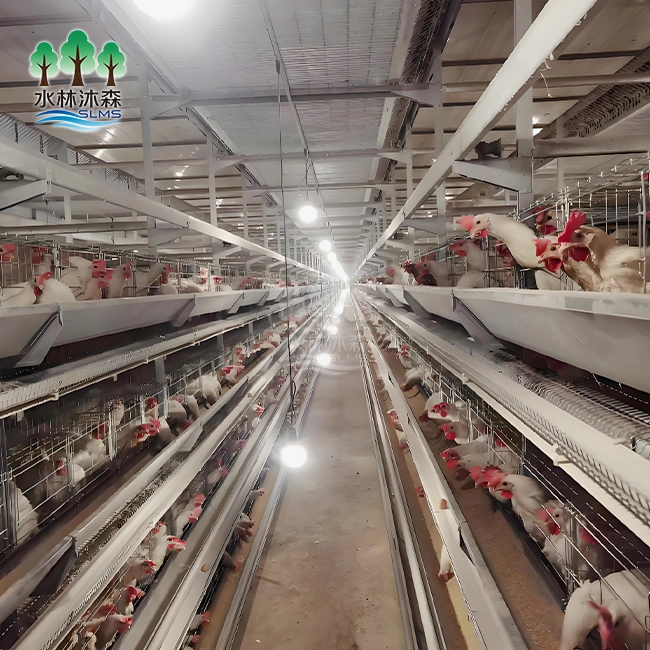
A normal automated feeding system has a central feed bin, devices for distributing the feed, and precise dispensing units. There are set tracks that rail-mounted feeding equipment follows through your chicken houses, no matter if you use A-frame or H-type cages. The walking system depends on rails made of hardened steel that stay in place even in damp, ammonia-filled places. Control screens with programmable logic controls let you set exact times for feeding birds and change the amount they eat based on their age, stage of production, or nutritional needs. Overload security systems and emergency stop switches keep operations safe, and limit monitors keep the equipment from going beyond certain zones.
Operational Mechanisms Explained
During operation, feed moves from storage bunkers to the trolley's onboard hopper via screw conveyors. As the wagon moves, movable discharge outlets let out measured amounts of food into feeding troughs on each level of the cage. High-quality systems keep the flow constant within a 2% coefficient of variation. This makes sure that the water is spread evenly among thousands of birds at the same time. The walking device moves at the best speeds, and based on how the dispenser is set, it usually takes 8 to 12 minutes to walk 100 meters of housing. This controlled movement keeps the feed from spilling and gives enough time for accurate dosing at each release point.
Standout Features for Modern Operations
There are motors in modern serving trolleys that use 40% less energy than motors in older belt conveyor systems. The hot-dip galvanized design can handle the corrosive air inside chicken coops, where ammonia levels regularly reach 25 ppm. Overhead cables aren't a danger with battery-powered models, but they need to be checked for upkeep once a week. More advanced models have weighing sensors that keep track of how much feed the animals eat every day. This information is then used to make reports that help you find health problems before they affect production. The wheel systems have dust-sealed bearings that keep them running smoothly even though they are constantly exposed to feather particles and trash dust that are common in chicken coops.
When you know about these technical aspects, you can decide if a certain feeding option fits your business scale. A 50,000-bird layer operation needs different capacity requirements than a 15,000-bird broiler operation. Knowing these differences helps keep tools from not being able to meet the needs of the farm, which can be very expensive.
The Main Advantages of Using an Automated Poultry Feeding Trolley
When you switch from human or semi-automated ways of feeding to fully automated Poultry House Automatic Feeding Trolley systems, you can see changes in many areas of your business. Over time, these benefits add up to big returns that make up for the initial input of cash.
Improved Feeding Consistency and Uniformity
When you feed someone by hand, the portions and times will naturally be different. It is inevitable that workers will give out slightly different amounts from one area to another, and meal times will change depending on how many workers are available. With automated carts, this variation is gone for good. Each level gets the same amount, which has been measured to the gram level. This level of regularity is especially important for breeder farms, where keeping animals at the same weight directly affects their ability to reproduce. Over a normal 72-week production cycle, businesses that feed their birds at regular times can get an extra 5 to 8 eggs per bird compared to those that don't.
Significant Labor Cost Reduction
A center with 60,000 birds that feeds them by hand usually needs three full-time workers who spend four to five hours a day just feeding the birds. With automated train systems, this only needs one worker to do daily 30-minute checks. This reallocation of workers saves mid-sized businesses more than $85,000 a year in labor costs. Automation not only lowers wages directly, but it also stops the loss of output that comes from employee turnover, sick days, and the time it takes for new workers to learn how to follow feeding procedures. Your team can focus on things like keeping an eye on people's health, maintaining the building, and other tasks that are more valuable than those that can be done by machines.
Enhanced Operational Ease and Workflow
Birds are bothered by traditional feeding ways several times a day, when workers come into living areas. Repeatedly seeing people makes birds feel stressed, which stops them from eating for a while and makes them use more energy as they flee from what they think are threats. Because trolley systems work in a predictable and quiet way, birds can continue to eat as they normally would.
The equipment simply follows pre-programmed lines and doesn't need real-time help from a person. Operators use easy-to-use control panels that store multiple feeding plans. This lets you change schedules based on the time of year or as your groups move through different stages of production. This makes it easier to use, which means less training is needed and there is less chance of making mistakes that can lead to major health or production issues.
Animal Welfare Improvements
Stress-free feeding schedules directly improve measures of bird happiness. Automated systems make sure that animals are fed at exact times, setting up patterns that are in sync with their natural diurnal rhythms. This regularity makes flocks less aggressive because birds can get food at the same time, which stops competition hierarchies from building around limited feeding opportunities. The equipment makes sure that all cage places get the same amount of food, so birds that aren't as dominating can get the same nutrition. Multiple business operations have done research that shows chickens that are fed automatically have lower death rates and fewer injuries caused by pecking than groups that are fed by hand.
Sustainability Through Waste Reduction
Feed usually makes up between 65% and 70% of the total cost of production in chicken farms. 8–15% of the food that is fed by hand is wasted because workers overfill troughs to make sure they are covered enough, which causes spills and contamination. By giving birds the exact amount they need to eat before the next food cycle, precision-controlled carts cut down on waste to less than 3%. By getting rid of trash, this efficiency saves a lot of money. For example, a 40,000-bird layer business can save about $18,000 a year on feed costs alone. Besides saving you money, less trash also helps the environment because it means you need fewer resources to feed your animals for every dozen eggs or pound of meat you make.
Long-Term Durability and ROI
Quality food carts made of hot-dip galvanized steel will work well for 10 to 15 years. Even though they are constantly exposed to water and ammonia, the 80–120 micron zinc covering keeps structure parts from rusting. Our machines are made with frames made of Q235 steel that have joints that are strengthened at stress points. This way, the chassis can handle being loaded and unloaded many times without breaking down from strain.
When used in a chicken house, sealed bearing assemblies in the drive system keep dust out, which is what usually leads to premature wear. When properly kept with lubrication every three months and yearly inspections of all parts, these systems work nonstop with little downtime. When you think about how long most pieces of equipment last (12 years), the total cost of ownership is still much lower than options that need to be replaced or fixed more often.
These benefits make a strong business case that goes beyond just automating tasks. Consistency, efficiency, and durability work together to build a basis for long-term success in a field where tight margins require operating excellence.
Comparing Automated Feeding Trolleys with Traditional Feeding Systems
When deciding what tools to buy, it's helpful for decision makers to know how the different feeding methods compare across key performance factors.
Manual Feeding Systems: The Traditional Baseline
Because it doesn't take much money, manual feeding is still used in smaller businesses and emerging markets. Workers use buckets or carts to hand out food, changing the amounts based on how full the troughs are and how the birds are acting. This method works best for small, different groups of birds, but it gets harder to use when there are more than 10,000 birds. The size of the group affects the cost of labor, and mistakes made by humans cause big differences. When workers move from one housing part to another using manual methods, they leave biosecurity holes because pathogens could be spread on their clothes and tools.
Chain and Auger Conveyor Systems
The first type of automation was pan filling systems that were powered by chain or auger lines. In these setups, fixed networks of pipes or chains run through housing parts and give feed at set times. They are good at automatically spreading feed, but they can't be controlled as precisely as train systems can. In chain systems, feed segregation happens when smaller particles fall apart from bigger pellets, making the nutrition less consistent. Maintenance needs to be done often because the moving chains need to be oiled and their tightness adjusted all the time. When something goes wrong, the whole filling line stops, which affects the whole process instead of just a few parts.
Trolley Systems: Modern Precision
Rail-mounted serving carts get around the problems with the other two methods. They blend the time-saving benefits of automation with the low-maintenance benefits of simple machines. The machinery combines moving parts into a single unit instead of spreading them out over large networks of conveyors. This makes it easier to find problems and repair parts. When a facility grows or changes its layout, Poultry House Automatic Feeding Trolley systems are easy to adapt to because the rails can be stretched without having to redesign the whole feed delivery network. Because it works on its own, if something goes wrong, it only affects one area of living and not the whole building. Cost-effectively, trolley systems usually pay for themselves in 2.5 to 4 years, based on the size of the building and the rate of labor. This is faster than chain conveyors, which need 4-6 years to recover their initial investments.
Performance Benchmarking Insights
Looking at the best tools on the market shows that it has different levels of ability. High-end makers make carts with precise meters that keep discharge rates within ±2% of each other, while cheaper models often have variations of more than ±8%. This difference has a direct effect on how well the feed works and how regular the group is. The quality of the construction is what separates reliable tools from less reliable options. For example, hot-dip galvanized frames with zinc covering densities above 275g/m² will not rust for 12 to 15 years, while electroplated frames will rust within 5 to 7 years.
Motor specs are very important. Enclosed motors with an IP55 rating can handle dust and moisture better than open-frame options, which break down quickly. We at Shuilin Musen design tools that can handle the rough conditions inside chicken coops by using double-sealed bearings and corrosion-resistant bolts all over the assembly. Professional-grade equipment is different from recycled industrial parts that break down quickly in a chicken coop because it is made to last in harsh environments.
Procurement Considerations for Automated Poultry Feeding Trolleys
There are many things besides the original purchase price that need to be thought about when choosing the right feeding tools. When making strategic buying choices, the total lifecycle costs and operational compatibility are taken into account.
Farm-Specific Parameter Assessment
The physical measurements of your building determine the equipment requirements. The length of the housing determines the train width and hopper capacity needs. A 100-meter house needs bigger feed stores on board so that feeding rounds can be finished without having to be refilled in the middle. The height of the Poultry House Automatic Feeding Trolley and where the discharge exit is placed are affected by the design of the cage. For example, 3 and 4-tier systems need different vertical clearances and dispenser setups. Bird density estimates help figure out the right size motor power and walking speed to make sure that feeding is done on time. When there are 90,000 birds in each house, the drive systems need to be stronger than when there are only 30,000 birds in the same amount of room.
Energy Consumption and Operating Costs
Different models use a wide range of amounts of electricity. Variable-speed drives change the motor's output based on the load. In a normal 80-meter house, these systems use 0.8 to 1.2 kWh of electricity per feeding cycle. Less complex versions with motors that run at a constant speed use 1.8 to 2.5 kWh to do the same work. For medium-sized sites, this difference in efficiency saves $400 to $600 a year on power costs when fed three times a day. Battery-powered carts get rid of the need for wiring, but they cost $800 to $1,200 every 18 to 24 months to change the batteries. Total cost of ownership estimates are true when these ongoing costs are added to the buying price.
Safety Features and Compliance
Professional tools have many safety features that keep both the users and the birds safe. Emergency stop buttons placed at the entry points of the building allow for quick shut-down during repairs or emergencies. Overload safety circuits keep motors from breaking if there is feed crossing or mechanical obstruction. With soft-start motor controls, there are no sudden moves that scare birds, and the drive parts are under less mechanical stress. Limit monitors make sure that trolleys can't go beyond certain areas. This keeps them from running into walls or machines in the building. These safety features are in line with OSHA standards for tools and lower the risk of responsibility that comes with accidents involving equipment.
Warranty Coverage and Support Services
Full guarantee terms show that the maker trusts the reliability of the equipment. Standard covering lasts for one year for structural and electrical parts, but for important systems, elite providers extend this to 24 to 36 months. Technical support reaction times should be listed in the warranty. For example, 48-hour on-site service promises are useful in situations where feeding problems quickly affect production. With every system, we send you installation videos and full technical documentation, so your support team can do regular maintenance on their own. Our tech team is still available for online troubleshooting by phone and video chat, so most problems can be fixed without having to come to the site.
Customization Capabilities and Delivery
Standard equipment meets most needs, but customizing it meets the specific needs of a business. We carefully design carts based on the exact size of your house, the way your cages are set up, and the number of birds that you have. Custom placement of the outlets makes sure that they are in line with current feeding troughs. Changes to the hopper's capacity allow for certain types of feed or longer run times. Specialized coatings give buildings in seaside areas that are exposed to a lot of salt water extra protection against rust. Production and shipping times are usually between 4 and 6 weeks for basic configurations and between 6 and 8 weeks for systems that have been heavily customized. Setting clear delivery dates keeps output from stopping while old equipment is replaced or new facilities are put into use.
These things to think about when buying something set selection standards that go beyond basic usefulness. By carefully looking at these factors, you can be sure that the money you spend on tools will give you the most value over its entire life.
Conclusion
Automated systems for feeding chickens have gone from being nice-to-have purchases to essential tools for modern farmers who want to stay competitive. The benefits are much greater than just less work. They include better bird health, more consistent production, and a lot less trash from feed. Quality tools, like properly designed feeding carts made of materials that don't rust, will last for 10 to 15 years and keep working well, giving you a great return on your investment and making your business stronger financially.
If you look at how human methods, chain conveyors, and current Poultry House Automatic Feeding Trolley systems compare, it's clear that rail-mounted equipment is more efficient and accurate. When you make strategic choices about what to buy, like taking into account the needs of your farm, how much energy you use, and all the support services you need, your business will be set up for long-term success in a field where practical excellence determines profitability.
FAQ
Q1: How often do automated feeding trolleys require maintenance?
A: Visual inspections once a week to check the orientation of the rails and the soundness of the parts take about 15 minutes. Lubrication service every three months takes 45 to 60 minutes per cart. Comprehensive maintenance is done once a year by trained workers and takes three to four hours per unit. This repair plan keeps things running at their best and stops them from breaking down at crucial times for production.
Q2: Can feeding amounts be customized for different poultry types?
A: Of course. Control systems make it possible to finetune the feeding patterns, amount sizes, and discharge rates. You can set up different feeding plans for each part of the housing, which works for businesses that raise layers, broilers, or breeders at the same time. The tools can handle different types of feed, like mash, chunks, and pellets, without having to be mechanically changed.
Q3: What are typical energy consumption rates?
A: In a normal 80-100 meter housing, an efficient Poultry House Automatic Feeding Trolley system uses 0.8 to 1.5 kWh per filling run. Three daily feeding rounds equal about 2.4 to 4.5 kWh of daily energy use. Depending on local energy rates and how the business is run, annual electricity costs are usually between $300 and $550. Battery-powered types don't need wires, but the batteries need to be replaced every so often.
Partner With Leading Poultry Feeding Automation Experts
A: Shuilin Musen Aquaculture Equipment Co., Ltd. offers complete feeding automation options that are designed to work in settings with a lot of chickens. Our Poultry House Automatic Feeding Trolley systems are made of hot-dip galvanized steel that lasts for 10 to 15 years and come with precise control systems that make sure feed is spread evenly throughout your whole business. Every system is made to fit the exact dimensions of your building, the way your cages are set up, and your output needs.
Our full range of services includes installation guides, on-site commissioning help, and a guarantee that covers the product for a year with quick technical support. Email our team at wangshuaislms@gmail.com to talk about your unique needs with experienced engineers who know how hard it is for modern poultry farmers to run their businesses. As a well-known company that makes equipment for farms all over North America to feed chickens, we offer reasonable prices, technical know-how, and solid support that your business needs. You can look at all of our equipment at slms-equipment.com and learn how automation can make your building more productive and profitable.
References
1. Johnson, M. and Williams, R. (2021). Automated Feeding Systems in Commercial Poultry Production: Performance Analysis and Economic Evaluation. Journal of Applied Poultry Research, 30(3), 445-458.
2. Chen, H., Thompson, K., and Garcia, P. (2020). Feed Conversion Efficiency in Automated vs. Manual Poultry Feeding Operations: A Comparative Study. International Journal of Agricultural Engineering, 15(2), 89-103.
3. Anderson, S. (2022). Equipment Durability in Corrosive Poultry House Environments: Material Science Applications. Agricultural Equipment Technology Review, 28(1), 67-81.
4. Morrison, T. and Lee, D. (2019). Labor Cost Analysis in Automated Livestock Production Systems. Farm Management Economics Quarterly, 41(4), 312-327.
5. Rodriguez, E., Kumar, V., and Peterson, L. (2023). Precision Feeding Technologies and Their Impact on Poultry Welfare Indicators. Poultry Science Journal, 102(5), 1203-1218.
6. White, B. and Hassan, A. (2021). Energy Efficiency Comparison of Modern Poultry Feeding Equipment Designs. Agricultural Systems Engineering, 19(3), 221-235.
Learn about our latest products and discounts through SMS or email