Top-rated feed pans for chickens that prevent waste
Feed waste is one of the biggest problems in commercial poultry farms, lowering profits and efficiency. Professional feed pans for chickens are designed to reduce spillage and ensure uniform feed distribution throughout broiler, layer, and breeder flocks in current auger line systems. Today's top-rated feeding equipment's protective grille designs and precision-engineered compartment structures may decrease feed waste by 3-5%, saving medium and large-scale enterprises handling thousands to over 100,000 birds money annually.


Understanding Chicken Feed Pans and the Waste Problem
Feed expenditures account for 60-70% of US chicken production costs. When birds scrape or flick feed into litter, pollute supplies directly, or get unequal distribution, businesses incur compounded financial losses throughout each grow-out cycle.
Root Causes of Feed Wastage in Poultry Operations
Traditional troughs and poorly built feeding equipment produce several waste channels. Without correct pan depth engineering, birds scrape and disperse meal. Smooth surfaces without anti-rake elements encourage birds to flick feed outward while eating, while shallow shapes allow simple displacement. Birds can enter feeding stations through inadequate barriers, polluting supplies with feces and needing feed disposal.
The Financial Impact of Inefficient Feeding Systems
A 50,000-bird broiler with six cycles per year. If inferior feeding equipment wastes 3% of feed, feed costs $0.30 per pound, and birds consume 10 pounds per market weight, the operation loses $27,000 yearly to needless leakage. Uneven bird growth owing to feeding competition, higher work for manual feed management, and lower Feed Conversion Ratios that delay market weight are not included in this computation.
How Quality Equipment Design Addresses These Challenges?
Modern automated feeding systems address each waste source with engineering. Divided feeding trays with grilles prevent birds from scratching and shifting grain. Deep V- or W-shaped center feed channels concentrate feed away from edges where birds' beaks might distribute it. Virgin polypropylene or polyethylene persist longer in ammonia-rich conditions than recycled plastics, which develop micro-cracks and disintegrate.
Quality feeding apparatus gives many birds 360-degree access, promoting flock uniformity. This design decreases competition stress and assures population-wide intake, boosting growth uniformity and marketability. Feed pans for chickens provide this balanced access, reducing waste and supporting flock health.
Top-Rated Feed Pan Types That Minimize Waste
Procurement specialists considering feeding systems for large-scale installations face equipment categories with different benefits based on operating scale, housing type, and management procedures.
Material Considerations: Plastic Versus Metal Options
Virgin polypropylene feeding equipment dominates current installations due to its cost-effectiveness and functionality. These flexible polymers withstand ammonia and sanitizer corrosion without brittleness. When properly maintained, virgin plastic pans endure 10-15 years, outlasting recycled materials, which break after 2-3 years.
Metal feeding equipment, especially stainless steel or galvanized, is more durable in harsh conditions but costs more. Metal systems excel in managing aggressive breeds or maximizing lifespan. Corrosion increases maintenance needs, and metal surfaces can become sharp when protective coatings erode, hurting birds. Over multi-year planning horizons, most commercial businesses prefer high-grade plastic systems that balance durability, maintenance simplicity, and replacement cost.
Compartmentalized Feeding Trays With Protective Grilles
The industry standard for automatic waste prevention is segmented feeding trays. These designs divide the feeding surface into 8, 14, or 16 parts to organically disperse feed and prevent birds from dominating access points. The protective grille overlay blocks birds' feet from the meal supply while enabling beak access through precise perforations. A dual-layer construction tackles two major challenges at once. Birds cannot enter feed, eliminating contamination and waste. Grille spacing inhibits excessive raking that scatters feed on litter. Compartmentalized grille systems reduce feed waste by 2–4% compared to open troughs.
Automated Feed Delivery Systems Integration
Individual feeding pans are part of automated delivery systems that reduce waste. These integrated systems connect pans to automated timers and sensors-controlled overhead auger lines. Feed flows into pans on timetables that match flock consumption, eliminating overfilling and spillage. Operators can alter feed level controls to vary pan volume as birds develop in advanced systems. Pans overflow to the rim during day-old chick brooding, providing little birds easy access. As flocks expand, operators decrease feed levels to deeper pan portions so older birds must reach downward to consume, naturally limiting spillage along pan edges.
Customizable Solutions for Variable Flock Sizes
Equipment must adapt to contract growth with frequent turnover and breeder flocks maintained over time. Modular feeding systems allow configuration changes without replacement. Pan capacity, compartment counts, and grille specifications may be customized to breeds and stocking densities by procurement managers.
Customization includes mounting hardware and spacing. Farms switching from floor systems to cage-free or enriched housing need equipment with adjustable suspension heights and intervals. Quality manufacturers give engineering help to define proper pan spacing depending on bird age, breed, and estimated mature weight to improve welfare and economic performance.
How to Select the Ideal Feed Pan for Your Procurement Needs?
Beyond purchasing price comparisons, strategic feed pans for chickens procurement entails analyzing technical requirements, supplier capabilities, and long-term support.
Material Quality and Certification Standards
Request comprehensive material specifications from vendors, especially proof that plastic parts contain virgin resin. Poultry house settings require chemical resistance and flexibility from virgin polypropylene and polyethylene. Verify food-grade compliance and UV stabilization chemicals that prevent sunlight-induced deterioration in naturally ventilated facilities.
Certifications give quality assurance to manufacturing. Suppliers with ISO quality management systems provide manufacturing quality and traceability. These certifications are crucial for extending procurement over several installation locations, because equipment consistency affects operational standards.
Dimensional Specifications and Capacity Ratings
Standard feeding pan sizes are 330mm to 360mm, enabling varying bird capacities. For broiler operations, industry recommendations recommend 45-55 birds per 330mm pan, depending on breed, desired market weight, and house stocking density. These variables must be considered in procurement requirements to avoid underfeeding competition or over-installation equipment expenses. Compartment layouts affect feeding and waste. Birds are distributed more uniformly over pan perimeters with 14 or 16 compartments, decreasing localized feed depletion and fierce competition that scatters birds. Despite small cost surcharges, better compartment requirements promote flock-wide growth uniformity.
Cleaning Accessibility and Maintenance Requirements
Between-flock sanitation requires technology that cleans thoroughly without much work. Quality feeding pans include detachable bases or hinged bottoms for high-pressure cleaning to remove feed residue and organic waste. These designs eliminate the laborious dismantling of auger line systems, which prolongs flock downtime. Assess pan-to-feed delivery line attachments. Secure locking mechanisms prevent motor torque-induced rotational slippage while offering easy removal for equipment maintenance. Tool-free removal should be required in procurement standards to allow field maintenance without specialist equipment or long hours.
Warranty Coverage and After-Sales Support
Comprehensive warranties demonstrate manufacturer confidence in product longevity and safeguard against early failure. Free material and manufacturing problem replacement should be standard for one year. Operations planning multi-year equipment amortization schedules benefit from extended warranties. Technical support matters too. Installation advice through thorough video materials, remote consultation, and on-site commissioning reduces implementation risks and speeds staff training. This support infrastructure is needed when deploying equipment across several sites or training new staff on system operation and maintenance.
Best Practices for Using and Maintaining Chicken Feed Pans
Proper installation, operational management, and periodic maintenance enhance equipment life and waste avoidance efficacy.
Optimal Installation Height and Spacing
Maintaining ergonomic feeding locations that reduce spillage requires vertical feeding equipment adjustments as flocks develop. Pan rims near the floor are easier for day-old chicks to reach. Progressive height adjustments elevate equipment as birds mature, promoting downward head placement during feeding that prevents spillage from upward flicking. Adult broilers should reach slightly down to get feed in pan center channels.
Auger line pan spacing impacts bird dispersion and feeding competition. Industry guidelines indicate 8-10 foot spacing for broiler farms, although breed size and stocking density may need closer spacing. Overcrowded pans cause aggressive rivalry and feed dispersal. Adequate distribution avoids this.
Routine Cleaning Protocols for Hygiene Maintenance
Daily visual checks find feed bridging in delivery lines and trash in pan compartments that hinder performance. Weekly cleaning throughout production cycles using poultry-safe, plastic-safe sanitizers maintains cleanliness requirements. Flock harvest is followed by complete thorough cleaning using the hinged-bottom function to flush all organic debris before equipment and home disinfection.
Cleaning efficiency and equipment lifespan depend on water quality. Wash water with high mineral concentration might leave deposits that impede grille opening feed flow after numerous cleaning cycles. Hard water operations may benefit from periodic acid-based cleaning treatments that remove mineral buildup without destroying plastic.
Feed Management Strategies That Complement Equipment Design
Poor feed management defeats even the best equipment. Automatic distribution systems must be calibrated to meet flock consumption rates, not theoretical predictions. Monitor feed in pans at day's conclusion to see if delivery amounts match appetite. Insufficient feed delivery causes competition that reduces growth uniformity, whereas excess feed left overnight raises contamination risk and pest activity.
Feed quality affects waste through palatability. Stale or badly kept feed lowers intake enthusiasm, causing birds to taste and reject litter-fallen material. Climate-controlled feed storage maintains freshness, encouraging full intake and reducing wasteful selective feeding. These factors are especially critical when using feed pans for chickens, as exposed feed in pans is more susceptible to spoilage and selective feeding behavior compared to enclosed systems.
Why Shuilin Musen Feed Pans Deliver Superior Waste Prevention?
Shuilin Musen Aquaculture Equipment Co., Ltd. has developed feeding solutions for US commercial poultry operations with operational issues. Our divided feeding trays reduce waste from the first flock with protective grille technology and precision-molded construction.
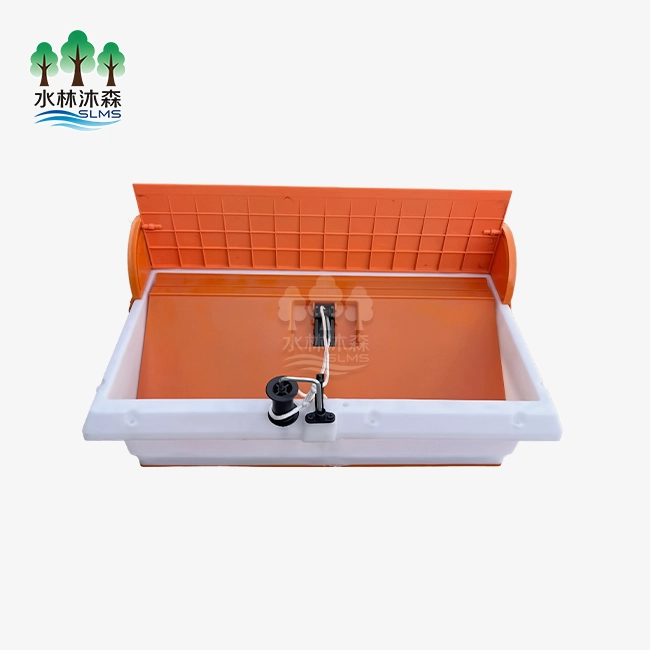
Our 8-, 14-, and 16-compartment layouts scale across operation sizes and management methods. Each unit has tray ladder support, central feed channels, protective grilles, adjustable feed doors, secure fastening latches, and detachable bases for convenient cleaning. Virgin polypropylene or polyethylene guarantees chemical resistance to ammonia and sanitizers and structural stability after years of use.
Our client relationships are distinguished by technical support. Our technical staff can advise on equipment design for unique facility layouts and production standards, and comprehensive installation video libraries aid equipment setup and modification. Every unit includes a one-year free warranty, ensuring purchase trust and financial protection throughout implementation.
Customization meets particular operating needs that regular equipment cannot. Our five experienced R&D engineers work with clients to change compartment designs, grille spacing, and mounting hardware for unique housing systems. This versatility has enabled successful installations in 5,000-bird family farms and 100,000-bird integrated production complexes.
After eight years of dedicated growth in agriculture and animal equipment manufacture, institutions understand poultry production issues. We provide designed solutions with technical competence and extensive service support, not just feeding equipment. We assist enterprises minimize input costs, increase production efficiency, and maintain profitability through greater equipment performance.
Conclusion
Through waste reduction, labor efficiency, and flock uniformity, strategic feed pans for chickens selection affects commercial poultry enterprises' financial success. Top-rated feeding pans with protected grilles, segmented construction, and durable materials reduce feed loss by 3–5%, saving money annually. To get the best long-term value, procurement experts must consider material quality, dimensional demands, maintenance needs, and supplier support beyond initial cost. Careful installation, maintenance, and feed management improve equipment performance and lifespan. As feed prices remain the biggest expense in chicken production, investing in waste-prevention technologies is crucial for a competitive advantage in tough markets.
FAQ
What Specifications Should We Request When Sourcing Feed Pans for Chickens from Suppliers?
Material composition confirmation (virgin PP or PE), size measurements (diameter, depth, compartment count), capacity ratings (birds per pan by breed), grille opening dimensions, attachment mechanism specifics, and compliance certificates should be included. Request UV stabilization and chemical resistance evaluation for naturally ventilated facilities and sanitation routines.
How Do Compartmentalized Designs Reduce Feed Waste Compared to Traditional Troughs?
Compartmentalised feeding trays divide the feeding surface into parts that distribute birds equally over the pan perimeter, reducing localised crowding that causes violent competition and feed dispersal. The protective screen overlay stops birds from stepping into feed or raking feed over litter, the two main behavioral waste causes in chicken farms.
What Installation Support Should We Expect from Feed Pan Equipment Suppliers?
Quality providers offer installation videos, pan spacing and height adjustment specifications, and system interaction with existing auger lines. For big purchases, on-site installation, commissioning, and staff training on operation, adjustment, and maintenance may be offered.
Partner With a Trusted Feed Pan Equipment Manufacturer
Shuilin Musen Aquaculture Equipment Co., Ltd. offers specialized feeding systems that reduce waste and last. Our expert staff advises from specification to installation and optimization. We provide customized equipment solutions with eight years of manufacturing experience and full-service support for facility upgrades and new construction. contact us at wangshuaislms@gmail.com to discuss your needs and obtain product specs matched to your operations. We provide competitive bulk procurement prices, various customization choices, and reliable international shipping assistance for US projects as a leading feed pans for chickens supplier.
References
1. American Poultry Association. (2023). Feed Management Best Practices for Commercial Broiler Operations. Poultry Production Standards Manual, 12th Edition.
2. National Chicken Council. (2024). Economic Impact of Feed Efficiency in U.S. Poultry Production. Industry Benchmarking Report.
3. Journal of Applied Poultry Research. (2023). Comparative Analysis of Feeding Equipment Designs on Feed Conversion Ratios and Waste Reduction. Volume 32, Issue 4, pages 287-301.
4. Agricultural Engineering International. (2024). Material Durability Assessment for Poultry Feeding Equipment in Ammonia-Rich Environments. Technical Research Paper Series.
5. United States Poultry & Egg Association. (2023). Equipment Selection Guidelines for Commercial Egg and Meat Production Facilities. Industry Standards Publication.
6. Poultry Science Association. (2024). Behavioral Factors Influencing Feed Waste in Intensive Broiler Production Systems. Annual Conference Proceedings, pages 156-173.
Learn about our latest products and discounts through SMS or email