Why Choose 8 Level Egg Chicken Cage for Higher Productivity
When you're in charge of a big chicken farm, every choice you make affects your bottom line. Modern intensive farming has never seen anything like the Eight-tier Layer Cage, which makes great use of space and runs smoothly. This housing method stacks birds vertically, which lets you house a lot more birds in the same space—sometimes 300% more birds than with usual setups. In addition to saving room, these high-tech systems include automatic food, watering, and removal of manure, which greatly reduces the amount of work that needs to be done while still ensuring the birds' health. The end result is a strong mix of higher egg production rates, lower operational costs, and faster return on investment that solves the main problems that commercial egg producers face today.


t-Tier Layer Cage: Design and Benefits
The tech behind multi-level chicken coops is the result of decades of improving the way farm equipment is made. If we look at modern egg farms, we can see right away the difference between old ways of doing things and the best ways to do things now.
The H-Type Structural Advantage
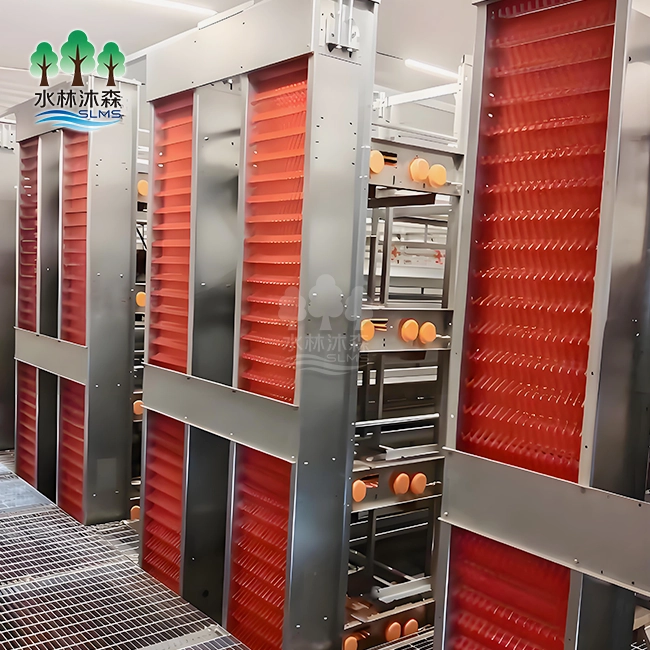
Eight-tier Layer Cages that work well are built around the H-type frame configuration. The H-type structure is more stable and evenly distributes weight across all floors, unlike older A-frame designs that cause shadows and uneven weight distribution. At Shuilin Musen Aquaculture Equipment Co., Ltd., we build our frames out of Q235 steel wire that has been hot-dip galvanised.
This gives the frames structural integrity that lasts for more than 15 years, even in the harsh environment of a chicken farm. The choice of material isn't random; the galvanisation process adds a zinc layer that protects against ammonia and water damage, two things that destroy cheap cage systems very quickly.
The vertical arrangement lets each level work on its own while sharing tools that work together. You'll notice that this design makes the most of your building's cubic space rather than just its floor space, which has a huge impact on your production costs.
Automated Systems Integration
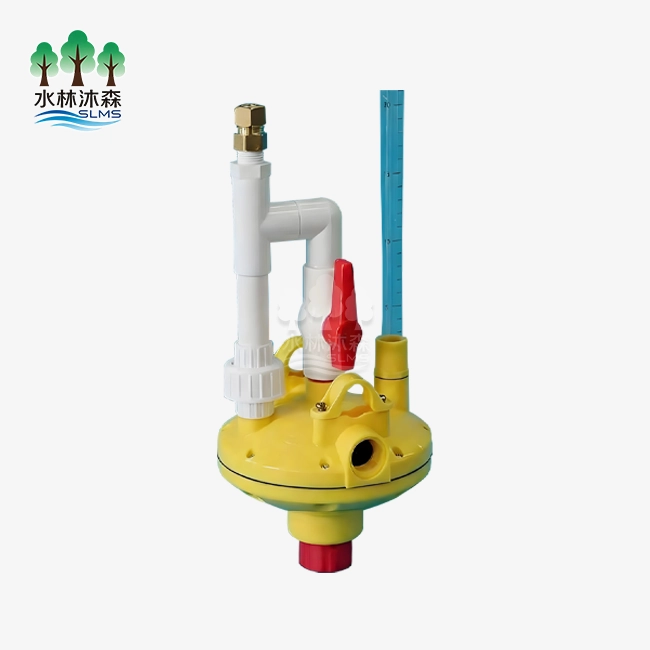
Modern multi-level cage systems are great because they get rid of boring, time-consuming, and inconsistent human jobs that have to be done over and over again. The automatic feeding system gives each level of birds the exact amount of food they need at the same time, making sure that your whole group gets the same nutrition. Using nipple drinker systems to deliver water keeps it clean and easy to get while reducing spills and bacterial contamination.
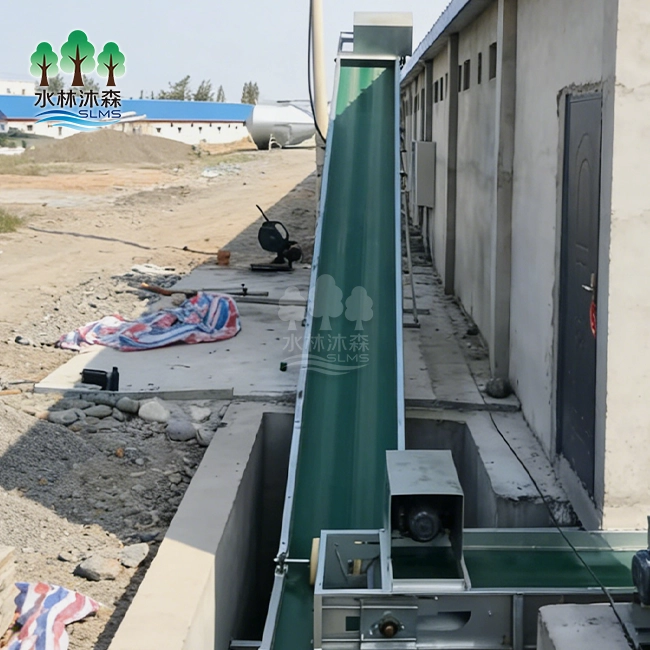
The system for getting rid of manure needs extra attention. With eight levels making a lot of waste, getting rid of it quickly is important for keeping the air clean and birds healthy. Under each level, automated belt systems move waste away from the living area all the time. This keeps ammonia from building up and lowers the risk of disease. When compared to cleaning by hand, this technology directly cuts down on labour costs by more than 40%.
Stocking Density and Bird Welfare Balance
At a stocking density of 40KG/◡, you have to think carefully about both output measures and bird welfare. The 45cm length and width of the cage give each bird enough room while also making the most of the space available. The 10-degree slope at the bottom does two things: it lets eggs roll gently into collection troughs, which keeps breakage rates below 0.5%, and it lets birds stand naturally without being crowded.
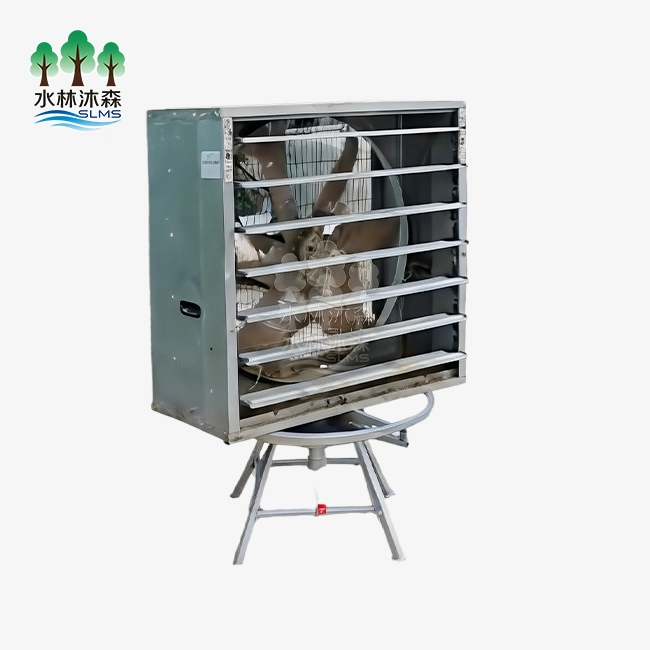
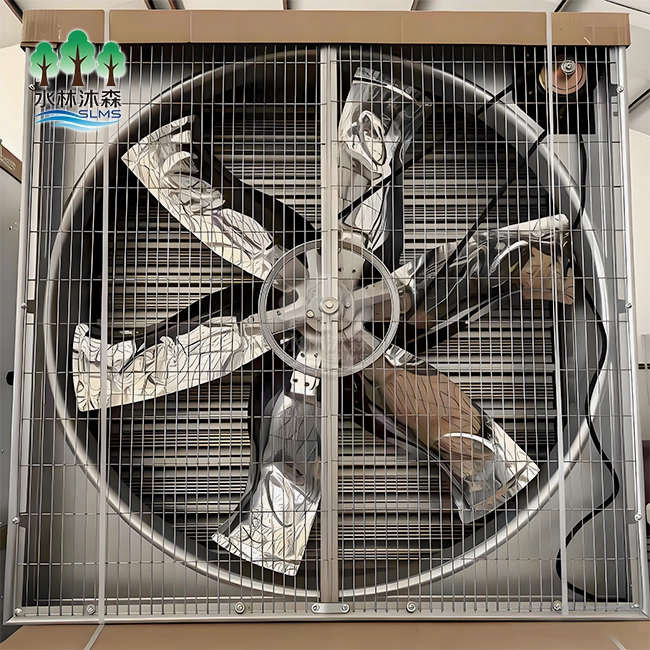
In places with a lot of people, air flow is very important. The open space between H-frame supports lets more air flow through than with compact A-frame arrangements, which helps keep the temperature even from the bottom to the top levels. When negative pressure ventilation systems are properly installed, temperature differences stay below 2°C on all levels. This keeps the upper levels from getting too hot, which happens a lot in installations that aren't designed well.
Comparing Eight-Tier Layer Cages with Alternative Systems
Knowing your choices makes it easier to see why vertical cage systems are the best choice for large-scale operations. Each building method has its own unique features that affect how well it works and how complicated it is to run.
Traditional Battery Cages vs. Multi-Tier Solutions
Normal battery cages can only stack three to four levels high because of how they are built and how hard it is to clean up the waste. Although they are simple, they don't make good use of space compared to what modern operations need. If you use properly designed Eight-tier Layer Cages, the land area needed to house 100,000 birds in traditional battery cages could hold 300,000 to 400,000 birds.
Besides differences in capacity, there are also big differences in working efficiency. In traditional setups, collecting eggs by hand and cleaning up manure are often separate tasks that slow down daily operations. With multi-tier setups, these functions work together without any problems, so one expert can effectively watch over 50,000 birds.
Aviary Systems and Free-Range Considerations
Aviary systems are appealing to businesses that want to attract high-end customers and have certain welfare certifications. These arrangements give you a lot of room to move vertically and perch, which lets your pet behave naturally. However, they add a lot of complexity: collecting eggs becomes harder because birds lay them all over the building, death rates rise because of pecking and crowding, and it's harder to keep diseases under control in places where birds touch manure-contaminated surfaces.
The need for space tells a lot of the story. Aviaries need a lot more space per bird than cage systems, which makes them too expensive to build in places where land is expensive. Egg production rates are also going down because the movement of the flock is stressful and uses up energy that could be used to make eggs.
Five-Tier Systems as Middle Ground
Five-tier designs are a middle ground between old-fashioned and cutting-edge methods. They make better use of space than battery cages and don't require as much engineering work as taller structures. It's easier to control the ventilation, and many operators feel safer working at a lower height during maintenance.
But this middle ground gives up the huge efficiency gains that come with full Eight-tier Layer Cage implementations. It's like you're not using 37.5% of the vertical space that could be there—space that you already paid to cover and keep cool. When you look at the difference in cost between five and eight tiers per bird house, it's not that big, but the difference in production capacity is still big.
How to Choose the Best Eight-Tier Layer Cage for Your Business
To choose the right cage system, you need to make sure that the technical specs match how you will be using it. When people make decisions about what to buy without doing a lot of research first, they often end up with expensive repairs or poor performance.
Assessing Your Production Scale and Facility Constraints
First, figure out how many birds you want to attract and how big a building you have available. Depending on the width of the aisles and the needs of the support structures, a building that is 80 meters by 12 meters can hold between 50,000 and 60,000 birds in an Eight-tier Layer Cage layout. Your electrical system needs to be able to handle automated systems. Plan for separate circuits to handle lighting controls, ventilation fans, and feeding motors.
Early attention should be paid to foundation requirements. Because of the concentrated point loads from an eight-level system, the foundations must be made of reinforced concrete that is usually 30 to 50 cm deep and have steel reinforcements lined up perfectly with the positions of the H-frame legs. If the foundations sink or aren't lined up correctly, the manure belts will get stuck. This will weaken the structure and make repairs more expensive.
Material Quality and Corrosion Resistance
The harsh environment for chickens quickly destroys materials that aren't up to par. The minimum standard for durability is hot-dip galvanisation with a zinc covering thickness of more than 275g/m². Some manufacturers offer cheaper electro-galvanizing, but this method doesn't protect well enough—rust will form within three years, and the structure will break before your investment is recouped.
Wire gauge is very important. The width of the main structural lines should be between 3.0 mm and 3.2 mm, which is a good balance between strength and weight. Door mechanisms need 2.3 mm wire that is a little thinner but still flexible enough to keep the doors shut securely. We've found that door systems with springs last longer than simple slide devices, especially in areas with a lot of foot traffic where birds often get in.
Automation Level and Control Systems
Different tasks need different levels of automation sophistication. Basic systems have feeding that is controlled by a timer and a manure belt that runs all the time. These are good for smaller installations where management is available on-site. In more advanced setups, sensors keep an eye on feed levels, water pressure, temperature differences, and belt tracking. When parameters move out of the ideal ranges, they send alerts to mobile devices.
Think about how much labour you can actually get. If hiring people is hard or expensive in your area, investing in more automation will pay off because it will require less daily intervention. The customisation choices in Shuilin Musen let you adjust the level of automation to fit your management style and budget.
Evaluating Supplier Credentials and Support
Your relationship with the company that sells you equipment goes far beyond the purchase itself. Because Eight-tier Layer Cages are so complicated to install, they need professional teams with a lot of experience who know how to balance ventilation, put together structures, and connect electricity systems. We offer installation services on-site and full video recording that walks your team through the setup process.
Warranty coverage shows that the company that made the product is sure that it will last. Our standard one-year warranty covers problems with the materials or the work, but our systems are designed to work without any problems for 15 years or more. How fast can they send replacement parts or expert help when problems happen? This is something you should ask possible suppliers.
Practical Tips for Using and Maintaining Eight-Tier Layer Cages
To work at its best, even the best equipment needs to be used and maintained correctly. Sound protocols should be set up from the start so that small problems don't get worse.
Installation Best Practices
How well your site is prepared affects whether your system works smoothly or causes you constant problems. Make sure your building has enough height—Eight-tier Layer Cages usually need 3.5 to 4 meters of clear height, depending on how far apart the tiers are. Make sure that the type of soil is taken into account when you dig the base. For example, sandy soils need deeper footings than clay makeup.
During assembly, use laser levels to make sure that the frame uprights are standing straight up. Even small changes can add up over eight levels, causing egg collection troughs to not line up right or manure belts to rub against the edges of the cage. We suggest putting together the whole first row before moving on to the next rows. This way, you can find and fix any problems before they get worse.
Pay close attention to electrical connections. Power lines should be run through secure conduit and away from places where manure could build up and cause corrosion. Put disconnect switches in easy-to-reach places so that maintenance workers can safely turn off sections while they are being serviced.
Routine Maintenance Protocols
Visual checks every day catch problems early as they start to happen. As you walk along each level, listen for any strange sounds coming from the feeding motors and check the water pressure at the nipple drinkers on each level. Also, make sure the manure belts are straight and not spilling. These quick checks don't take long, but they keep equipment from breaking down, which could hurt thousands of birds.
As part of weekly maintenance, chain drives should be oiled, the stability of belt splices should be checked, and backup systems should be tested. The device that tracks the manure belt needs extra care—deviation sensors need to stay clean and properly adjusted so that belts don't slide off their rollers.
Troubleshooting Common Challenges
Monthly a deep cleaning once a month gets rid of dust and organic matter that regular cleaning doesn't get rid of. Power-wash the water lines and feeding troughs with approved disinfectants, and look for biofilm that can hold pathogens. Check galvanised surfaces for any signs of damage to the coating. If you find any scratches or gouges, fill them in with zinc-rich paint before corrosion starts.
Temperature differences between levels are a sign that there isn't enough air. If levels above are consistently warmer than levels below by more than 2°C, make sure that air deflectors are properly pointing new air toward the ceiling before it flows down through bird zones. Most of the time, static pressure mismatches happen because inlet vents are closed or exhaust fans are too small for the size of the building.
More broken eggs could be caused by a number of things. Check the angle of the bottom slope. If it's too steep, the eggs will move quickly and hit the walls of the collection trough. If it's too shallow, the eggs won't be able to roll off and will be stepped on by birds. The 10-degree angle we recommend has been shown to work best in many real-world tests. Also, look at the surface of the collection belt for any rough spots or things that could break shells while they're being moved.
Procurement Insights: Buying Eight-Tier Layer Cages Smartly
Planning your way through the buying process will protect your investment and make sure you get equipment that meets your needs and arrives on time.
Understanding Pricing Structures
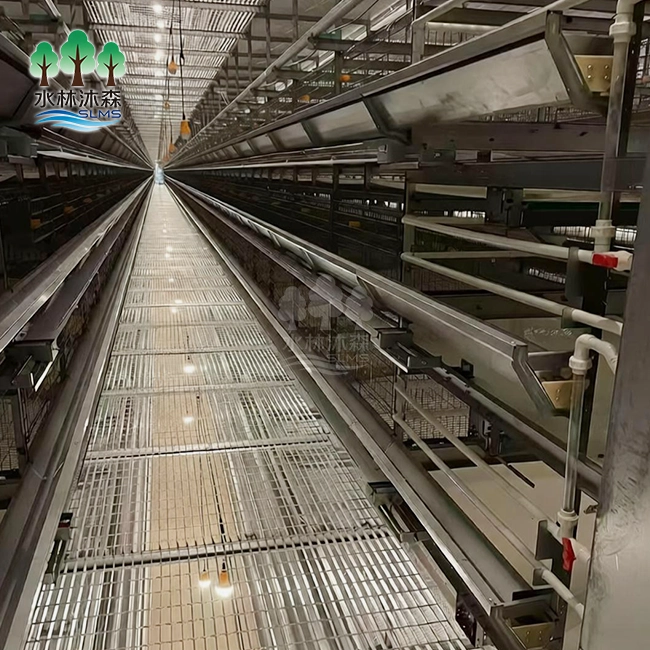
Complete Eight-tier Layer Cages usually cost $15 to $25 per bird capacity, but this depends on how automated they are, what materials they are made of, and how much customisation is needed. This picture shows the structure of the cage, the feeding system, the watering system, the equipment for getting rid of the waste, and the ways to collect the eggs. Shipping, installation, and making changes to the building to make room for the system add to the costs.
There are big benefits to buying in bulk. When you order equipment for a capacity of 50,000 birds or more, you can often get 10-15% off compared to smaller installations. This is because manufacturers can make more with less when they do larger runs. Talk to your suppliers about your total expected capacity if you're planning a staged growth. They may be able to extend volume price across multiple delivery dates.
Customization Options Worth Considering
From order confirmation to delivery, the lead time is between 45 and 90 days, depending on how customised the product is and how quickly the manufacturer can make it. Plan your procurement timelines accordingly, especially if you need to work with the construction schedules of other buildings. It is sometimes possible to get items quickly, but there are usually extra fees of 20 to 30 percent.
Standard settings work for many tasks, but careful customisation often makes users happier in the long run. Changes that are made based on the climate are very important. For example, businesses in hot areas can benefit from more ventilation and heat-reflective roof coats, while setups in cold climates need insulated water lines and extra heating.
Verifying Supplier Credibility
Different bird breeds and ways of raising them can be accommodated by different cage widths. Fewer birds can fit in a wider cage, but the birds may be more comfortable and the eggs may be of higher quality, which is something that premium markets value. Talk to your suppliers about the breeds you want to sell and the markets you want to reach to find the best dimensional specifications.
If growth plans are still unclear, modular extension should be thought about. Systems with standard connection points let you add rows or extend existing ones without having to do a lot of reconfiguring. This lets you keep the initial investment you made while increasing capacity.
Conclusion
The choice to use an Eight-tier Layer Cage is a big strategic move that will completely change the economics of your production. There are big financial benefits when you combine dramatically more bird space within existing building footprints with big labour cost savings from integrated automation and better bird health outcomes from better waste management. Even though it takes more money up front than easier options, the higher productivity and improved operating efficiency usually pay for themselves in 2.5 to 3.5 years.
For success, choose high-quality equipment made from properly galvanised materials, make sure there is enough ventilation, and work with suppliers who offer real technical support during installation and operation. When all of these things are in place, multi-tier cage systems always do better than other housing options in the ways that matter most to commercial egg producers.
FAQ
How do you manage ventilation across all eight tiers effectively?
For air to flow properly, negative pressure systems that work with calculated air speeds of around 3.5 to 4 meters per second are needed. Using air entry baffles in a smart way sends new air toward the upper levels, letting it rise through all levels while keeping the temperature the same (within 2°C) from the top to the bottom. This stops the buildup of heat that happens in high tiers that don't have enough air flow.
What foundation specifications do these systems require?
Because of the concentrated point loads, the foundations must be made of reinforced concrete and be between 30 cm and 50 cm deep, depending on the type of soil and the load calculations. Important factors include exact alignment with the H-frame leg positions and enough steel reinforcement to stop subsidence that would affect the operation of the manure belt and the structure's strength over the system's 15-year or more life span.
Can existing buildings accommodate eight-tier installations?
The suitability of a building depends on its clear height, its ability to support weight, and its ability to ventilate. Most setups need a clear height of at least 3.5 to 4 meters. To support integrated automation systems, older buildings may need to have their foundations strengthened and their electricity capacity raised. A site assessment finds out if the project is possible and what changes need to be made.
Partner with Shuilin Musen Aquaculture Equipment Co., Ltd. for Your Eight-Tier Layer Cage System
To change how you make eggs, you must first find the right tools seller who knows your business problems and offers tried-and-true solutions. As a well-known Eight-tier Layer Cage manufacturer with eight years of experience, we've helped a huge number of businesses on six continents reach their goals for productivity and efficiency. Our team of five dedicated engineers is always improving our products. Each year, they come up with more than three new ideas that solve real-world problems. We offer full customisation services that are tailored to your needs, climate, and automation preferences, whether you're adding on to an existing building or putting up brand-new infrastructure.
We don't just supply tools; we also offer full installation help, clear technical documentation, and quick after-sales service, all backed by a standard one-year warranty. You can look at our full product specs at slms-equipment.com, or you can email us at wangshuaislms@gmail.com to talk about how our solutions can help your business run better and make more money.
References
1. Appleby, M.C., Mench, J.A., and Hughes, B.O. (2004). Poultry Behaviour and Welfare. CABI Publishing, Wallingford, UK.
2. Bell, D.D. and Weaver, W.D. (2002). Commercial Chicken Meat and Egg Production, Fifth Edition. Kluwer Academic Publishers, Norwell, Massachusetts.
3. Hunton, P. (1995). Poultry Production: World Animal Science. Elsevier Science Publishers, Amsterdam, Netherlands.
4. North, M.O. and Bell, D.D. (1990). Commercial Chicken Production Manual, Fourth Edition. Van Nostrand Reinhold, New York.
5. Sainsbury, D. (2000). Poultry Health and Management: Chickens, Turkeys, Ducks, Geese and Quail. Blackwell Science, Oxford, UK.
6. Tauson, R. (1998). Health and Production in Improved Cage Designs. Poultry Science Journal, Volume 77, Issue 12, Pages 1820-1827.
Learn about our latest products and discounts through SMS or email